
If you’ve ever scrolled through a beautifully curated Instagram feed or clicked through a blog post with mouthwatering food photos, you might have wondered how all of that content comes together. As someone who creates professional content for food and wellness brands, I know that what you see online is the result of careful planning, styling, photography, and strategy.
Creating content isn’t just pointing a camera at a dish or setting up a pretty shot. It’s a process that takes into account the story the brand wants to tell, the audience it wants to reach, and the results it hopes to achieve. Behind every scroll-stopping post is a series of deliberate steps designed to make the content appealing, engaging, and aligned with the brand’s goals.
In this post, I’m taking you behind the scenes to show exactly how I create content for food and wellness brands — from studio shoots to on-location lifestyle photography, and from styling and photography to content strategy and management.
Planning: the first step in every successful shoot
Before the camera comes out, there’s planning. This stage is all about understanding the client, their brand, and their audience.
For each project, I start by asking questions like:
- Who is the audience?
- What is the goal of this content?
- How will it be used — social media, website, blogs, newsletters, PR campaigns?
- Are there any key messages or promotions to highlight?
Answering these questions ensures every post has a purpose. For example, a food brand I worked with wanted to launch a new line of high-protein snacks. The audience was active on Instagram, primarily aged 25–40, interested in quick, healthy food. Knowing this, I could plan content that spoke directly to their interests: quick recipe videos, visually appealing product shots, and engaging carousel posts with tips and benefits.
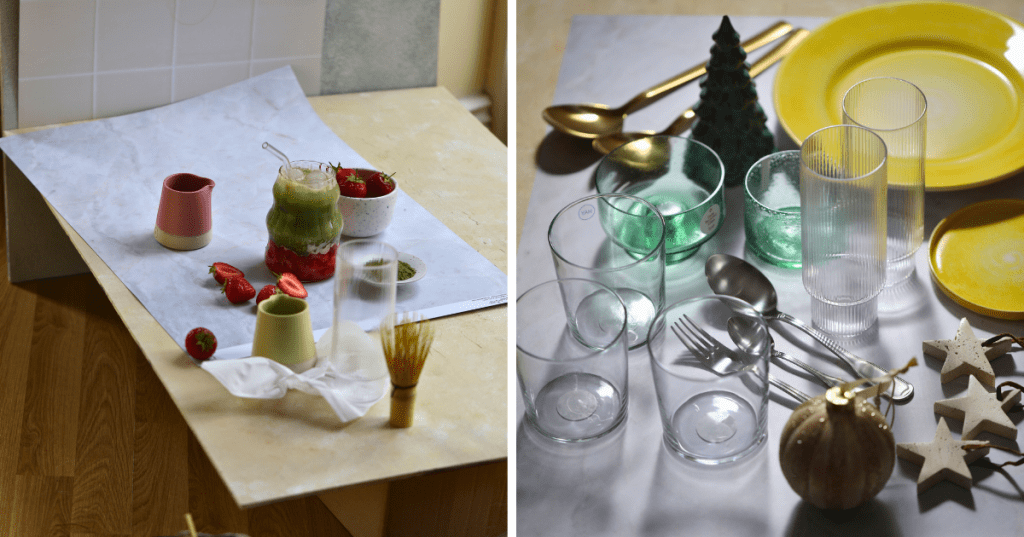
At this stage, I also consider the practical side of planning: what props are needed, which ingredients are in season, lighting setups, and timing. Studio shoots, especially, require a lot of preparation. Ingredients need to be fresh, props need to complement the brand aesthetic, and the lighting has to highlight textures and colours in the right way.
Studio food photography: crafting the perfect shot
Studio photography is a staple in the content I create. It gives me full control over lighting, angles, and styling, allowing me to showcase the product at its best.
1) Lighting and angles
Lighting is everything in food photography. Soft, natural-looking light helps highlight textures and colours without making the food look flat. I often use a combination of natural light and diffused studio lights to create depth and dimension.
Angles are another critical element. Some dishes shine from above, while others look better at eye level or a slight angle. I experiment with angles until the composition feels balanced and draws the viewer’s eye naturally toward the subject.
2) Styling: making food look delicious
Styling is way more than arranging food on a plate — it’s about telling a story with the image. Props, backgrounds, plates, and utensils all contribute to the mood and messaging (and sometimes you can intentionally opt for a minimalist look with just a plate and a spot-on backdrop). For example, a breakfast bowl for a wellness brand might be styled with soft, neutral props to evoke calm mornings, while a vibrant smoothie bowl could use bold, colourful elements to convey energy and freshness.
I pay attention to details like texture, colour contrast, and balance. Little touches (like a sprinkle of seeds, a drizzle of sauce, or the placement of a leaf) can elevate an image from “nice” to scroll-stopping.
3) On-location lifestyle and branding photography
While studio content is ideal for product-focused posts, food photography and recipe content, lifestyle and branding photography on location helps bring the brand to life. This could mean photographing a nutritionist preparing meals in a kitchen, a yoga teacher demonstrating stretches on the beach, or an acupuncturist getting ready for a treatment in their studio.
Lifestyle photography shows the human side of a brand. It connects the audience to real people, environments, and experiences, making content feel more relatable and authentic. I always try to capture moments that feel natural and unforced while keeping the visuals consistent with the brand’s style.

Videography for social media: adding movement and engagement
Video content is increasingly important for social media. Short clips, reels, or instructional videos can communicate more than a single photo, especially when explaining recipes, demonstrating wellness routines, or highlighting product features.
When creating video content, I approach it like a mini production:
- Storyboarding the sequence
- Planning the shots and angles
- Considering pacing, transitions, and timing
- Capturing multiple takes to ensure options for editing
Even simple videos benefit from good lighting, styling, and composition. For example, a smoothie bowl video might show the ingredients being added, blended, and plated in a sequence that feels effortless yet visually appealing. These small details make a huge difference in engagement and shareability.
Content strategy: planning beyond the photo
Photography and styling are important, but without a strategy, even the most beautiful images can go unnoticed. Every piece of content I create ties back to a strategy.
Content strategy includes:
- Aligning visuals with the brand’s voice and messaging
- Planning posts for different platforms (Instagram, Facebook, Pinterest, blog)
- Mapping content to seasonal trends, campaigns, or product launches
- Deciding on formats: photos, carousels, videos, or lifestyle imagery
- Ensuring consistency in style, colour palette, and tone
For instance, a wellness brand launching a new product might have a campaign spanning four weeks. Studio photography provides high-quality product shots, lifestyle photos show real people enjoying the product, and short videos demonstrate its use. All these assets are planned and scheduled to support engagement and sales over the campaign period.
Copywriting and captions: pairing words with visual content
Even the best photos need words to fully connect with the audience. I create captions, social media copy, and blog content that complements the visuals. The goal is to make posts engaging, informative, and action-oriented.
For example, a photo of a colourful salad could be paired with a caption that shares a simple tip for meal prep, the health benefits of key ingredients, or a personal anecdote from the brand owner. This adds personality to the content and encourages comments, shares, and saves.
Workflow: how a content day looks
A typical content day involves multiple stages:
- Preparation: gather props, ingredients, and any special equipment. Make sure all items fit the brand’s aesthetic.
- Shooting: capture the studio images, lifestyle photos, and videos. Pay attention to lighting, angles, styling, and composition.
- Editing: select the best shots, adjust colour, crop, and retouch where needed. Videos are cut, transitions added, and captions planned.
- Scheduling: content is organised and scheduled according to the strategy, ensuring posts are spread out for maximum engagement.
This workflow ensures that clients receive high-quality content ready to post, saving them time and stress.
Examples from my work
I often hear clients say, “I never realised how much goes into creating content like this.” To give you a sense:
- Studio product shoot: a small Irish food brand needed product photography for their website and social media. We planned the shoot around seasonal ingredients, styled dishes to highlight texture and colour, and captured multiple angles to provide flexibility for posts and campaigns.
- Lifestyle photography: for a food industry consultant, we created a series of on-location photos showing her under an approachable and modern light. This helped followers see her expertise and relate to her approach.
- Video content: a nutritionist client wanted short recipe videos. We storyboarded each recipe, filmed multiple takes, and created clips suitable for Instagram and Facebook, boosting engagement significantly.
Tools I use to keep everything organised
Managing content for multiple brands requires a clear system. Some of the tools I use include:
- Asana and Dubsado: for project management and planning
- Google Drive and WeTransfer: storing and sharing raw and edited images and videos
- Lightroom & Photoshop: editing photos to maintain a consistent style
- Adobe Premiere Pro & Rush: editing video content for social media
- Social media scheduling tools: organising posts according to strategy
Using these tools keeps content organised, ensures deadlines are met, and allows clients to access assets easily.
Working with me: why strategy and visuals go hand in hand
The key to successful content is not just having a library of beautiful photos or videos — it’s combining visual storytelling with a solid strategy. I help food and wellness brands create content that:
- Reflects their unique brand voice
- Connects with their ideal audience
- Drives engagement, website visits, and sales
- Saves them time so they can focus on running their business
All my content is planned with purpose. Every image, video, and caption has a role in telling the brand’s story. And while I often focus on studio shoots, I also work on location to capture lifestyle and branding photography that humanises the brand and builds connection.
Creating consistent, high-quality content for your brand can feel overwhelming, but you don’t have to do it all alone. I have 8+ years of experience as a food photographer, food stylist, social media strategist, and social media manager. I work with wellness and food brands to plan, create, and manage content that reaches the right audience.
It’s possible to arrange a consultation or a series of consultations with me to develop your content strategy, define your visual approach, and figure out what content works best for your audience. Based in Ireland, I work remotely, so distance is never a barrier.
Contact me today using the button below to see how I can help you create content that connects, engages, and grows your brand.
 A MATTER OF NOURISHMENT