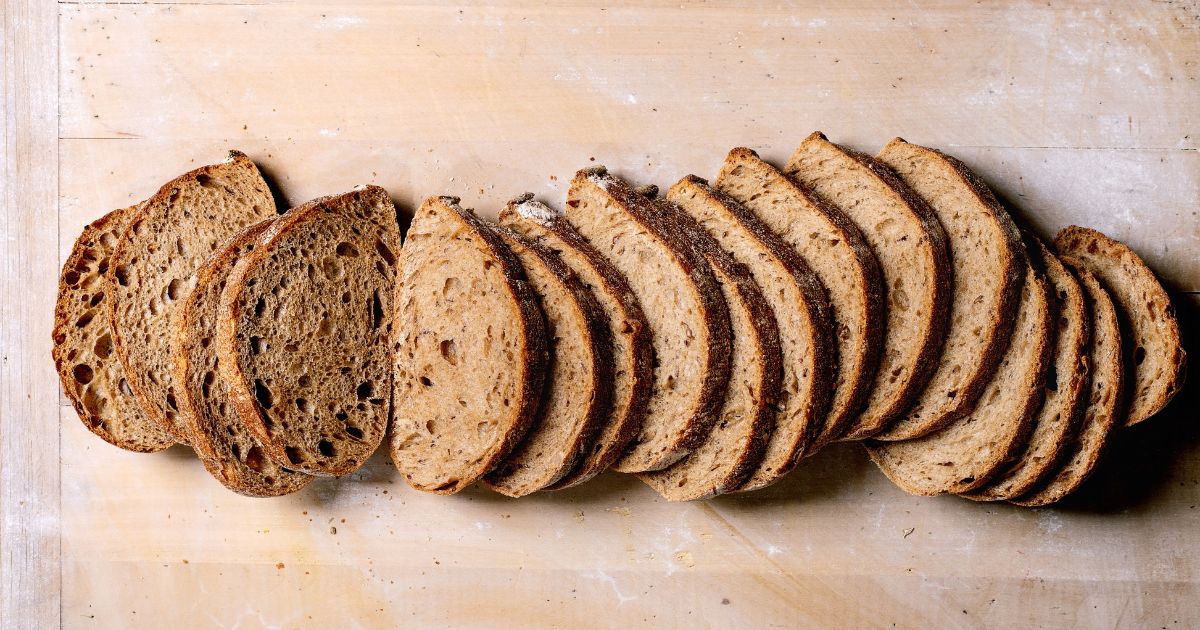
You know that moment in cooking when food stops being raw and starts being something else entirely? That’s the one we often end up taking for granted. Think about the surface of a piece of bread that goes from pale to golden, a steak placed into a hot pan that begins to char at the edges, or roasted vegetables that go from soft and steaming to fragrant and coloured at the corners. Even coffee beans, green and grassy when they go in, emerge dark, fragrant, and completely transformed.
What’s happening in all of those moments is the same reaction, even though the foods couldn’t be more different. It’s called the Maillard reaction, and it’s one of the most important chemical processes in cooking. It’s also one of the most misunderstood, and two things come up so consistently when people talk about it that I want to address them before anything else.
What the Maillard reaction is not
The first misunderstanding: that it’s just about sugar. It isn’t: the Maillard reaction does involve reducing sugars, but it requires something else too — amino acids, which are the building blocks of proteins. Both have to be present for the reaction to occur. This is why vegetables brown during roasting (they contain both sugars and amino acids), why bread develops a crust (the flour contains proteins), and why a plain sugar syrup heated in a pan does something very different — that’s caramelisation, a separate reaction that only involves sugar breaking down under heat. The two are often confused, and while they can happen simultaneously in the same food, they are chemically distinct processes producing different compounds and different results.
The second misunderstanding: that it’s something only meat does. Meat is one of the most obvious examples because the transformation is so dramatic and the flavour change so significant that it’s impossible to miss, but the Maillard reaction happens in an enormous range of foods. Bread, biscuits, coffee, chocolate, beer, roasted nuts, soy sauce, and even some cheeses all owe part of their flavour and colour to some version of this reaction. If you’ve ever wondered why oven-roasted broccoli tastes completely different from steamed broccoli despite starting from the same ingredient, the Maillard reaction is a significant part of the answer.
What’s actually happening chemically
The reaction was first described in 1912 by a French chemist and physician named Louis-Camille Maillard, who noticed that amino acids and reducing sugars behaved in interesting ways when heated together. He wasn’t studying food science (he was working on understanding biological protein synthesis, trying to replicate how amino acids behave in living organisms), but his observations turned out to explain a lot of what happens in the kitchen.
Here’s the simplified version: when an amino acid and a reducing sugar are exposed to heat, they react with each other to form an unstable compound. That compound doesn’t stay as it is for long — it breaks down and rearranges itself into a cascade of new molecules, sometimes hundreds of them, depending on the specific amino acids and sugars involved, the temperature, the moisture content, and the time. It’s those new molecules that are responsible for the colour, the smell, and the flavours that make cooked food taste so different from raw.
The reason the Maillard reaction produces such a wide range of results across different foods is precisely because so many variables are involved. The specific amino acids and sugars present in meat are different from those in bread dough or coffee beans. In addition, temperature and moisture conditions are all different. Each combination produces its own unique set of compounds, which is why a seared steak and a toasted slice of bread are both the result of the Maillard reaction but taste and smell nothing alike.
Temperature, moisture, and timing: the conditions that matter
The Maillard reaction doesn’t happen at any temperature. It begins noticeably around 140–165°C and accelerates as temperature increases, which is why the surface of food needs to be hot enough (and dry enough) to brown properly.
Moisture is also where a lot of cooking frustration comes from, even when people don’t realise it. Water keeps food at or near 100°C as it evaporates, which is below the threshold the Maillard reaction needs to proceed significantly. This is why boiling or steaming doesn’t brown food — the temperature simply doesn’t get high enough at the surface while moisture is present. It’s also why patting meat or vegetables dry before cooking makes a meaningful difference: you’re removing surface moisture so that the temperature at the surface can rise quickly once it hits a hot pan or oven.
This is also why overcrowding a pan tends to produce disappointing results. Too much food in a pan at once drops the temperature and traps steam: the moisture released by the food can’t escape quickly enough, and instead of browning, everything ends up stewing in its own liquid. The temperature never climbs high enough for the reaction to happen properly, and you lose the crust, the colour, and the flavour development that comes with it.
pH also plays a role, which is something that comes up in professional baking and food production, even if it’s less intuitive at home. The Maillard reaction proceeds faster in alkaline conditions, which is why baked goods made with bicarbonate of soda (an alkali) often brown more deeply and quickly than those made with baking powder, which contains both an alkali and an acid and is formulated to largely neutralise itself when activated, producing a much milder effect on browning. The use of lye (a strongly alkaline solution) in traditional pretzel and bagel making is a deliberate application of exactly this principle: it accelerates the Maillard reaction at the surface and produces the characteristic deep, mahogany-coloured crust that’s almost impossible to achieve any other way. Bicarbonate of soda dissolved in water works on the same principle and is the more accessible alternative used by home bakers — it produces a less intense result than lye but still noticeably darker than untreated dough, for the same reason: it raises the pH at the surface and pushes the reaction along.
Why it matters for flavour and why it’s so complex
The Maillard reaction doesn’t just brown food. It creates flavour compounds that weren’t there before — many of which are found almost exclusively in cooked or heat-processed food and rarely or never in raw ingredients. Pyrazines, furans, thiophenes, and dozens of other compound classes are all produced during Maillard reactions in different foods, and each contributes differently to what we taste and smell.
This is why the flavour of a browned crust is so different from the inside of the same loaf. The inside has been heated too, but not to the same temperature — the crumb of a fully baked loaf typically reaches around 93–96°C and stays there while the structure sets, which is enough to cook the dough through but not enough to drive significant Maillard browning. The crust, exposed to higher temperatures, has undergone a completely different chemical transformation, which is why it tastes different, smells different, and has a different texture.
It’s also part of why slow-cooked or braised meat that hasn’t been seared first can taste rich and deeply flavoured from the collagen and fat, but still lacks the specific top notes that a browned surface produces. Many recipes call for browning meat before braising precisely to capture those flavour compounds before the liquid goes in. The braising liquid won’t reproduce them — it can’t, because the temperature never climbs high enough for the Maillard reaction to take place.
A simple thing to observe at home
If you want to see the difference the Maillard reaction makes in a way that’s truly hard to forget, try this: cook two batches of the same diced onion in the same pan with the same amount of oil. In the first, keep the heat low, add a splash of water, and cover the pan — the onions will soften and turn translucent but stay pale. In the second, use higher heat, keep the pan uncovered, and don’t stir too frequently — the onions will start to colour at the edges, deepen in flavour, and smell quite different. Both are cooked, but only the second one has undergone significant Maillard browning. The difference in flavour between them is the reaction made visible and edible.
What this looks like on camera
Browning is both a flavour story and a visual one. The compounds produced during the Maillard reaction absorb light differently from the pale surface of uncooked food, which is why browned food looks the way it does: deeper, more textured, more dimensional. It catches light in a way that a raw surface doesn’t, and that contrast is part of what makes certain food photographs so scroll-stopping and irresistible.
As someone who came to food photography from a chemistry background, I find this one of the more interesting overlaps between science and visual work. The golden crust on a loaf, the char on a grilled vegetable, and the deep colour on a properly seared piece of meat are the physical result of hundreds of new molecules forming at the surface of the food. Knowing what you’re actually looking at when you see that browning changes how you think about capturing it.
If you want to read more on how food science and food photography intersect, including why certain textures and reactions photograph better than others, I have the perfect post for you.
The bigger picture
The Maillard reaction is one of those things in food science that, once you understand it, you start seeing everywhere. In the base of a pan after searing. In the way a loaf smells different in the last ten minutes of baking. In the skin of a roast chicken, the surface of a cookie, or the crema in a cup of espresso.
Despite occasionally looking a bit like magic, it’s all just chemistry, happening fast in the time between raw and ready (or, if you prefer, raw and delicious). Understanding it doesn’t make cooking more mechanical and less creative. If anything, it makes the small decisions more intentional: why the heat matters, why surface moisture slows browning down, why the pan needs to be hot before the food goes in and so on.
Food science, photography, and the brands that take both seriously
I’m Chiara, a food photographer and stylist based in Dublin, with an MSc in chemistry, a certification in nutrition and a diploma in digital marketing. I work with food, drink, and wellness brands across Ireland and worldwide on photography, video, and social media strategy. The science of how food behaves (how it browns, how it changes under heat, how it looks on camera) is part of how I think about every shoot.
If you’re a food, drink, or wellness brand whose visuals don’t yet reflect the quality of what you’ve actually built, get in touch using the button below.

