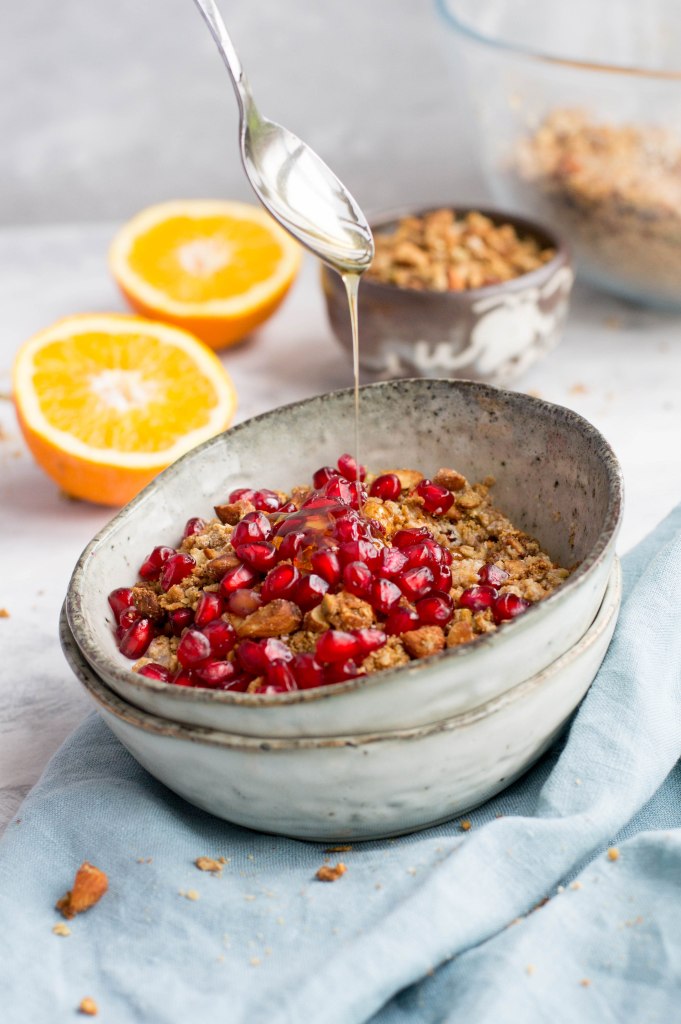
Have you ever read about liquid gold? It’s one of the common ways used to talk about ghee, one of the cornerstones of Ayurveda (Indian traditional medicine). The use of ghee for cooking, Ayurvedic treatments, or as part of ceremonies is well-established in the Indian culture (but also in other countries). The Sushruta Samhita, a compendium on medicine and an Ayurvedic classic text, talks about ghee claiming that’s beneficial for the whole body and associates its use as a remedy for issues related to the pitta dosha, such as inflammation.
But what is ghee and how does it differ from butter? Butter is an emulsion, it contains a fat component, water and milk proteins (emulsifiers). Ghee, also known as clarified butter, is obtained by heating the butter with separation of milk solids (casein, lactose): what remains is a golden liquid that will solidify when cool. The high heat applied to butter removes moisture. Chemically, ghee is a complex lipidic mixture made of glycerides, free fatty acids, phospholipids, sterols, sterol esters, fat-soluble vitamins, carbonyls, hydrocarbons, carotenoids (the quantity depends on the milk used), small amounts of casein and traces of minerals such as calcium or phosphorus. Approx. 98% of the ghee’s composition are glycerides, while sterols (mostly cholesterol) is usually the 2-5% of total material. Typically, ghee has a higher smoke point than butter (approx. 250°C vs 150°C), so it’s ideal for cooking at high temperature. Ghee as also the ability to give a unique flavour to preparations such as curry, dahl, soups, and it’s useful in baking.
- Obviously, ghee remains a fat source, so it should be considered in the total daily fat intake, used in limited amounts and appropriately (especially for people who suffer from high cholesterol or related diseases).
- If ghee is prepared properly, there should be just traces of casein and lactose so it can be suitable even for people who are dairy intolerant, unless a person is extremely sensitive (discuss with your GP if you have any concerns about allergic responses).
- Since moisture is largely removed, ghee is shelf-stable: you can store it in the fridge, but it’s safe even if you keep it outside in an airtight container. In India, aged ghee is considered to have even more healing properties than the freshly made one (even 100-years old ghee): it’s used externally for therapeutic treatments by Ayurvedic practitioners.
- Ghee contains vitamins such as A (that has an important role in different metabolic processes, assists in protein absorption and contributes in slowing the ageing process), E (with antioxidant properties), K (that stimulates bone growth/repair and plays a role in blood health).
- Ghee is rich in short, medium and long-chain fatty acids, both unsaturated and saturated. Ghee contains omega 3 and omega 9 essential fatty acids. It’s also one of the highest natural sources of CLA (conjugated linoleic acid), especially when made from organic butter and grass-fed cow’s milk. Ghee contains also phenolic antioxidants, good for the immune system.
- Traditionally, ghee has been used especially to aid digestion and for keeping connective tissues and joints healthy.
That’s interesting: a research group studied the antioxidant activities of orange peel extract in ghee stored at different temperatures. The study revealed that orange peel could be a good natural source of antioxidants which can be used in fat-rich food products like ghee to retard the process of oxidative deterioration.
How to prepare ghee?
Ghee is often available in health food stores, but you can make it at home easily. Use preferably organic and unsalted butter. Ghee can be made starting with different kind of milk (traditionally in India is made with buffalo’s milk).
Cut the butter into small cubes and place it in a saucepan over low heat until completely melted. Heat for about 10-15 min. You will notice the separation of white curds that will start to collect at the bottom of the pan. The melted butter will pass through different stages such as foam, bubbles, and then foam again: at this stage the ghee is ready. You should have a bright golden liquid and milk solids. Let it cool for few minutes and then filter the liquid through a cheesecloth. Allow to cool completely and solidify before closing the jar.

References:
Ghee: Its Chemistry, Processing and Technology
Ghee: An Ayurvedic and Biochemical Treatise
Would you like to start having a healthier diet and lifestyle, but also start building lifelong healthy habits? Need help to get started? Click on the button below: