Colour psychology in food branding: how to use colour to stand out on social media

If you’ve ever stopped scrolling because a food photo just felt “right,” chances are colour had something to do with it.

Colour is one of the first things people notice when they see your content. It can make a dish look more appetising, a brand feel more trustworthy, or a photo feel more energising or calm. And for food, drink, and wellness brands, it can make the difference between someone pausing to engage or scrolling straight past.

In this post, we’re digging into how colour psychology impacts the way your brand is perceived, and how you can use it to make your social media content more engaging and effective.

Why colour matters in food branding

In the food world, colour doesn’t just signal aesthetics. It shapes how people perceive flavour, quality, and even healthiness. For example:

  • Red is linked to appetite, energy, and urgency. Think fast food branding and bold product launches.
  • Green signals freshness, health, and natural ingredients. It’s widely used in wellness and plant-based brands.
  • Yellow grabs attention and adds a sense of warmth or joy. It’s often used in snack brands or casual dining.
  • Blue can evoke calm and trust, but it’s used sparingly in food because it’s not commonly found in natural ingredients.
  • Brown and earthy tones suggest wholesomeness, comfort, and simplicity (perfect for baked goods or organic-focused brands).

The key is using colour intentionally to reinforce the kind of experience or feeling you want your audience to associate with your brand.

The role of colour in social media content

When your audience is scrolling quickly, a strong visual identity can help them recognise your content immediately, even before they see your name. Consistent use of colour helps build that recognition over time.

But consistency doesn’t have to mean repetition.

You can weave your brand colours into:

  • Props and styling in your food or product photography
  • Clothing worn in lifestyle or founder portraits
  • Backdrops, surfaces, and textures in shoot setups
  • Graphics and templates for educational or storytelling posts

A clean, cohesive palette doesn’t just look good. It helps your brand feel considered and professional.

Using brand colours strategically

Your brand colours don’t need to appear in every piece of content. But they should show up enough to create visual consistency. Here are a few ideas:

  • Accent props: use napkins, plates, or utensils in your brand colours when shooting top-down or styled table scenes.
  • Packaging close-ups: frame your packaging in a setting that highlights the brand colour in the background.
  • Lifestyle shots: dress your team or models in your colour palette when doing behind-the-scenes or about-us photos.
  • Ingredient choices: when possible, lean into ingredients that echo your colour palette (like herbs for green or berries for rich purples).

You don’t need to overdo it — subtle repetition is more effective than trying to force colour into every frame.

When to use complementary colours instead

In some cases, your brand colours might not be the right fit for the mood or message of a particular post. That’s where complementary colours come in.

Let’s say your brand palette is mostly greens. Using a pop of pink, orange, or deep red in a food photo can create a strong contrast that draws attention while still working visually with your core branding.

A few tips:

  • Look at a colour wheel to find natural complements to your palette.
  • Use complementary colours in props or garnishes to make key elements stand out.
  • Balance bold contrasts with neutral backdrops to avoid clashing or chaos.

This technique is especially helpful if your feed is starting to feel too flat or muted. Adding variation through contrast can bring new energy to your visuals.

Colour psychology and your website

While social media might be your first touchpoint, your website is where potential customers go to learn more about your brand. That means your colour strategy needs to extend beyond Instagram.

On your website, colour can:

  • Guide attention: use bold colours for buttons or calls to action.
  • Support your story: background colours, product shots, and photography styling can reinforce your brand personality.
  • Set the tone: a wellness brand might use calming greens and neutrals, while a snack brand might go for energetic reds and oranges.

Make sure your social media content and website feel visually connected. If they don’t, you risk confusing potential customers.

When it’s okay to break the rules

There’s no one-size-fits-all approach to colour. While consistency and psychology matter, content still needs to feel fresh, relevant, and creatively inspired.

There are times when a seasonal campaign, product launch, or limited-edition item may call for something completely outside your usual palette. That’s okay.

Breaking the rules can work if it’s intentional — and if your core visual identity is strong enough that your audience still knows it’s you.

You can also use different colour strategies for different types of content. For example:

  • Stick to your palette for educational graphics or branded templates.
  • Use complementary or mood-based colours in lifestyle shoots.
  • Follow colour psychology cues for campaign-based or emotional storytelling content.

This kind of flexible consistency allows you to stay visually cohesive while still leaving room for experimentation.

Final thoughts

Colour is a tool — one that shapes how your audience sees, feels, and connects with your brand. For food, drink, and wellness businesses, that connection starts with the visuals.

To intentionally use a colour well, you just need to:

  • Know what your colours represent
  • Use them consistently in content styling and branding
  • Switch things up with complementary colours when it makes sense
  • Make sure your visuals reflect the story and values you want to communicate

Done right, your colour palette becomes more than just part of your logo. It becomes part of the experience.


Need help creating content that reflects your brand visually and strategically?

I work with food, drink, and wellness brands to create photos, videos, and content that connect with the right people. If you’re ready for visuals that actually feel like your brand, get in touch using the button below and let’s chat.

What is a social media strategy and why your food brand needs one

Social media is a powerful tool for food brands. It helps businesses connect with their audience, build brand awareness, and ultimately drive sales. But simply posting pretty pictures of your products isn’t enough. A strong social media strategy ensures your content is intentional, effective, and aligned with your business goals.

If you’ve been posting without a clear direction or struggling to see results, it might be time to rethink your approach. Here’s why a well-planned social media strategy is essential for your food brand — and how it can make a real impact.

What is a social media strategy?

A social media strategy is a plan that outlines how your brand will use social platforms to achieve specific goals. It includes everything from defining your audience to choosing the right content and measuring success.

Without a strategy, social media can feel like a guessing game. A well-structured plan helps ensure your efforts are focused and effective.

Why your food brand needs a social media strategy

  1. Builds brand awareness

The food industry is competitive, and standing out requires more than great products. A consistent, well-thought-out social media presence helps people recognise and remember your brand.

By sharing engaging content that reflects your brand’s personality — recipes, behind-the-scenes glimpses, and product highlights — you can create a connection with your audience and stay top of mind.

  1. Reaches the right audience

Not everyone on social media is your ideal customer. A strategy helps you define your target audience and tailor content to attract the right people. Instead of posting aimlessly, you can focus on what resonates with your ideal customers, whether it’s busy families looking for quick meals or health-conscious consumers interested in nutritious options.

  1. Boosts engagement and community growth

People don’t just follow food brands for product updates — they follow for inspiration, education, and entertainment. A strong social media strategy ensures your content encourages conversations, shares, and interactions.

Engaging with your audience through comments, polls, and interactive stories helps create a loyal community around your brand. This kind of engagement leads to more visibility and organic reach.

  1. Increases sales and conversions

A social media strategy isn’t just about likes and comments — it’s also about driving results. By strategically incorporating call-to-actions (CTAs) in your posts, you can guide followers to your website, online store, or physical location.

Effective strategies include sharing user-generated content, running promotions, and showcasing real-life use cases of your product to build trust and encourage purchases.

  1. Helps you stay consistent

One of the biggest mistakes food brands make is inconsistent posting. A strategy includes a content calendar, so you always know what to post and when. This keeps your brand active and relevant without the stress of scrambling for content at the last minute.

Consistency also applies to your brand’s voice and visuals. A well-defined strategy ensures that your posts, captions, and images reflect a cohesive brand identity.

  1. Keeps you adaptable and data-driven

Trends, algorithms, and consumer behaviours change constantly. A strategy isn’t just a one-time plan — it’s something you refine over time. By tracking key metrics (reach, engagement, conversions), you can adjust your approach based on what works and what doesn’t.

Key elements of a strong social media strategy

If you’re building a social media strategy for your food brand, here are the essential elements to include:

  1. Define your goals

What do you want to achieve? More brand awareness? Higher engagement? Increased sales? Setting clear, measurable goals helps guide your strategy and measure success.

  1. Know your audience

Who are your ideal customers? What are their interests, habits, and pain points? Understanding your audience helps you create content they actually care about.

  1. Choose the right platforms

Not every platform is right for every brand. Instagram and TikTok are great for visual content, while Pinterest is ideal for recipe sharing. Focus on the platforms where your audience is most active.

  1. Create a content plan

A mix of content types keeps your audience engaged. Your strategy should include:

  • High-quality images and videos
  • Engaging captions with clear messaging
  • A mix of educational, promotional, and entertaining posts
  • A posting schedule to stay consistent
  1. Optimise for SEO and engagement

Using relevant keywords in your captions, hashtags, and profile description can help your content reach more people. Engaging with your audience through comments and DMs also boosts visibility.

  1. Monitor performance and adjust

Tracking your analytics allows you to see what’s working and what needs improvement. Adjusting your strategy based on data ensures continuous growth.

Conclusion

A social media strategy is more than just a posting schedule — it’s a roadmap that helps your food brand connect with the right audience, grow your community, and drive results. By being intentional with your content, staying consistent, and adapting based on performance, you can turn social media into a powerful tool for your business.


If you’re feeling stuck or unsure about your next steps, I can help. Whether you need a strategy built from scratch or just a fresh perspective on what’s working, get in touch and let’s get your food brand moving in the right direction.

6 Food trends that will shape 2025

As a new year begins, it’s always interesting to think about what’s next in the food world. Trends don’t appear out of nowhere—they reflect how people eat, shop, and connect with food in their daily lives.

After years of working closely with food brands and developing recipes, I’ve noticed a few shifts that will likely take centre stage in 2025. From bold flavours to a growing focus on sustainability, here are the six food trends to watch in the coming year.

1) The Rise of Tea: Beyond Matcha

Matcha has been a go-to for years, but in 2025, other teas will step into the spotlight.

Oolong, pu-erh, and rooibos are gaining popularity—not just as drinks but as key ingredients in creative recipes. Think smoky oolong broths, tea-infused desserts, and complex, full-bodied brews served in restaurants and cafes. More menus will highlight these teas, giving them the space they deserve alongside coffee and cocktails.

For tea lovers, this shift means more variety and more chances to explore new flavours.

2) Smarter Ways to Reduce Food Waste

Food waste has been a long-standing issue, but in 2025, more home cooks and businesses will take practical steps to cut down on unnecessary waste.

Expect to see:

  • More recipes that highlight leftovers—like bread puddings, frittatas, and soups that make the most of what’s on hand.
  • Smarter storage solutions to extend the life of ingredients.
  • A push for products that help reduce waste, from upcycled snacks to meal kits designed with minimal packaging.

Reducing waste is becoming less about guilt and more about empowering people to get creative with what they have—which is a shift worth celebrating.

3) Spicy + Citrus

One of the most exciting flavour trends for 2025? The combination of heat and citrus.

Pairing tangy lime with smoky chilli, or bright yuzu with a punch of habanero, brings a bold and vibrant twist to dishes. This mix will show up in:

  • Hot sauces and condiments
  • Marinades and dressings
  • Cocktails and even ice cream

It’s a fresh, lively way to add depth to food, and it’s bound to be everywhere soon.

4) Cooking Together at Home

Cooking at home isn’t slowing down, but there’s a shift happening: more people are seeing it as a shared experience rather than just a daily task.

In 2025, we’ll see more families, friends, and couples cooking together—not just for special occasions but as a way to spend time together. From making pasta from scratch to baking a weekend dessert, food is becoming a way to connect, learn, and enjoy the process as much as the final meal.

This trend also ties into the growing interest in cooking skills—people are looking to improve their techniques and gain confidence in the kitchen.

5) Sour Flavours Take the Spotlight

Sour will be the flavour of the year in 2025.

Beyond the usual pickles and citrus, expect to see:

  • Tamarind and green mango in savoury dishes
  • Sour cherries in sweet and savoury dishes
  • Fermented fruits adding complexity to drinks and desserts
  • More sourdough-based sweets and baked goods
  • Tangy dressings and sauces bringing brightness to meals

Sour flavours add depth and balance to dishes, making them exciting for both home cooks and chefs experimenting with bold new recipes.

6) Bread is Here to Stay

Sourdough, focaccia, and homemade pizza had a resurgence—and that’s not changing anytime soon.

Bread baking is still going strong, with more people experimenting with:

Heritage grains for deeper flavour and nutrition
Flavoured focaccia with toppings like roasted garlic, herbs, and even fruit
Stuffed sourdough loaves
Creative pizza recipes that push boundaries

The process of making bread is deeply satisfying, and 2025 will bring even more innovation to this classic staple.

What Should We Leave Behind?

One trend that should fade away in 2025? Clickbait food content that leads to unnecessary waste.

Over-the-top, impractical recipes created for views (rather than for actual enjoyment) often result in wasted ingredients. Instead, it would be great to see more content that inspires creativity while being useful and accessible.

Final Thoughts

Food trends come and go, but the ones shaping 2025 are about flavour, connection, and sustainability. Whether it’s the rise of tea, smarter ways to reduce waste, or the continued love for homemade bread, these trends reflect how people are choosing to eat and cook.

For food brands, restaurants, and content creators, the key is knowing how to tap into these shifts in a way that makes sense for their audience.


If you want to bring fresh, strategic content to your brand in 2025 — through photography, recipes, or social media strategy — I’d love to help.

Want to chat about what that could look like for your brand? Get in touch and let’s make your content work for the year ahead.

Social media trends shaping 2025: what to expect this year

Social media is always evolving, and 2025 is set to bring big shifts in how brands connect with their audience. From stronger communities to platform-specific strategies, the focus this year is on meaningful interactions, authenticity, and creative freedom.

Based on my experience working in marketing, photography, and content creation—along with research and insights from the past year—these are the top social media trends that will shape 2025.

If you’re looking to refine your social media strategy, here’s what to keep in mind.

1) Community Will Matter More Than Ever

Social media has always been about connection, but in 2025, brands will put even more emphasis on building strong communities rather than chasing high follower counts.

People want to engage with brands that listen, respond, and create real conversations. Successful businesses will focus on:

  • Encouraging discussions through comments and DMs
  • Creating exclusive groups or spaces for their audience
  • Prioritising loyal followers over viral moments

A strong community fosters trust and long-term engagement—something algorithms can’t measure but customers value.

2) Employee-Generated Content (EGC) Will Grow

Your team might be your best brand ambassadors. Employee-generated content (EGC) is becoming a key part of social media strategies because it feels genuine, relatable, and trustworthy.

Instead of relying only on polished marketing campaigns, brands are turning to their employees to share:

  • Behind-the-scenes moments
  • Day-to-day experiences with the product or service
  • Insights into company culture

Encouraging EGC doesn’t mean forcing employees to post—it’s about creating an environment where they feel comfortable sharing their experiences in an authentic way.

3) Experimentation Will Be Key

Trends change fast, but a brand’s core message should stay true. In 2025, more businesses will experiment with:

  • New platforms (Is Threads still relevant? Will another platform take off?)
  • Different content formats (short videos, long-form storytelling, interactive posts)
  • Refining their messaging (testing different tones, angles, and creative styles)

Instead of sticking to a rigid content plan, brands will stay flexible, try new things, and adjust based on what resonates with their audience.

4) Content Strategies Will Be More Platform-Specific

For years, brands have taken one piece of content and shared it everywhere. That approach isn’t working as well anymore. In 2025, brands will focus on tailoring content for each platform instead of stretching one idea across multiple channels.

What works on Instagram might not work on LinkedIn. What resonates on TikTok might not make sense for Pinterest. Instead of being everywhere, brands will prioritise where their audience is most engaged and create content that fits each platform’s strengths.

5) Less Corporate, More Creative Freedom

People connect with brands that sound human. The overly polished, corporate tone is fading, and brands are leaning into clear, relatable, and engaging messaging.

Expect to see:

  • Less jargon and buzzwords
  • More direct, meaningful storytelling
  • A conversational approach that aligns with the audience’s values

The goal is to communicate with personality and purpose—without unnecessary barriers.

6) Short-Format Video Will Stay Strong

Short-form video isn’t going anywhere. Instagram Reels, TikTok, and YouTube Shorts will continue to dominate in 2025. But instead of relying on flashy edits, storytelling will take centre stage.

Brands that stand out will use short videos to:

  • Show their process behind the scenes
  • Share quick tips or insights
  • Communicate their values in a creative way

The key isn’t just posting more videos—it’s making sure each one adds value, tells a story, or sparks engagement.

7) Photography Is Making a Comeback

For years, video has been the top priority, but great photography is regaining attention. A single well-composed image can tell a story in a way that a fast-moving video sometimes can’t.

In 2025, expect brands to focus more on:

  • High-quality imagery that captures emotions and details
  • Photos that feel natural rather than overly staged
  • A mix of both video and photography to create a balanced content strategy

Photos pause the scroll, invite reflection, and often hold a longer-lasting impact. They’re not replacing video, but they’re proving to be just as powerful when done well.

Final Thoughts: How to Make These Trends Work for You

These trends aren’t just predictions—they’re shifts that are already happening. The brands that succeed in 2025 will be the ones that focus on real connections, experiment with new approaches, and create content that truly resonates.

For businesses that don’t have the time or resources to keep up, working with a strategic content creator can help:

  • Plan content that aligns with your brand goals and audience preferences
  • Capture high-quality visuals that stand out in a crowded feed
  • Develop a balanced strategy that includes community-building, storytelling, and platform-specific content

Need help refining your brand’s strategy for 2025? Get in touch and let’s create something that works for your audience.

Soft cocoa burger buns

Want to step up your homemade burger game without having to compromise on fluffy bread? This recipe is for you. These delicious soft cocoa burgers buns will easily become one of your favourite baking projects.

Working with new ingredients and different cooking techniques is part of my everyday job and something I love doing because allows me to put my chemistry hat on in order to find out what is really going on in a recipe. That’s why doing all the testing (and taste-testing) required for these cocoa brioche buns has been quite an enjoyable experience for me. It all started a couple of years ago while I was working on my recipe for classic soft burger buns: I wanted to create something different for some photos I was working on, so I tried to add cocoa to my existing bread recipe. After a couple of attempts, I had a recipe that worked well but I knew it was far away from being what I wanted. Due to lack of interest and being busy with work, I ended up forgetting about it.

Soft cocoa brioche burger buns
Crumb shot of cocoa bread

A few weeks ago, I made a deliciously decadent chocolate cake for my boyfriend’s birthday and the idea of cocoa bread popped right back into my mind. I found my old notes forgotten in the middle of a notebook and started planning a route to develop my recipe for the most delicious fluffy cocoa burger buns.

The previous buns were a bit dry, couldn’t hold their texture for longer than a day and, in terms of flavour, they were closer to rye bread than cocoa buns. They also didn’t have the right texture for getting that perfect burger bite. I know you can use many kinds of bread for burgers but here we are talking about soft brioche-style buns, so they had to tick all the boxes.

Thankfully, there is a kind of bread that I learned to master in the past couple of years: Japanese milk bread (also known as Hokkaido milk bread or Shokupan). This bread is famous for its softness and pillowy texture and it’s made using the Yudane method. The secret behind this soft bread is called Tangzhong: a simple roux-like paste made using a combination of water or milk and flour cooked until the starches in the flour gelatinize and the paste thickens. In this way, you are adding a gel into the dough that helps to retain moisture inside the cooked bread but you are also inhibiting some of the gluten from forming: the result is a bread that is extremely soft and lasts for longer compared to regular loaves.

Introducing the use of Tangzhong into my recipe for cocoa burger buns has been the first change I made (having already tried this technique for the classic buns). Then I worked on both ingredients and raising/baking times to get a final result I was happy with. All this recipe development work now allows me to share with you some useful details about substitutions and consequent changes in texture and flavour profile.

Here’s the ingredients list for these delicious soft cocoa burger buns:

  • bread flour
  • eggs
  • butter
  • yogurt
  • cocoa powder
  • sugar
  • coffee
  • water
  • milk
  • dry yeast
  • olive oil
  • sesame seeds
  • salt

As you can see, this recipe calls for both milk and water but there are some substitutions you can make on this point and they all work well.

  • Using milk and water is the best choice in terms of texture. Milk is the liquid part in the roux-like paste mentioned before, while water is one of the liquid ingredients used in the dough. These buns tend to last longer comparer to others.
  • You can substitute water in the dough with stout beer to get a more flavourful result. These buns have a slightly bitter finish and they are fluffy and moist but the texture tends to change after a day. They also tend to turn out a bit more flat than the others.
  • Another good alternative for water in this recipe is non-dairy milk (hazelnut, almond or cashew milk are the best choices). In this case, you can use a plant-based drink to substitute both water and milk. This new ingredient affects the flavour profile of the buns giving them a delicate nutty finish. The texture is a bit more dry compared to buns made with water and milk.

These might seems small details to you but it’s just another proof of how each ingredient has a different effect on the final result and this is due to their chemical composition and role in the recipe. You can find more information about baking and food chemistry in my recipe for classic burger buns.

Dough for cocoa bread in a bowl
Uncooked cocoa buns with sesame seeds on top
Cooked cocoa burger buns on a baking tray

Soft cocoa burger buns

Ingredients – dough:

  • 180 g strong bread flour
  • 1 large egg (approx. 50-55 g)*
  • 35 g plain unsweetened yogurt
  • 20 g butter, softened
  • 20 ml water (or stout beer/non-dairy milk)
  • 15 g granulated sugar
  • 15 g unsweetened cocoa powder
  • 10 ml coffee (espresso or coffee made with a Moka pot)
  • 1 tbsp milk (for the final egg wash)
  • 2 tsp sesame seeds (optional)
  • 8 ml olive oil
  • 4 g quick dry yeast (instant)
  • 3 g salt

*I separate from this amount approx. 1 tsp of egg and keep it in the fridge for the final egg wash.

Ingredients – Tangzhong:

  • 50 ml milk (or non-dairy milk/water)
  • 15 g strong bread flour

Method:

  • To make the Tangzhong, combine milk and flour together in a small pot over medium-low heat. Whisk constantly until the mix becomes a paste; you’ll easily notice this change. Use a hand whisk to avoid lumps. Allow the paste to cool down: combine it with the other ingredients when it will be at room temperature.
  • Place the yeast and warm coffee in a large bowl (the coffee should be slightly warm not hot). Mix and set aside for 5 minutes.
  • Add half of the total amount of water (or stout beer/non-dairy milk, as suggested in the introduction written above), the yogurt, sugar, egg, softened butter (at room temperature) and cocoa powder. Mix well with a hand whisk.
  • Now you can add the Tangzhong to the same bowl. Mix well then start adding the flour. Towards the end, check your dough and add the remaining amount of water. Use a bit of olive oil to help you knead the dough. The exact amount of flour and water you need depends on the kind of flour, temperature and experience you have in kneading a dough by hand. You can totally make these buns using a stand mixer or food processor, too.
  • Knead the mixture for approx. 5 minutes until you get a soft and smooth dough. Drizzle a bit of olive oil all over the dough and allow it to rise in a bowl covered with a clean kitchen towel or a reusable wrap. This step will take approx. 1-1.5 hours, depending on the temperature of the room.
  • Once the dough has doubled in size, divide it into 4-5 equal pieces. Each bun could weigh around 90-105 g but you can adjust the size according to your preferences. Roll each piece of dough with your hands to get a perfectly round ball. Ensuring the bottom of your buns is shaped properly will help you in getting a better looking cooked bread. Place the buns on a baking tray lined with a reusable mat or parchment paper and ensure there’s enough room between them. Gently press down a little the top of each bun (skip this step if you are using beer in the dough).
  • Cover the buns with a clean kitchen towel, then let them rise for approx. 45 minutes, until doubled in size. Gently brush the buns with the egg wash (approx. 1 teaspoon of egg + 1 tablespoon of milk), sprinkle some sesame seeds on top and bake in a preheated oven at 180°C for approx. 16-18 minutes.
  • These burger buns will keep well for up to 3 days but you could also freeze them.
A burger bun made with cocoa powder, more buns in a bowl in the background

If you liked this post, share it with your friends using the buttons below.

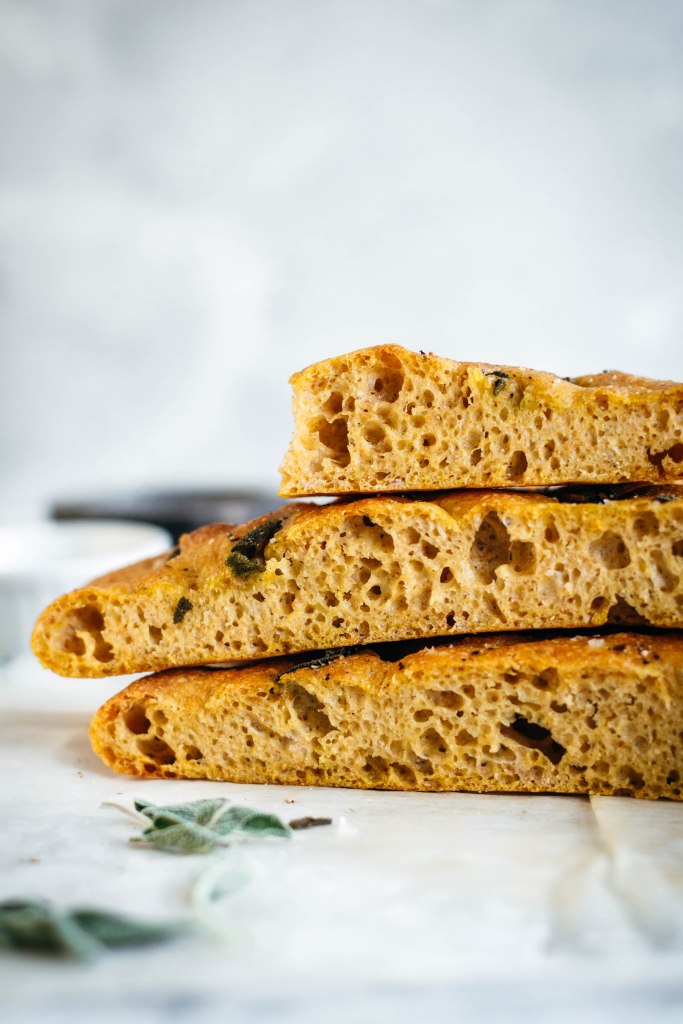
Focaccia morbida alla zucca

(read in English)

Ottima anche se mangiata così com’è, questa focaccia vegana alla zucca è morbidissima e, grazie al suo sapore dolce che ricorda un po’ la frutta secca, potrebbe facilmente diventare una delle tue ricette preferite!

Delicious even when eaten on its own, this soft vegan pumpkin focaccia has a sweet finish and a pillowy texture, that may help this one to easily become one of your favourite recipes!

Una fetta di questa focaccia alla zucca è l’alternativa perfetta al pane per preparare un panino, ma starebbe benissimo anche in un tagliere per l’aperitivo. Il suo sapore un po’ particolare si sposa molto bene con l’hummus, il formaggio, la rucola e l’insalata in generale, ma ci sono tante altre combinazioni che potrebbero rivelarsi davvero delle ottime scelte.

Quando si decide di aggiungere un ingrediente diverso dal solito nel pane o nella focaccia, alle volte non si ottiene un buon risultato fin da subito; proprio per questo motivo è importante capire come modificare una ricetta sulla base dell’effetto che avrà l’introduzione di una nuova variabile. La zucca, ad esempio, ti consentirà di sfornare una focaccia con un bel colore e dal sapore davvero unico, ma può anche risultare una scelta un po’ difficile da gestire ed è facile finire con un risultato con un’interno denso ed una consistenza troppo molle.

In questo post ti spiego come preparare una focaccia vegana alla zucca usando ingredienti di facile reperibilità ed un po’ di pazienza. Il rapporto tra farina e zucca arrostita, i tempi di lievitazione lunghi e una particolare combinazione di ingredienti sono ciò che ti aiuterà a preparare questa focaccia senza problemi anche se non hai molta esperienza in questo campo. Non c’è assolutamente nulla di complicato in questa ricetta e può essere una buona scusa per provare a cucinare qualcosa di diverso dal classico pane; se vuoi leggere qualcosa di più sulla chimica dietro gli impasti lievitati, puoi dare un’occhiata al mio post sui panini per burger.

Domande frequenti riguardo questa focaccia alla zucca:

  • Perchè usi l’amido di mais? L’utilizzo della zucca rende quest’impasto abbastanza diverso da uno più classico. L’amido di mais consente di bilanciare l’effetto di questa nuova variabile in un modo simile a quello delle uova: infatti, è d’aiuto per la struttura del prodotto finale, che risulta così bene lievitato ed areato. Ho deciso di optare per l’amido di mais per creare una ricetta vegana. Ricorda che l’amido e la farina di mais sono due cose diverse; infatti, potresti sostituire l’amido di mais con quello di patate, ma non con la farina.
  • Non ho un frullatore, posso preparare comunque questa ricetta? Certo! Schiaccia la zucca cotta in una ciotola con una forchetta prima di aggiungerla agli altri ingredienti. Il risultato sarà meno omogeneo, ma comunque ottimo.
  • Che tipo di zucca devo utilizzare? Puoi preparare questa focaccia con una zucca tipo “butternut squash” o qualsiasi altro tipo, esclusa quella chiara dall’interno filamentoso (spesso chiamata “spaghetti squash”).
  • Posso accorciare i tempi della ricetta? La preparazione di per sè non richiede molto tempo, ma l’impasto deve riposare per poter ottenere una focaccia morbida, ben lievitata ed areata. Puoi adattare le tempistiche alle tue necessità come indicato nella ricetta, ma non ti consiglio di cambiarle completamente; non otterresti un risultato soddisfacente facendo tutto nel giro di un paio d’ore.
  • Posso usare un tipo di farina diverso? Sì, puoi scegliere di utilizzare una farina diversa o una combinazione differente di quelle già incluse tra gli ingredienti; ricorda semplicemente che avrai probabilmente bisogno di una quantità di acqua diversa. Non ho ancora ottimizzato una versione senza glutine di questa ricetta, quindi, per essere sicura che la focaccia venga bene, ti consiglio di usare una farina con glutine.
  • Posso usare solo farina integrale? In questa ricetta la farina integrale è utilizzata sia per il suo contenuto di nutrienti, sia per una questione di sapore; puoi decidere di usare solo questo tipo di farina, ma ricorda che dovrai adattare la quantità di acqua di conseguenza e che la struttura della focaccia sarà un po’ diversa (solitamente è un po’ meno areata, ma comunque morbida, a patto che l’impasto sia ben idratato e le tempistiche per la lievitazione siano lunghe).
  • Perchè usi la farina da pane? Quando preparo la focaccia o il pane, se posso, preferisco usare almeno una parte di farina da pane. Questo tipo di farina ha un contenuto leggermente più alto di proteine rispetto a quella classica. In commercio si trova sia la versione bianca che quella integrale: in questa ricetta ho utilizzato una combinazione di entrambe per ottenere un risultato ottimale, ma potresti anche usare una parte di farina di pane ed una di quella normale.
Delicious even when eaten on its own, this soft vegan pumpkin focaccia has a sweet finish and a pillowy texture, that may help this one to easily become one of your favourite recipes!

Focaccia morbida alla zucca

INGREDIENTI:

  • per il lievitino: 130 g di farina da pane integrale, 150 g di acqua, 3 g di lievito secco istantaneo
  • 200 g di farina bianca da pane*
  • 150 g di zucca cotta al forno
  • 20 g di amido di mais
  • 3 g di lievito secco istantaneo
  • 100 ml di acqua
  • 2-3 cucchiai di olio extra vergine d’oliva
  • 1/3 di cucchiaino di sale
  • Opzionale, da aggiungere sopra: olio extra vergine d’oliva, salvia fresca, un pizzico di sale

*Per darti un’idea, se confronto una farina bianca normale ed una da pane della stessa marca, rispettivamente hanno 10 g e 12.6 g di proteine (anche la quantità di carboidrati è ovviamente diversa, risulta più bassa in quella da pane).

PREPARAZIONE

  1. Per preparare il lievitino: mischia gli ingredienti e lascia riposare il tutto in una ciotola coperta con un canovaccio da cucina pulito o un involucro riutilizzabile (come quelli fatti con cera d’api) per almeno 1 ora (fino a 3).
  2. Frulla la zucca con l’acqua finchè non ottieni un purea omogenea.
  3. Prendi il lievitino (che a questo punto dovrebbe essere ricoperto di bolle in superficie) e mischialo con gli altri ingredienti (olio d’oliva escluso). Potrebbe essere d’aiuto utilizzare un colino per l’amido di mais.
  4. Inizia ad impastare, inizialmente con un cucchiaio, poi con le mani, controllando l’impasto passo dopo passo (potresti dover usare una quantità di acqua o farina diversa, in base agli ingredienti che usi ed alla tua esperienza nell’impastare a mano). Aggiungi l’olio d’oliva in 2-3 volte giusto quando l’impasto sarà quasi pronto.
  5. Lavora l’impasto per circa 5 minuti finchè non sarà morbido e liscio; lascialo lievitare in una ciotola (con un filo d’olio d’oliva) coperta con un canovaccio da cucina pulito o un involucro riutilizzabile (come quelli fatti con cera d’api) per circa 1-1.5 ore.
  6. Quando l’impasto sarà raddoppiato, piegalo su se stesso, poi copri bene la ciotola e riponila in frigorifero per almeno 8 ore (fino a 12).
  7. Rimuovi la ciotola dal frigo, piega l’impasto su se stesso e spostalo su una teglia da forno rivestita con un tappetino in silicone riutilizzabile o con carta forno. Servirá un po’ di tempo all’impasto per ritornare a temperatura ambiente (1 o anche 2 ore, in base alla temperatura della stanza): durante questo tempo, aggiungi un filo d’olio d’oliva sulla focaccia e, in un paio di passaggi, inizia a dare all’impasto la forma desiderata (è importante evitare che si formi una crosticina sulla superficie dell’impasto, quindi copri la teglia con un canovaccio da cucina pulito o, a patto che sia ben chiuso, mettila scoperta all’interno del forno spento). Noterai la formazione di bolle d’aria sulla superficie della focaccia quando la tocchi per stenderla. Questo è anche il momento giusto per aggiungere la salvia fresca ed un pizzico di sale.
  8. Cuoci la focaccia in forno preriscaldato a 180°C per circa 20-25 minuti finchè non sará dorata in superficie e ben cotta all’interno (il tempo di cottura vara in base allo spessore della focaccia).

Se questo post ti è piaciuto, condividilo con i tuoi amici usando i link qui sotto. Non dimenticare di taggarmi @amatterofnourishment su Instagram se provi questa ricetta: mi piacerebbe molto vedere le tue creazioni!

Soft pumpkin focaccia

(read in Italian)

Delicious even when eaten on its own, this soft vegan pumpkin focaccia has a sweet finish and a pillowy texture, that may help this preparation to easily become one of your favourite recipes!

Delicious even when eaten on its own, this soft vegan pumpkin focaccia has a sweet finish and a pillowy texture, that may help this one to easily become one of your favourite recipes!

A piece of homemade pumpkin focaccia is the perfect alternative to bread for a tasty sandwich or a great addition to any appetizer or snack board. It’s characteristic nutty flavour pairs really well with hummus, cheese, rocket or salad leaves but there are so many other combinations that could work well, too.

When you decide to add one extra ingredient into bread or focaccia, sometimes the result doesn’t turn out great from the beginning; that’s why it’s important to understand how to change a recipe based on the effect of that new variable. Pumpkin, for example, will make a delicious, sweet and beautiful coloured focaccia but, it can also be tricky to use and it’s easy to get a soggy result with a way too dense texture.

In this post, I show you how to make a soft vegan pumpkin focaccia using simple ingredients and a bit of patience. The ratio between flour and roasted pumpkin, the long leavening time and the combination of ingredients will help you to successfully make this focaccia even if you don’t have much experience in baking. There’s absolutely nothing complicated about this recipe and it can be a good chance to try baking something different from regular bread; if you want to learn something more about the chemistry behind baking, you can find more info in my post about burger buns.

Common questions about this focaccia with pumpkin:

  • Why do you add cornstarch? The use of pumpkin makes this focaccia quite different from a classic one. Cornstarch allows me to counter-balance the effect of this extra ingredient in a similar way eggs would do: it helps with the structure of the final product, that is indeed well-leavened and aerated. I decided to opt for cornstarch to keep the recipe vegan. Remember than cornstarch is not the same thing as corn flour or cornmeal; while you could swap cornstarch with potato starch, the different corn-based products are not interchangeable.
  • I don’t have a blender, can I make this recipe anyway? Absolutely! Just mash well the cooked pumpkin with a fork before mixing it with the other ingredients. The result would be less homogeneous but still delicious.
  • What kind of pumpkin should I use? You can make this vegan focaccia using butternut squash or another kind of pumpkin or squash like Delicata, Hokkaido or Kabocha (due to its particular texture, the only kind I would avoid is the one called “spaghetti squash”).
  • Can I shorten the preparation time? The preparation itself doesn’t take too much time but the dough needs to rest in order to get a focaccia with a more soft and aerated texture. You can adapt some of the timings to your needs as written in the recipe below but I don’t recommend you to change them completely; you won’t get a great result by doing everything in a couple of hours.
  • Can I use a different flour? Yes, you can use a different flour or a different combination of those already included in the ingredients’ list; just remember that you’ll probably need a different amount of water. I haven’t optimised a gluten-free version of this recipe yet, so, to ensure you’ll get a good result, I recommend you to use a flour with gluten.
  • Can I use just whole grain flour? In this recipe, whole grain flour is used both for its nutritional value and for a matter of taste; you can decide to use just this kind of flour but keep in mind that you’ll need to adapt the amount of water used in the preparation and that the texture of the baked focaccia will be different (usually less aerated but still soft if the dough was well-hydrated and the timeframe for the leavening process is long).
  • Why do you use bread flour? To make focaccia or bread, I prefer to choose bread flour if available. This kind of flour has a slightly higher protein content compared to the classic all-purpose flour. You can find both the white and whole grain version of it: in this recipe, I use a combination of these two ingredients for an optimal result but you could also pair one part of bread flour and one part of the regular one.
Delicious even when eaten on its own, this soft vegan pumpkin focaccia has a sweet finish and a pillowy texture, that may help this one to easily become one of your favourite recipes!

Soft pumpkin focaccia

INGREDIENTS:

  • for the starter: 130 g whole wheat bread flour, 150 ml water, 3 g quick dry yeast (instant)
  • 200 g white bread flour*
  • 150 g roasted pumpkin
  • 20 g cornstarch
  • 3 g quick dry yeast (instant)
  • 100 ml water
  • 2-3 tbsp extra virgin olive oil
  • 1/3 tsp salt
  • optional, to add on top: extra virgin olive oil, fresh sage, a pinch of salt

*To give you an idea, if I compare white all-purpose flour and bread flour from the same brand, they have 10 g and 12.6 g of protein respectively (they also have a different amount of carbohydrates, that’s higher for the all-purpose flour).

METHOD:

  1. To make the starter: mix the ingredients and allow everything to rest in a bowl covered with a clean kitchen towel or a reusable wrap for at least 1 hour (up to 3).
  2. Blend the roasted pumpkin with the water until you get a smooth result.
  3. Take your starter (that should have some bubbles on top at this stage) and mix it with all the other ingredients (apart from the olive oil). It may be useful to use a sifter or a fine-mesh sieve for the cornstarch.
  4. Start mixing the dough with a spoon at the begin and with your hands later on: check the dough step by step (you may require a slightly different amount of water or flour, depending on your ingredients and kneading experience). Add the olive oil in portions just when the dough will be almost ready.
  5. Knead the mixture for approx. 5 minutes until you get a soft and smooth dough: allow it to rise in a bowl (with a bit of olive oil) covered with a clean kitchen towel or a reusable wrap. This step will take approx. 1-1.5 hours, depending on the temperature of the room.
  6. Once the dough has doubled in size, fold the dough on itself, then cover well the bowl and place it to rest in the fridge for at least 8 hours (up to 12).
  7. Take the bowl out from the fridge, fold the dough on itself and transfer it on a baking sheet lined with a reusable mat or parchment paper. It takes a while for the dough to warm up completely (1-2 hours, depending on the temperature of the room): during this time, add some olive oil on top of your focaccia and gently stretch the dough a couple of times, until you get the desired shape (also, keep the baking sheet covered with a clean kitchen towel to prevent the dough from drying; you could also do this step in a well-closed oven leaving the baking tray uncovered). You’ll notice the formation of bubbles on the surface of your dough when you touch it. This is also the right time to add the sage leaves and a pinch of salt.
  8. Bake your pumpkin focaccia in a preheated oven at 180°C for approx. 20-25 minutes until it’s golden on top and cooked through with a firm bottom crust (the baking time will be different based on the thickness of the focaccia).

If you liked this post, share it with your friends using the buttons below! Don’t forget to tag me @amatterofnourishment on Instagram if you try this recipe: I’d love to see your creations!

Tagliatelle al cacao fatte in casa

(read in English)

La pasta fatta in casa è un piatto veramente speciale e, per essere davvero buona, necessita di un po’ di pratica: queste tagliatelle al cacao sono un modo perfetto per affinare le tue capacità accompagnando un formato di pasta classico e semplice con il sapore ricco (e particolarissimo) del cacao in polvere. Questa pasta fresca all’uovo è ottima servita con formaggio fuso e spezie: ti sorprenderà con il suo sapore e, per questo, non ha bisogno di sughi che ne coprano troppo le caratteristiche.

Fresh pasta is a labour of love and great pasta needs practice: these homemade cocoa tagliatelle are a wonderful way to step-up your pasta game pairing a very basic shape with cocoa powder and its characteristic flavours and colour. Delicious when served with melted cheese and spices, this fresh pasta with cocoa will definitely surprise you with its special taste.

Capisco benissimo che preparare la pasta in casa sia un qualcosa in cui non tutti vogliono cimentarsi. Per molte persone, però, il problema non è la mancanza di voglia, bensì il pensiero di tutti gli utensili ed ingredienti particolari che servono per preparare la pasta fresca: se anche tu fai parte di questo gruppo, mi fa piacere dirti che, in realtà, le cose più importanti di cui avrai bisogno sono pratica ed impegno. Sebbene non raccomanderei questa ricetta col cacao a qualcuno che non ha mai provato a fare la pasta in casa, non mi sembra neanche giusto scoraggiare qualcuno che volesse cimentarsi con una bella sfida fin dall’inizio! Dunque, quali sono le differenze principali tra questa ricetta e la pasta classica? Come gestirle?

I miei consigli per aiutarti con questa ricetta:

  • Prepara l’impasto a mano: io sono abituata ad impastare tutto a mano e penso che sia il modo migliore per imparare. Preparare il tuo impasto a mano ti permette di capire meglio come cambia la consistenza, come aumenta l’elasticità e se hai bisogno di più farina o se ne hai già aggiunta fin troppa. Il cacao in polvere influisce sulla consistenza dell’impasto, quindi è ancora più importante poterne controllare la consistenza passo dopo passo.
  • Non aggiungere troppa farina: pensare che sia sempre meglio aggiungere più farina è un errore piuttosto comune quando si prepara la sfoglia. L’esperienza, però, mi insegna che non è così: ciò di cui hai bisogno è soltanto la quantità giusta di farina per non far attaccare l’impasto al piano di lavoro o al mattarello. Nel caso in cui dovessi aver bisogno di molta farina in questo passaggio, vorrebbe dire che probabilmente è stato commesso un errore in precedenza; di solito il motivo è l’aggiunta di troppi ingredienti liquidi o un impasto non lavorato abbastanza bene. In questa ricetta è presente il cacao in polvere (che ha un piccolo contenuto d’acqua e di grassi), quindi l’impasto tende ad essere un pochino più appiccicoso: è una nota utile e da tenere a mente, ma niente che renda impossibile la preparazione della pasta.
  • Un pochino d’olio d’oliva è utile: quando si parla di pasta fatta in casa, ognuno ha le sue preferenze ed i suoi trucchetti. Ho scoperto che un pochino d’olio d’oliva è piuttosto utile in questa ricetta con il cacao, perchè aiuta ad ottenere la consistenza giusta e l’impasto risulta diverso anche quando si stende la sfoglia.

Una nota a margine: non tutto il cacao in polvere ha le stesse caratteristiche!

Tra le tante specifiche che rendono ogni cacao il polvere unico, ci sono un paio di fattori che sono di particolare interesse per questa ricetta.

Fresh pasta is a labour of love and great pasta needs practice: these homemade cocoa tagliatelle are a wonderful way to step-up your pasta game pairing a very basic shape with cocoa powder and its characteristic flavours and colour. Delicious when served with melted cheese and spices, this fresh pasta with cocoa will definitely surprise you with its special taste.

Tagliatelle al cacao fatte in casa

Ingredienti (per 2 porzioni piccole):

  • 90 g farina (puoi usare sia la 0 che la 00)
  • 5 g cacao in polvere (puoi usare fino a 7 g di cacao per ottenere una colorazione più intensa)
  • 1 uovo
  • 2 cucchiaini di olio extra vergine d’oliva
  • opzionale: 1 cucchiaino di caffè (freddo)*

*usa qualcosa di concentrato come un espresso o un caffè fatto con la moka

Prepara la farina ed il cacao in una ciotola o su un tagliare, poi crea una conca al centro ed aggiungi l’uovo al suo interno. Utilizza una forchetta per sbattere l’uovo ed iniziare ad incorporare la farina. Continua a mischiare il tutto con le mani, poi aggiungi l’olio ed impasta per 5-10 minuti, finchè non avrai un risultato liscio ed elastico: ci potrebbe volere un po’ di tempo, ma riuscirai a capire facilmente i vari cambiamenti di consistenza e noterai quando sarà pronto. Copri l’impasto con della pellicola o un panno riutilizzabile e lascialo riposare in un posto fresco per 15-20 minuti circa.

Ora è il momento di stendere la sfoglia: dividi l’impasto in 2 parti e tieni sempre coperta quella che non stai utilizzando, altrimenti diventerà troppo secca. Puoi assolutamente preparare queste tagliatelle senza la macchina da pasta, utilizzando solo un mattarello: cospargi con un po’ di farina il piano di lavoro, poi inizia a stendere l’impasto preparando una sfoglia larga e sottile. Con il mattarello sarà più difficile ottenere delle forme rettangolari perfette, ma puoi comunque preparare facilmente la pasta e le tagliatelle verrano dello spessore e della lunghezza giuste in ogni caso (presta attenzione a ciò che stai facendo ed a come tagli la sfoglia).

Quando si usa la macchina per la pasta, solitamente si parte con le impostazioni più larghe e poi si procede in avanti da lì, ripassando l’impasto nella macchina varie volte. Questi passaggi aiutano anche a creare la superficie ruvida della pasta (quella che si sposa perfettamente con un bel sugo!) ed è per questo che mi piace fare qualcosa di simile anche quando la preparo a mano: è un passaggio in più e del tutto opzionale.

Prepara la sfoglia dello spessore che preferisci, cospargila con un po’ di farina e taglia le varie sezioni necessarie per le tagliatelle: vuoi creare dei lunghi rettangoli di pasta, che poi arrotolerai delicatamente su sè stessi. Utilizzando un coltello, taglia trasversalmente la pasta: prima di cuocere le tagliatelle, lasciale riposare per 30 minuti circa su una superficie leggermente infarinata o su un apposito essiccatore oppure prepare i classici nidi. Se non le usi subito, puoi conservarle in frigo per un paio di giorno (ma sono decisamente più buone quando vengono cotte entro 24 ore).

Come si possono servire? Sono ottime accompagnate con formaggio fuso (pecorino o qualcosa di simile) e pepe nero oppure con Camembert fuso e salvia.

Se questo post ti è piaciuto, condividilo con i tuoi amici usando i link qui sotto. Non dimenticare di taggarmi @amatterofnourishment su Instagram se provi questa ricetta: mi piacerebbe molto vedere le tue creazioni!

Homemade cocoa tagliatelle

(read in Italian)

Fresh pasta is a labour of love and great pasta needs practice: these homemade cocoa tagliatelle are a wonderful way to step up your pasta game pairing a very basic shape with cocoa powder and its characteristic flavours and colour. Delicious when served with melted cheese and spices, this fresh pasta with cocoa will definitely surprise you with its special taste.

Fresh pasta is a labour of love and great pasta needs practice: these homemade cocoa tagliatelle are a wonderful way to step-up your pasta game pairing a very basic shape with cocoa powder and its characteristic flavours and colour. Delicious when served with melted cheese and spices, this fresh pasta with cocoa will definitely surprise you with its special taste.

Making fresh pasta can be intimidating, I know. What most people are struggling with is the idea that you need special tools and fancy ingredients; truth is, the most important things required are some practice and dedication. Even if I won’t recommend this recipe with cocoa to somebody who wants to make fresh pasta for the first time, I don’t want to discourage a newbie who feels ready to dive into a challenging preparation, so here’s a list of helpful tips. Which are the main differences with regular fresh pasta and how to deal with them? Find the answer below.

My top tips to help you nail this recipe:

  • Knead your dough by hand: I am used to handmade pasta and I think it’s the best way to learn how to make it. The process of kneading your dough by hand allows you to understand how the consistency changes, how the elasticity increases and if you need more flour or if you have already made the mistake of adding too much of it. Cocoa powder affects the consistency of your dough, so it’s better if you can check it step by step.
  • Don’t add too much flour: it’s pretty common to assume that “more flour, the better” when it comes to rolling out your dough. Well, I disagree: you just need the right amount of flour to prevent your dough from sticking to the surface of your board and rolling pin; not more, not less. If you need a lot of flour in this step, this means you have likely made a mistake before; the reason is probably one of these two: too much liquid or not kneading well enough. When it comes to this specific recipe, you have some extra moisture and fat from the cocoa powder (although we are talking about relatively small quantities), so the dough tends to be a bit more sticky: just keep this in mind and move on.
  • A bit of olive oil helps: when it comes to making fresh pasta, everyone has personal preferences and tricks. I found that a little bit of olive oil in this recipe with cocoa powder helps with the consistency and it also makes a difference when you have to roll out the dough.

A reminder: not all cocoa powders are created equal!

Among many other characteristics that make each powder unique, there are a couple of main factors that are of interest for this recipe.

Fresh pasta is a labour of love and great pasta needs practice: these homemade cocoa tagliatelle are a wonderful way to step-up your pasta game pairing a very basic shape with cocoa powder and its characteristic flavours and colour. Delicious when served with melted cheese and spices, this fresh pasta with cocoa will definitely surprise you with its special taste.

Homemade cocoa tagliatelle

Ingredients (makes 2 small portions):

  • 90 g unbleached all-purpose flour
  • 5 g cocoa powder (you can use up to 7 g for a more intense colour)
  • 1 egg
  • 2 tsp extra virgin olive oil
  • optional: 1 tsp coffee (cold)*

*use something concentrated like an espresso o a coffee made with a moka pot

Prepare the flour and the cocoa powder in a bowl or on a board, then create a well into the centre and add the egg inside it. Using a fork, beat well the egg and start mixing it with the flour. Keep combining everything together with your hands then add the oil and knead the dough for 5-10 minutes until it’s smooth and elastic: it may take some time but you’ll understand how the consistency changes and you’ll understand when it’s ready. Cover the dough with cling film or a reusable wrap and place it in a cold place for approx. 15-20 minutes.

Now it’s time to roll out your dough: divide it into 2 pieces and always keep covered the one that you are not using to prevent it from becoming too dry. You can totally do this without a pasta machine, using just a rolling pin: dust your work surface with some flour, then start to roll out your pasta into a large thin sheet. Using a rolling pin, you won’t get those perfect rectangular shapes that you get with the machine but you’ll be able to make long tagliatelle anyway (just pay attention to what you are doing and cut your dough accordingly).

When you use a pasta machine, usually you’ll start with the widest setting and then move on, rolling out the dough several times. This helps to create the surface of pasta (the one that makes the perfect pair with a creamy sauce!) and that’s why I like to do something similar even when I use the rolling pin: start creating a sheet, fold the dough into thirds, then roll it out again: this step is optional and you could do it just once or more.

Create the sheets of pasta with your desired level of thickness, dust them with flour and cut your pieces to make tagliatelle: you want to create a long section of dough and then gently roll it up. Use a knife to cut the roll cross-wise: before cooking your tagliatelle, allow them to set and dry for approx. 30 minutes on a floured surface or on a drying rack or form the classic “pasta nests”. If you don’t use them straight away, you can store the tagliatelle in the fridge for a couple of days (but they taste better when used within 24 hours).

How to serve them? These homemade cocoa tagliatelle are delicious paired with a simple pasta sauce made of melted cheese: try to use pecorino (or a similar cheese made with sheep’s milk) and black pepper or go for Camembert and fresh sage.

Fresh pasta is a labour of love and great pasta needs practice: these homemade cocoa tagliatelle are a wonderful way to step-up your pasta game pairing a very basic shape with cocoa powder and its characteristic flavours and colour. Delicious when served with melted cheese and spices, this fresh pasta with cocoa will definitely surprise you with its special taste.

If you liked this post, share it with your friends using the buttons below.

Burger di tonno

(read in English)

Questi burger di tonno fatti in casa sono davvero ottimi e facili da preparare: con la loro consistenza a dir poco unica si sposano bene con un panino morbido ed altri ingredienti che aggiungano un tocco di croccantezza o di piccante per dar vita ad un piatto ricco di gusto che a tavola conquisterà tutti! Inoltre, avrai bisogno di soltanto 6 ingredienti per prepararli (spezie incluse!).

Easy tuna burgers with capers
Easy tuna burgers with capers served in a soft brioche burger bun made with turmeric

Se ti capita spesso di leggere il mio blog o i post sulla mia pagina Instagram, saprai che affronto di frequente il tema del “trarre il massimo da ciò che si ha”: non importa se stiamo parlando di avere poco tempo per cucinare all’interno di una giornata ricca di impegni o se si ha davanti una dispensa quasi vuota… è comunque possibile cercare di essere creativi e lasciare che gli ingredienti ci guidino nel preparare qualcosa di appetitoso. Questi burger di pesce rientrano perfettamente in quest’ottica: sono facili da preparare, non necessitano di tanti ingredienti e sono sicura che una buona parte di essi è spesso presente in molte cucine.

Una manciata di ingredienti di qualità costituisce un ottimo punto di partenza per un piatto di successo e ogni volta che riesco a trovare prodotti che non sono soltanto buoni ma sono anche caratterizzati da una particolare attenzione alla sostenibilità, sono ancora più contenta di metterli in tavola! Presta più attenzione ai cibi che scegli: questo è un cambiamento piuttosto semplice da attuare (leggi le etichette, cerca più informazioni sui prodotti, interessati sulla loro provenienza, etc.) che ti consente di diventare un consumatore più coscienzioso.

Prova questi burger di tonno con i miei panini soffici tipo pan brioche (che puoi anche preparare il giorno prima): per cambiare un po’, potresti decidere di aggiungere un po’ di curcuma nell’impasto; otterrai così un pane dal colore giallo brillante che riuscirà sicuramente a strappare qualche sorriso tra i tuoi commensali. Solitamente aggiungo 1 cucchiaino di curcuma in polvere in 300 g di farina (6 panini).

Uno dei modi che preferisco per servire questi burger di pesce è con cipolle caramellate, un po’ di insalata, una fetta di formaggio (come un Cheddar non troppo stagionato o dell’Emmental), un cucchiaio del mio hummus classico (mischiato con 1 cucchiaino di senape) ed una salsa al pomodoro piccante (qualcosa di simile al ketchup). Prova questa combinazione se ti piacciono gli ingredienti oppure creane una versione personalizzata sulla base delle tue preferenze (anche se ti consiglio, prima di tutto, di assaggiare i burger!).

Questi semplicissimi burger di tonno sono ottimi serviti all’interno di un panino ma sono anche perfetti per essere mangiati così come sono (ad esempio, potresti accompagnarli con un’insalata o delle verdure cotte al forno). Un ultimo consiglio: preferisco cuocere questi burger poco prima di mangiarli perchè tendono ad asciugarsi un po’ quando vengono riscaldati.

Easy tuna burgers with capers

BURGER DI TONNO

Ingredienti (2 burger):

  • 120 g di tonno (in scatola o in un barattolo di vetro – al naturale o in olio d’oliva, scolato)*
  • 20 g di pane (senza glutine se necessario)
  • 1 cucchiaio di capperi (o anche qualcosa di più)
  • 1 uovo
  • 1/2 cucchiaino di semi di finocchio
  • un pizzico di pepe nero

Preparazione:

Per questi burger di tonno puoi usare sia il tonno al naturale (in acqua) o in olio d’oliva, ma se scegli la prima opzione, aggiungi anche 1-2 cucchiaini di olio d’oliva al resto degli ingredienti. Se preferisci il tonno in olio d’oliva, per la cottura dei burger puoi utilizzare un pochino di questo stesso olio.

Prepara tutti gli ingredienti in una ciotola: sbriciola il pane in pezzettini utilizzando le mani (sia il pane fresco che quello che hai in casa da un paio di giorni sono buone opzioni) e frantuma i semi di finocchio in un mortaio (aggiungi anche un pizzico di sale se necessario; assaggia il tonno ed i capperi per assicurarti del sapore). Spezzetta il tonno utilizzando una forchetta e mischia bene tutto il necessario per i burger: dovresti essere in grado di prepararli facilmente con le mani, ma, se hai delle difficoltà durante questo passaggio, potresti dover aggiungere un pochino di pane in più. Ora puoi cuocere direttamente i burger o farli riposare in frigo per 20-30 minuti. Per la cottura utilizza una padella precedentemente riscaldata con un filo d’olio d’oliva e cuoci i burger 2-3 minuti per lato. Per un’idea su come servirli, dai un’occhiata all’introduzione che ho scritto in questa pagina proprio prima della ricetta.

Se questo post ti è piaciuto, condividilo con i tuoi amici usando i link qui sotto. Non dimenticare di taggarmi @amatterofnourishment su Instagram se provi questa ricetta: mi piacerebbe molto vedere le tue creazioni!