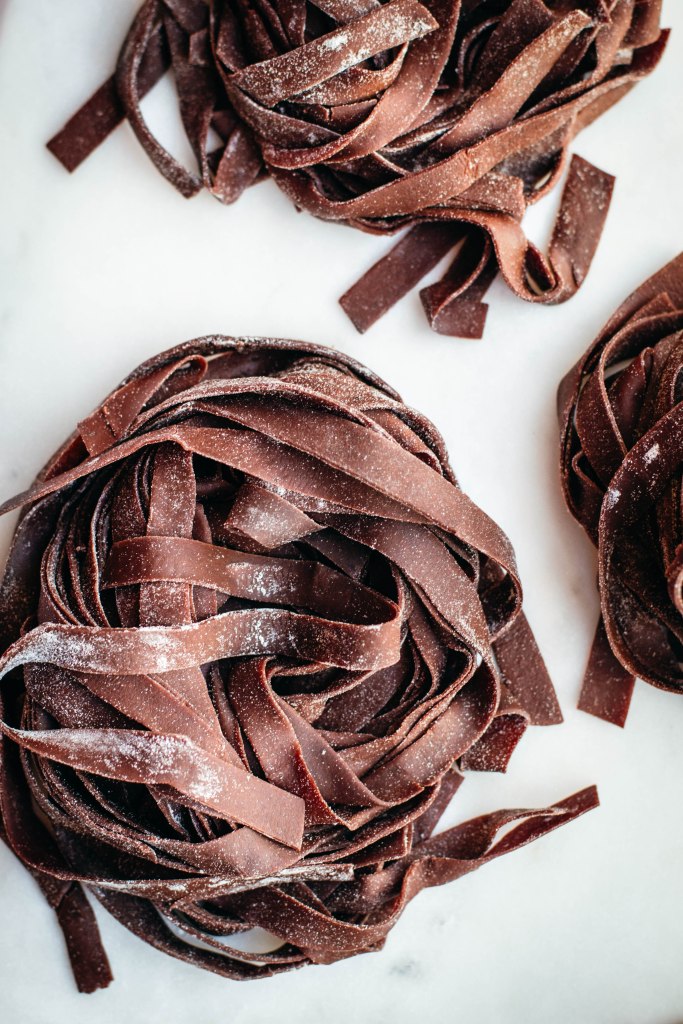
Homemade cocoa tagliatelle

(read in Italian)

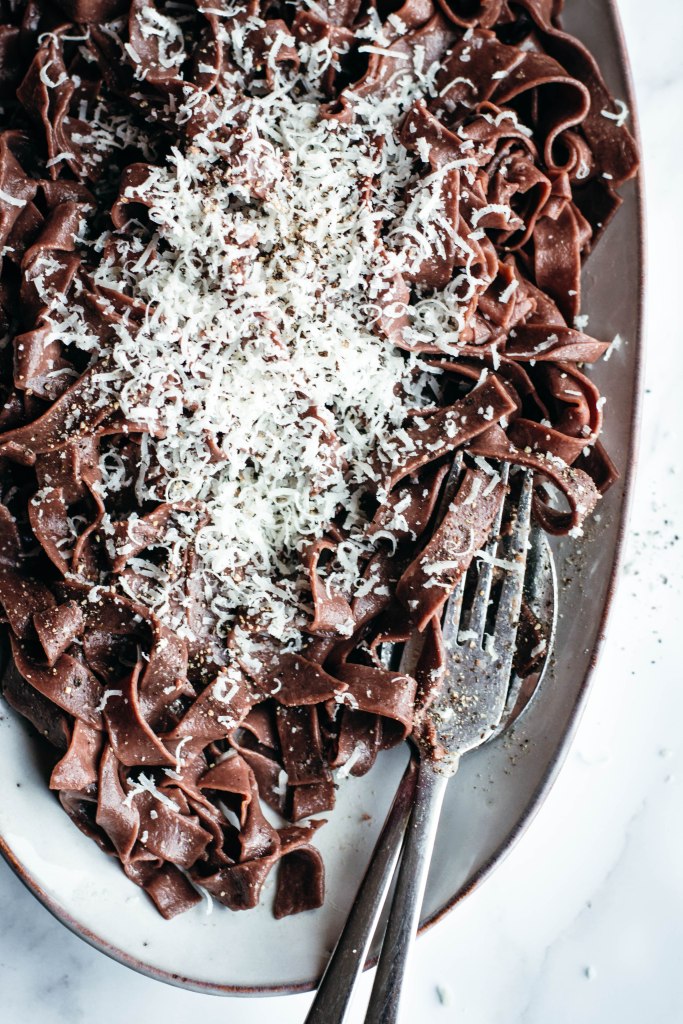
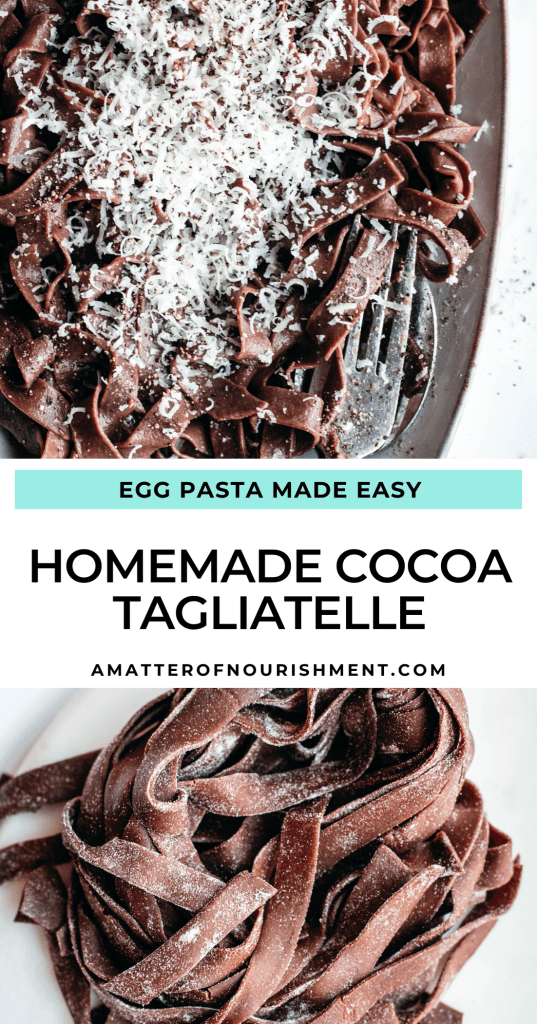
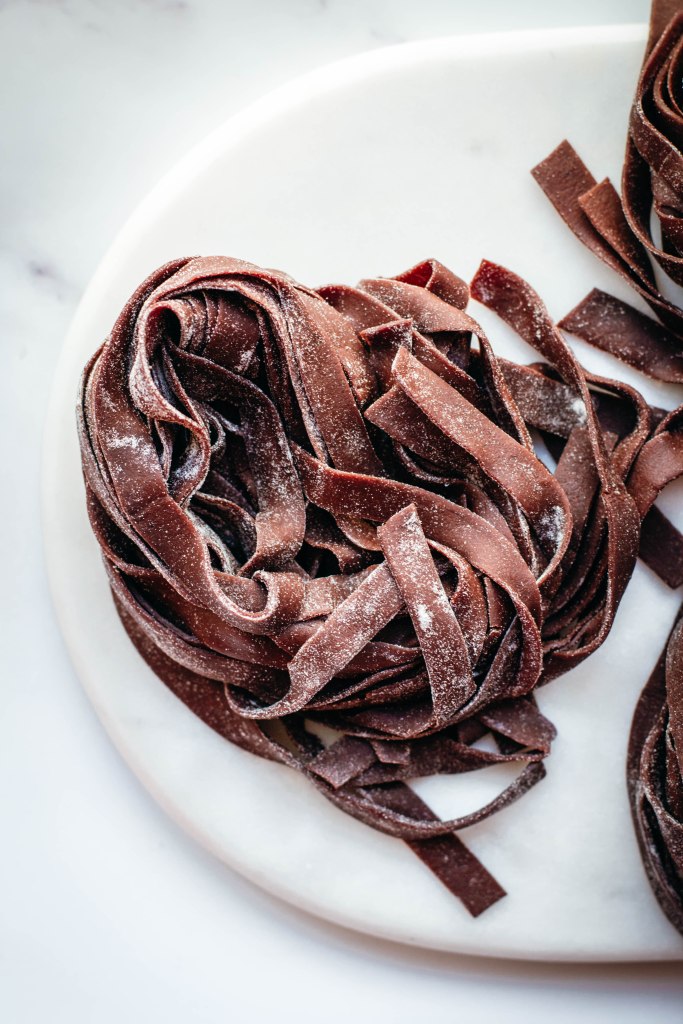
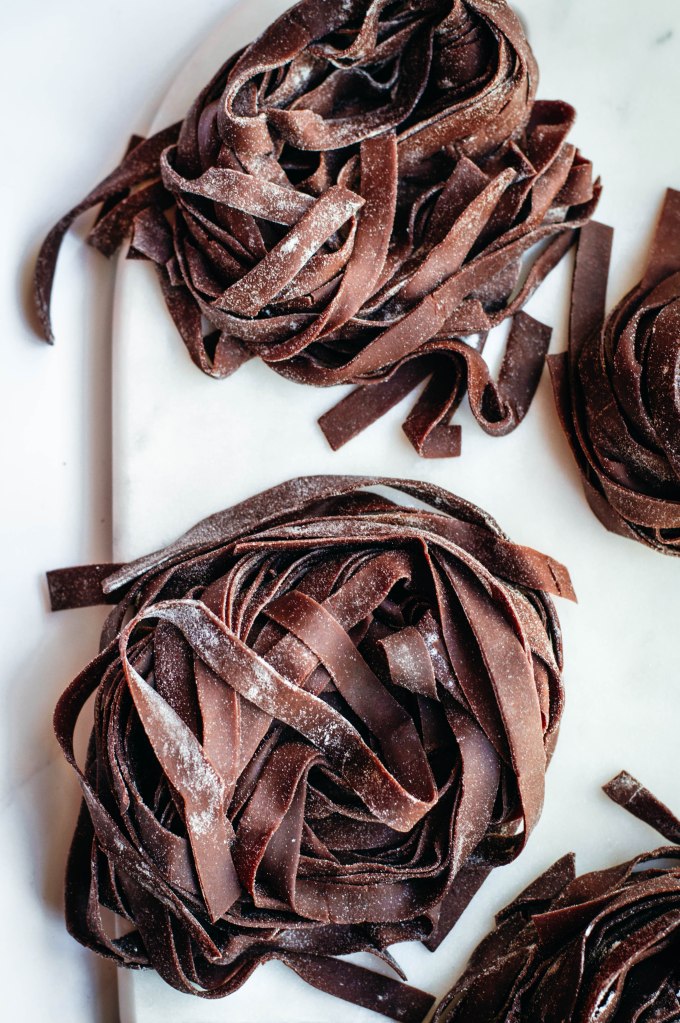
Fresh pasta is a labour of love and great pasta needs practice: these homemade cocoa tagliatelle are a wonderful way to step up your pasta game pairing a very basic shape with cocoa powder and its characteristic flavours and colour. Delicious when served with melted cheese and spices, this fresh pasta with cocoa will definitely surprise you with its special taste.

Fresh pasta is a labour of love and great pasta needs practice: these homemade cocoa tagliatelle are a wonderful way to step-up your pasta game pairing a very basic shape with cocoa powder and its characteristic flavours and colour. Delicious when served with melted cheese and spices, this fresh pasta with cocoa will definitely surprise you with its special taste.

Making fresh pasta can be intimidating, I know. What most people are struggling with is the idea that you need special tools and fancy ingredients; truth is, the most important things required are some practice and dedication. Even if I won’t recommend this recipe with cocoa to somebody who wants to make fresh pasta for the first time, I don’t want to discourage a newbie who feels ready to dive into a challenging preparation, so here’s a list of helpful tips. Which are the main differences with regular fresh pasta and how to deal with them? Find the answer below.

My top tips to help you nail this recipe:

  • Knead your dough by hand: I am used to handmade pasta and I think it’s the best way to learn how to make it. The process of kneading your dough by hand allows you to understand how the consistency changes, how the elasticity increases and if you need more flour or if you have already made the mistake of adding too much of it. Cocoa powder affects the consistency of your dough, so it’s better if you can check it step by step.
  • Don’t add too much flour: it’s pretty common to assume that “more flour, the better” when it comes to rolling out your dough. Well, I disagree: you just need the right amount of flour to prevent your dough from sticking to the surface of your board and rolling pin; not more, not less. If you need a lot of flour in this step, this means you have likely made a mistake before; the reason is probably one of these two: too much liquid or not kneading well enough. When it comes to this specific recipe, you have some extra moisture and fat from the cocoa powder (although we are talking about relatively small quantities), so the dough tends to be a bit more sticky: just keep this in mind and move on.
  • A bit of olive oil helps: when it comes to making fresh pasta, everyone has personal preferences and tricks. I found that a little bit of olive oil in this recipe with cocoa powder helps with the consistency and it also makes a difference when you have to roll out the dough.

A reminder: not all cocoa powders are created equal!

Among many other characteristics that make each powder unique, there are a couple of main factors that are of interest for this recipe.

Fresh pasta is a labour of love and great pasta needs practice: these homemade cocoa tagliatelle are a wonderful way to step-up your pasta game pairing a very basic shape with cocoa powder and its characteristic flavours and colour. Delicious when served with melted cheese and spices, this fresh pasta with cocoa will definitely surprise you with its special taste.

Homemade cocoa tagliatelle

Ingredients (makes 2 small portions):

  • 90 g unbleached all-purpose flour
  • 5 g cocoa powder (you can use up to 7 g for a more intense colour)
  • 1 egg
  • 2 tsp extra virgin olive oil
  • optional: 1 tsp coffee (cold)*

*use something concentrated like an espresso o a coffee made with a moka pot

Prepare the flour and the cocoa powder in a bowl or on a board, then create a well into the centre and add the egg inside it. Using a fork, beat well the egg and start mixing it with the flour. Keep combining everything together with your hands then add the oil and knead the dough for 5-10 minutes until it’s smooth and elastic: it may take some time but you’ll understand how the consistency changes and you’ll understand when it’s ready. Cover the dough with cling film or a reusable wrap and place it in a cold place for approx. 15-20 minutes.

Now it’s time to roll out your dough: divide it into 2 pieces and always keep covered the one that you are not using to prevent it from becoming too dry. You can totally do this without a pasta machine, using just a rolling pin: dust your work surface with some flour, then start to roll out your pasta into a large thin sheet. Using a rolling pin, you won’t get those perfect rectangular shapes that you get with the machine but you’ll be able to make long tagliatelle anyway (just pay attention to what you are doing and cut your dough accordingly).

When you use a pasta machine, usually you’ll start with the widest setting and then move on, rolling out the dough several times. This helps to create the surface of pasta (the one that makes the perfect pair with a creamy sauce!) and that’s why I like to do something similar even when I use the rolling pin: start creating a sheet, fold the dough into thirds, then roll it out again: this step is optional and you could do it just once or more.

Create the sheets of pasta with your desired level of thickness, dust them with flour and cut your pieces to make tagliatelle: you want to create a long section of dough and then gently roll it up. Use a knife to cut the roll cross-wise: before cooking your tagliatelle, allow them to set and dry for approx. 30 minutes on a floured surface or on a drying rack or form the classic “pasta nests”. If you don’t use them straight away, you can store the tagliatelle in the fridge for a couple of days (but they taste better when used within 24 hours).

How to serve them? These homemade cocoa tagliatelle are delicious paired with a simple pasta sauce made of melted cheese: try to use pecorino (or a similar cheese made with sheep’s milk) and black pepper or go for Camembert and fresh sage.

Fresh pasta is a labour of love and great pasta needs practice: these homemade cocoa tagliatelle are a wonderful way to step-up your pasta game pairing a very basic shape with cocoa powder and its characteristic flavours and colour. Delicious when served with melted cheese and spices, this fresh pasta with cocoa will definitely surprise you with its special taste.

If you liked this post, share it with your friends using the buttons below.

Burger di tonno

(read in English)

Questi burger di tonno fatti in casa sono davvero ottimi e facili da preparare: con la loro consistenza a dir poco unica si sposano bene con un panino morbido ed altri ingredienti che aggiungano un tocco di croccantezza o di piccante per dar vita ad un piatto ricco di gusto che a tavola conquisterà tutti! Inoltre, avrai bisogno di soltanto 6 ingredienti per prepararli (spezie incluse!).

Easy tuna burgers with capers
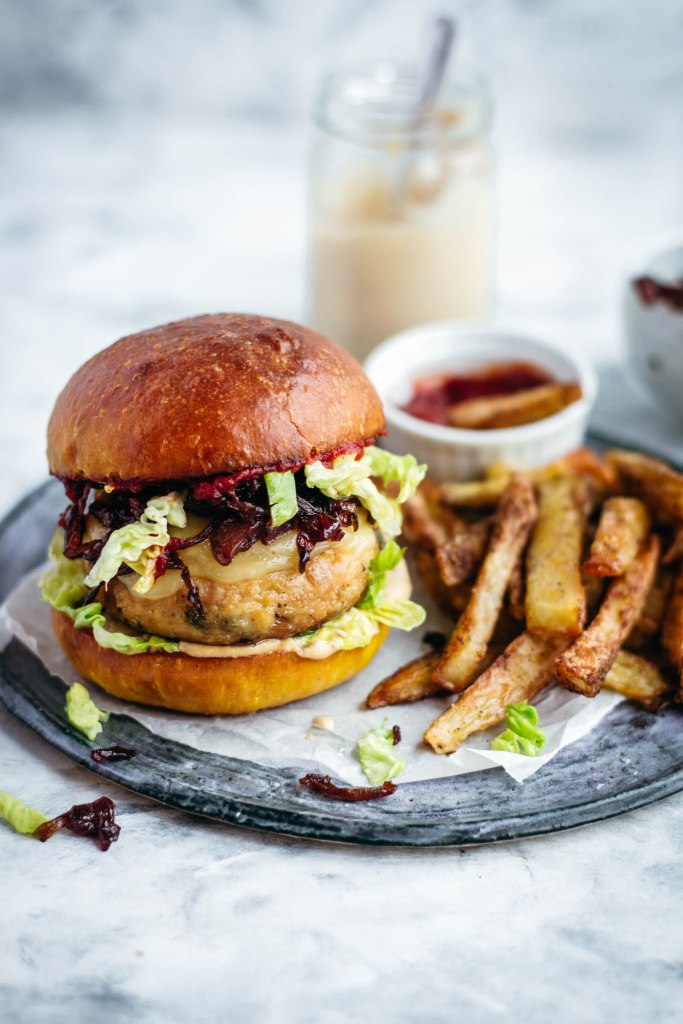
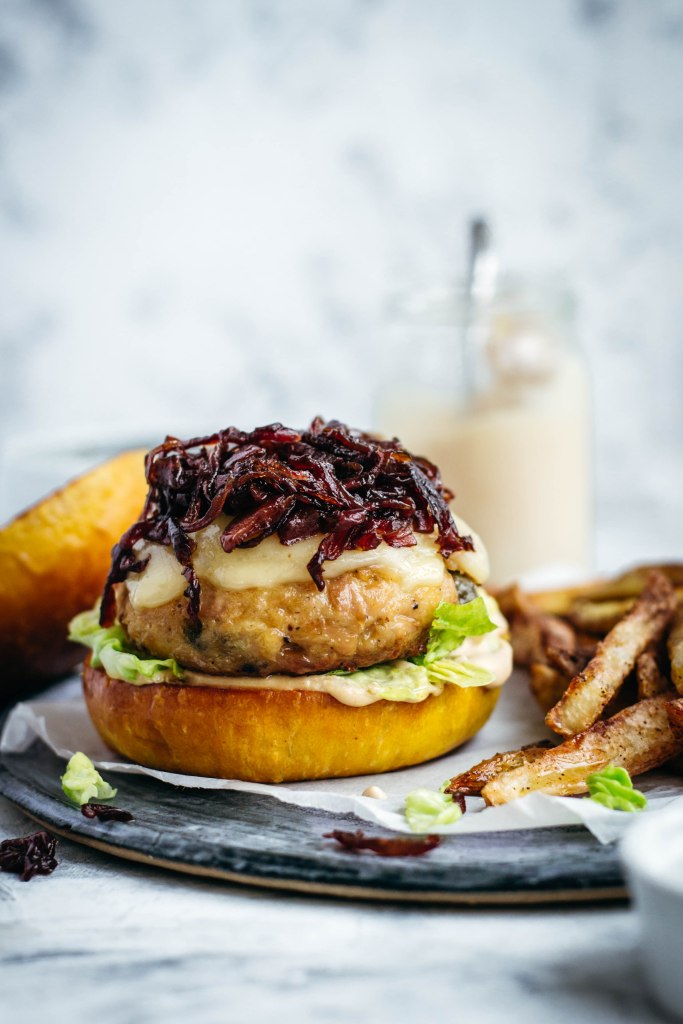
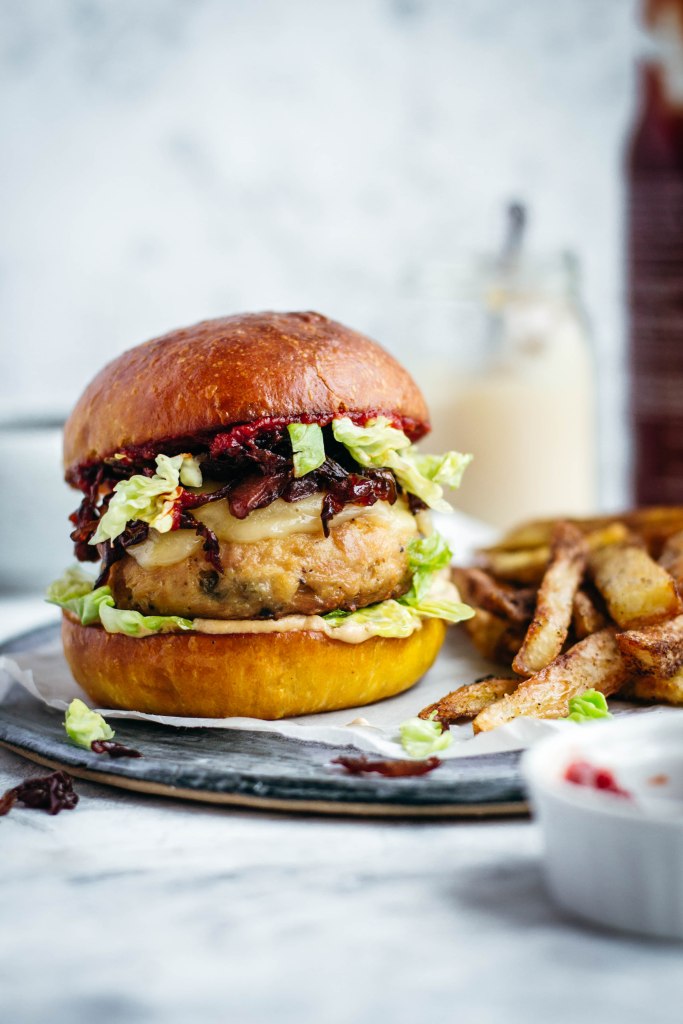
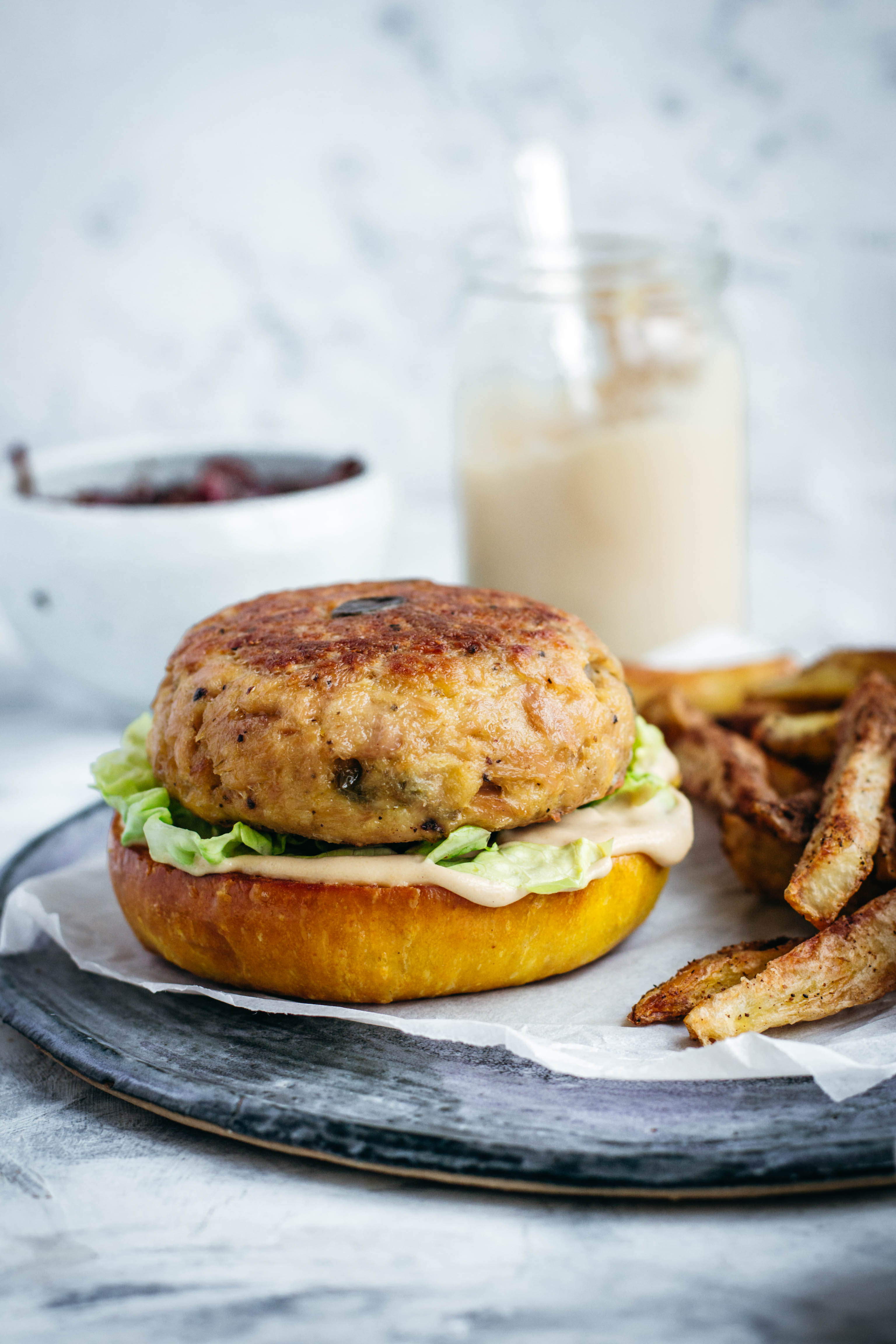
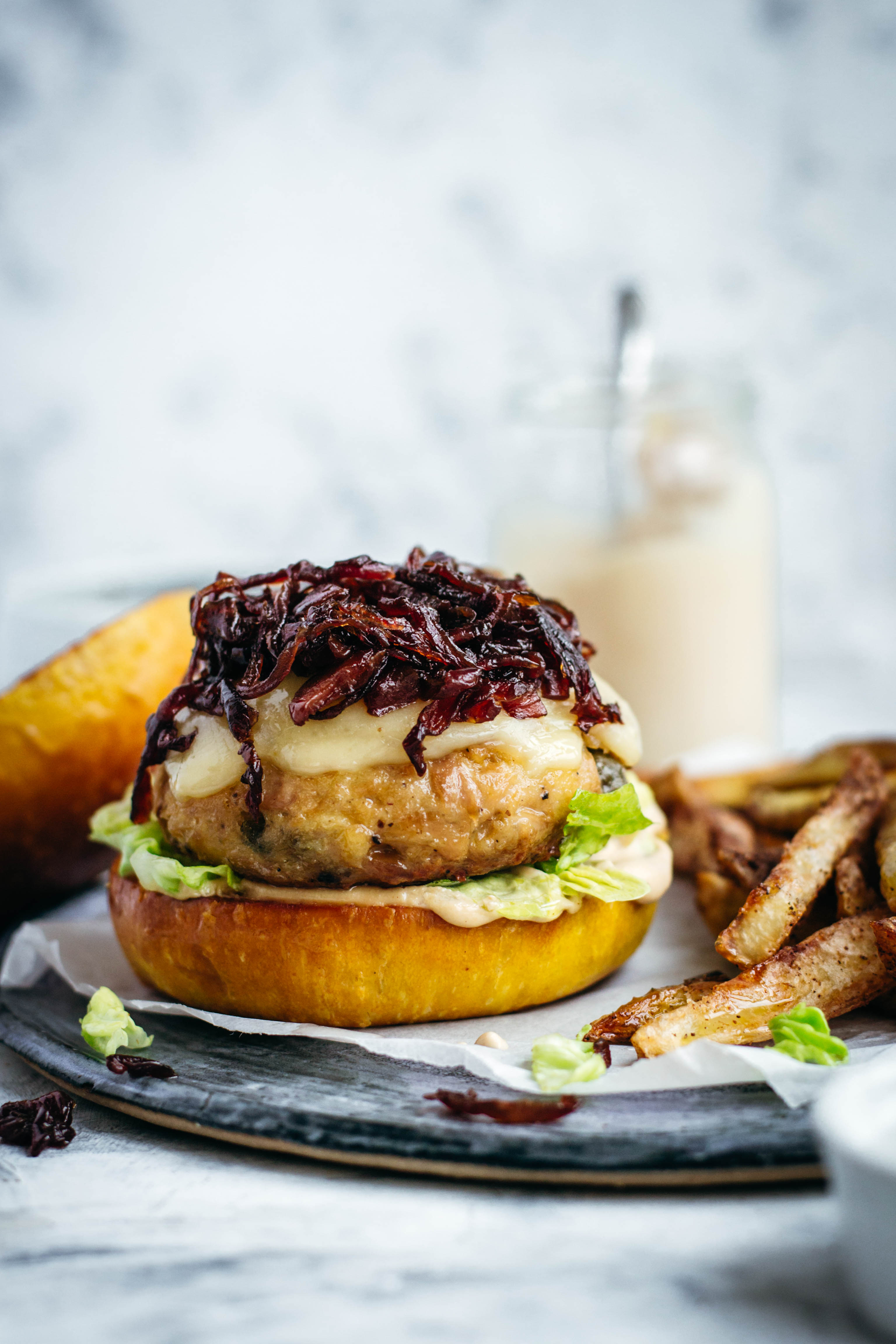
Easy tuna burgers with capers served in a soft brioche burger bun made with turmeric

Se ti capita spesso di leggere il mio blog o i post sulla mia pagina Instagram, saprai che affronto di frequente il tema del “trarre il massimo da ciò che si ha”: non importa se stiamo parlando di avere poco tempo per cucinare all’interno di una giornata ricca di impegni o se si ha davanti una dispensa quasi vuota… è comunque possibile cercare di essere creativi e lasciare che gli ingredienti ci guidino nel preparare qualcosa di appetitoso. Questi burger di pesce rientrano perfettamente in quest’ottica: sono facili da preparare, non necessitano di tanti ingredienti e sono sicura che una buona parte di essi è spesso presente in molte cucine.

Una manciata di ingredienti di qualità costituisce un ottimo punto di partenza per un piatto di successo e ogni volta che riesco a trovare prodotti che non sono soltanto buoni ma sono anche caratterizzati da una particolare attenzione alla sostenibilità, sono ancora più contenta di metterli in tavola! Presta più attenzione ai cibi che scegli: questo è un cambiamento piuttosto semplice da attuare (leggi le etichette, cerca più informazioni sui prodotti, interessati sulla loro provenienza, etc.) che ti consente di diventare un consumatore più coscienzioso.

Prova questi burger di tonno con i miei panini soffici tipo pan brioche (che puoi anche preparare il giorno prima): per cambiare un po’, potresti decidere di aggiungere un po’ di curcuma nell’impasto; otterrai così un pane dal colore giallo brillante che riuscirà sicuramente a strappare qualche sorriso tra i tuoi commensali. Solitamente aggiungo 1 cucchiaino di curcuma in polvere in 300 g di farina (6 panini).

Uno dei modi che preferisco per servire questi burger di pesce è con cipolle caramellate, un po’ di insalata, una fetta di formaggio (come un Cheddar non troppo stagionato o dell’Emmental), un cucchiaio del mio hummus classico (mischiato con 1 cucchiaino di senape) ed una salsa al pomodoro piccante (qualcosa di simile al ketchup). Prova questa combinazione se ti piacciono gli ingredienti oppure creane una versione personalizzata sulla base delle tue preferenze (anche se ti consiglio, prima di tutto, di assaggiare i burger!).

Questi semplicissimi burger di tonno sono ottimi serviti all’interno di un panino ma sono anche perfetti per essere mangiati così come sono (ad esempio, potresti accompagnarli con un’insalata o delle verdure cotte al forno). Un ultimo consiglio: preferisco cuocere questi burger poco prima di mangiarli perchè tendono ad asciugarsi un po’ quando vengono riscaldati.

Easy tuna burgers with capers

BURGER DI TONNO

Ingredienti (2 burger):

  • 120 g di tonno (in scatola o in un barattolo di vetro – al naturale o in olio d’oliva, scolato)*
  • 20 g di pane (senza glutine se necessario)
  • 1 cucchiaio di capperi (o anche qualcosa di più)
  • 1 uovo
  • 1/2 cucchiaino di semi di finocchio
  • un pizzico di pepe nero

Preparazione:

Per questi burger di tonno puoi usare sia il tonno al naturale (in acqua) o in olio d’oliva, ma se scegli la prima opzione, aggiungi anche 1-2 cucchiaini di olio d’oliva al resto degli ingredienti. Se preferisci il tonno in olio d’oliva, per la cottura dei burger puoi utilizzare un pochino di questo stesso olio.

Prepara tutti gli ingredienti in una ciotola: sbriciola il pane in pezzettini utilizzando le mani (sia il pane fresco che quello che hai in casa da un paio di giorni sono buone opzioni) e frantuma i semi di finocchio in un mortaio (aggiungi anche un pizzico di sale se necessario; assaggia il tonno ed i capperi per assicurarti del sapore). Spezzetta il tonno utilizzando una forchetta e mischia bene tutto il necessario per i burger: dovresti essere in grado di prepararli facilmente con le mani, ma, se hai delle difficoltà durante questo passaggio, potresti dover aggiungere un pochino di pane in più. Ora puoi cuocere direttamente i burger o farli riposare in frigo per 20-30 minuti. Per la cottura utilizza una padella precedentemente riscaldata con un filo d’olio d’oliva e cuoci i burger 2-3 minuti per lato. Per un’idea su come servirli, dai un’occhiata all’introduzione che ho scritto in questa pagina proprio prima della ricetta.

Se questo post ti è piaciuto, condividilo con i tuoi amici usando i link qui sotto. Non dimenticare di taggarmi @amatterofnourishment su Instagram se provi questa ricetta: mi piacerebbe molto vedere le tue creazioni!

Easy tuna burgers recipe

(read in Italian)

These homemade tuna burgers are delicious and super easy to make: with their unique texture, they pair really well with a soft bun and other spicy or crunchy bits to create a tasty burger experience that will conquer everyone at your dinner table! Plus you will only need 6 ingredients to make them (spices included!).

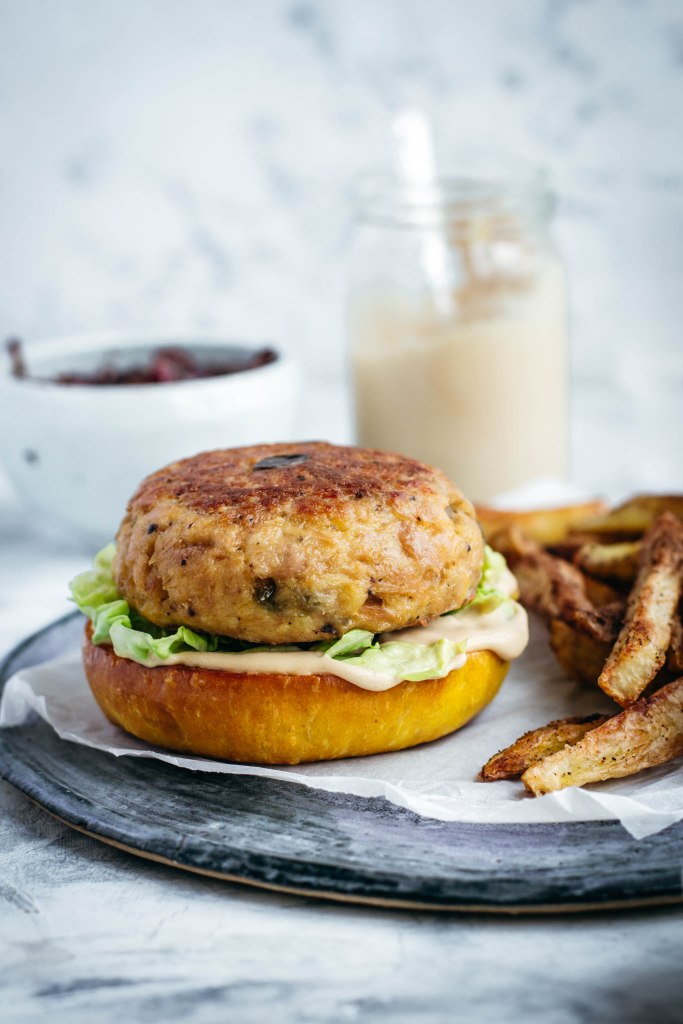
Easy tuna burgers with capers served in a soft brioche burger bun made with turmeric

If you have been reading these pages or the posts on my Instagram feed for a while now, you know how often I talk about getting the most from what you have: it doesn’t matter if we are talking about a short time left for cooking in a busy day or an almost empty pantry… you can still get creative and let the ingredients guide you to prepare something delicious. These fish burgers fit perfectly into this idea: they are easy to make, they don’t require many ingredients and I’m pretty sure that a good part of these products can be regularly found in your kitchen.

Good quality ingredients are the starting point of any great meal and when I can find products that are not just delicious but also have special attention to sustainability, I am even happier to put them on my table! Put more attention to the food you choose: it’s quite an easy step to take (read the labels, get more information about your food, learn where it comes from, etc.) that allows you to become a more conscious consumer.

Try these tuna patties with my soft brioche burger buns (that you can even make in advance the day before): for a different twist, you can decide to add some turmeric into the dough; you’ll get a bright yellow bread that will immediately bring a smile at your dinner table. I usually add 1 teaspoon of ground turmeric for 300 g of flour (6 buns).

One of my favourite ways to serve these homemade fish patties is with caramelised onions, a bit of lettuce, a slice of cheese (like a young Cheddar or Emmental), a tablespoon of my plain hummus (mixed with 1 teaspoon of mustard) and some spicy tomato sauce (something similar to a ketchup). Try this combination if you like the ingredients or feel free to create your own according to your preferences (it’s better to taste the patties first!).

These simple tuna burgers are delicious paired with bread but they are super tasty on their own, too (for example, you can serve them with a salad or some roasted vegetables). Top tip: I prefer cooking these patties right before eating them because they tend to get a bit dry when reheated.

Easy tuna burgers with capers

EASY TUNA BURGERS RECIPE

Ingredients (makes 2):

  • 120 g tuna (canned or in a glass jar – in water or olive oil, drained)
  • 20 g bread (gluten-free if necessary)
  • 1 tbsp capers (or even a bit more)
  • 1 egg
  • 1/2 tsp fennel seeds
  • a pinch of black pepper

Method:

For these homemade canned tuna patties, both tuna in water and olive oil will work well but if you choose the one in water, add 1-2 tsp of olive oil to the mix; if you prefer the one in olive oil, you can use a bit of the oil left after draining your tuna to cook the fish burgers.

Prepare all the ingredients in a bowl: crumble the bread into small pieces with your hand (a fresh loaf or one that is a couple of days old are both good options) and crush the fennel seeds in a mortar (add also a pinch of salt if necessary, based on the taste of your tuna and capers). Using a fork, break the tuna into small pieces and mix well all the ingredients: you should be able to easily shape the patties with your hands but, if you are encountering some difficulties in doing it, you may need to add some extra bread. Now you can either cook the burgers straight away or leave them to rest in the fridge for 20-30 minutes. Cook these fish patties in a preheated pan with a bit of olive oil for approx. 2-3 minutes on each side. For a serving suggestion, check the introduction written on this page just above the recipe.

If you liked this post, share it with your friends using the buttons below! Don’t forget to tag me @amatterofnourishment on Instagram if you try this recipe: I’d love to see your creations!
Barretta di cioccolato fatta in casa con frutta secca e pane tostato

(read in English)

Preparare una barretta di cioccolato in casa non è mai stato così semplice! Tutto ciò di cui hai bisogno per questa ricetta è del cioccolato fondente di buona qualità e pochi altri ingredienti selezionati: in pochi minuti avrai preparato una nuovissima versione di una classica tavoletta di cioccolato, ricca di gusto e con quel po’ di croccantezza che è sempre una scelta apprezzata.

Se non hai mai provato una fetta di pane tostato con un filo d’olio extra vergine d’oliva e dei pezzetti di cioccolato fondente… dovresti decisamente farlo! Pane e cioccolato sono un’accoppiata vincente che non passerà mai di moda, ma puoi credermi se ti dico che l’olio d’oliva porta tutto su un nuovo livello di bontà. Questo è proprio il punto di partenza da cui ho tratto ispirazione per questa barretta fatta in casa: tutto ciò che dovrai fare è spezzettare del pane in piccoli pezzi, aggiungere un filo d’olio d’oliva e tostarlo in padella o in forno finchè non sarà dorato (ovviamente, puoi anche usare del pane raffermo ed evitare così di sprecarlo!).

Alcune domande che potresti avere su questa ricetta:

  • POSSO USARE QUALSIASI TIPO DI PANE? Certo! Puoi usare del pane senza glutine se necessario, del pan brioche o anche una fetta di focaccia. Ricorda solo che se il pane che hai a disposizione ha un gusto particolare, è meglio assicurarti che si abbini bene al resto degli ingredienti della barretta di cioccolato. Qui io ho utilizzato i miei panini per burger.
  • CHE TIPO DI CIOCCOLATO DOVREI USARE? Opterei per un cioccolato fondente classico. Scegli un prodotto che abbia un contenuto di cacao intorno all’85% se preferisci qualcosa di più amaro, altrimenti opta per il 70%.
  • POSSO SOSTITUIRE LA FRUTTA SECCA CON DEI SEMI? Sì, puoi decidere di sostituire la frutta secca con semi di zucca e/o semi di girasole.

Barretta di cioccolato fatta in casa con frutta secca e pane tostato

  • 200 g di cioccolato fondente (con un contenuto di cacao intorno al 70-85%)
  • circa 20 g di pistacchi e mandorle (tagliati grossolanamente)
  • 10-15 g di pane (spezzato in piccoli pezzi, cosparso con un filo d’olio d’oliva e tostato in padella o nel forno finchè non sarà dorato)
  • un pizzico di sale
  • un pizzico di pepe

Sciogli il cioccolato in una ciotola resistente al calore messa su una pentola con dell’acqua calda sul fondo: segui le istruzioni per un classico bagnomaria, che ti permette di sciogliere la cioccolata con calma e senza intaccarne la consistenza finale. Quando il cioccolato sarà completamente sciolto, mischialo bene, poi trasferiscilo in una teglia rivestita con carta forno: utilizza una spatola per creare uno strato uniforme. Scegli la teglia da forno in base alle tue preferenze (più grandi saranno le dimensioni della teglia, più sottile sarà la barretta).

Aggiungi il resto degli ingredienti finchè la base è ancora morbida; se necessario, spingi leggermente dentro il cioccolato i pezzi più grandi. Puoi modificare la quantità di ingredienti da aggiungere sul cioccolato in base alle tue preferenze. Metti la barretta di cioccolato finita in frigo per un paio d’ore. Quando sarà pronta, spezzala in pezzi più piccoli.

Se questo post ti è piaciuto, condividilo con i tuoi amici usando i link qui sotto. Non dimenticare di taggarmi @amatterofnourishment su Instagram se provi questa ricetta: mi piacerebbe molto vedere le tue creazioni!

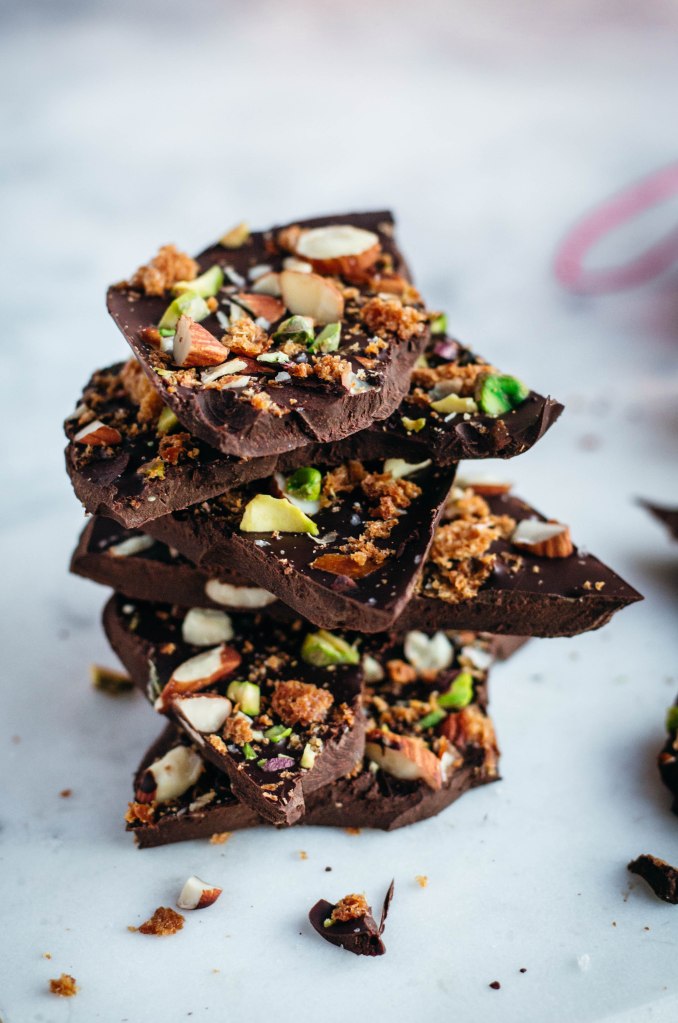
Homemade chocolate bark with nuts and toasted bread

(read in Italian)

Making a homemade chocolate bark has never been easier! All you need for this recipe is some good quality dark chocolate and a few delicious selected toppings: in a matter of minutes, you’ll make an upgraded version of a classic chocolate bar bursting with flavour and with that bit of crunchiness that is always a winning choice.

If you have never tried to make a slice of toasted bread with a drizzle of extra virgin olive oil and some pieces of dark chocolate… you definitely need to give it a go! Chocolate and bread is a match that will never get old but trust me on this, extra virgin olive oil brings it to a whole new level of deliciousness. That’s where the flavours of this homemade chocolate bark are coming from: all you have to do is breaking some bread into small pieces, toss it with olive oil and toast the breadcrumbs in a pan or in the oven until they will turn golden brown (and yes, you can use stale bread and avoid wasting it!).

Some questions you may have about this recipe:

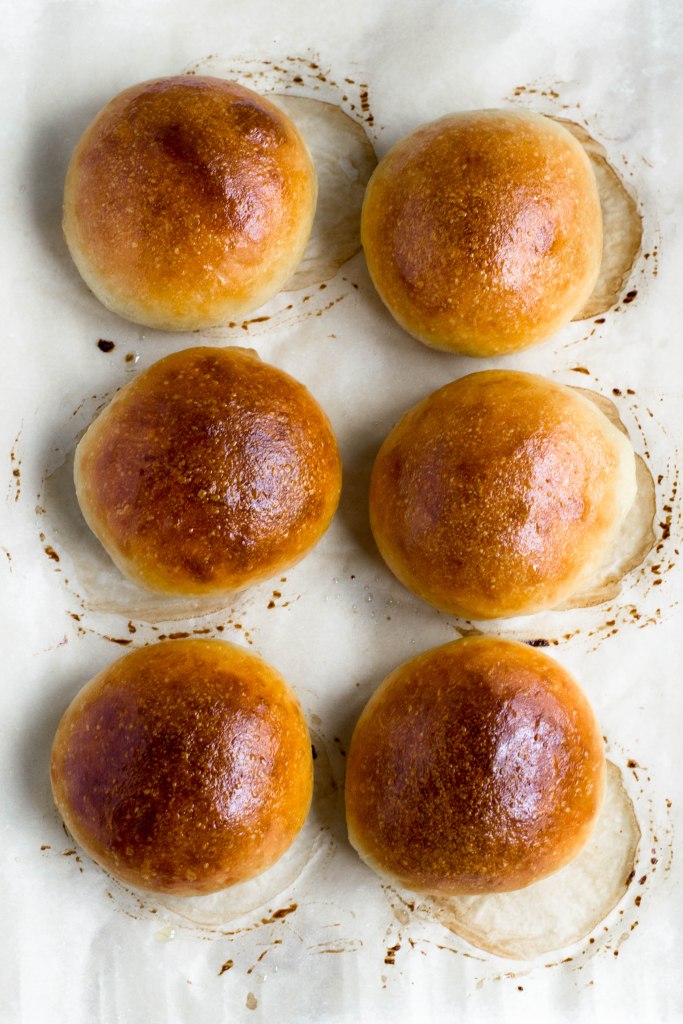
  • CAN I USE ANY KIND OF BREAD? Absolutely! You can use gluten-free bread if needed, brioche bread or even a flatbread. Just keep in mind that if the bread has a distinctive flavour, it will have to be something that pairs well with the other ingredients of the chocolate bark. Here I have used my soft brioche burger buns.
  • WHAT KIND OF CHOCOLATE WOULD YOU USE? I would go for plain dark chocolate. Choose something around 85% dark if you like the bitterness – otherwise, go for a 70% dark.
  • CAN I SWAP NUTS FOR SEEDS? Yes, you can swap nuts for pumpkin seeds and/or sunflower seeds.

Homemade chocolate bark with nuts and toasted bread

Ingredients:

  • 200 g dark chocolate (with a cocoa content around 70-85%)
  • approx. 20 g of mixed pistachios and almonds (roughly chopped)
  • 10-15 g of bread (broken down into smaller pieces, tossed with olive oil and toasted in a pan or in the oven until golden brown)
  • a pinch of salt
  • a pinch of black pepper

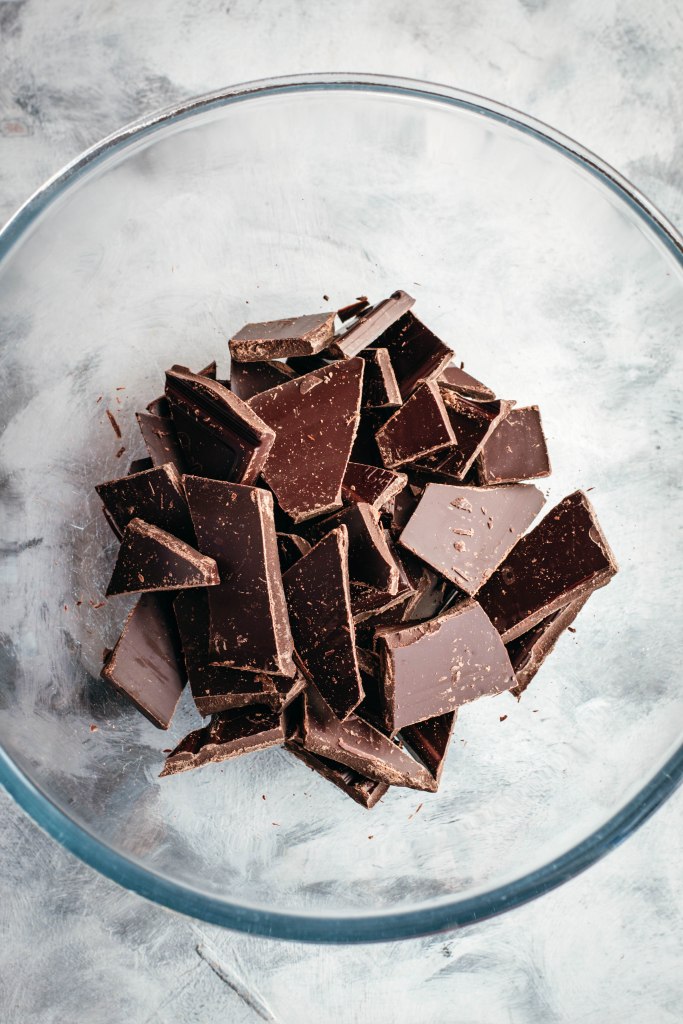
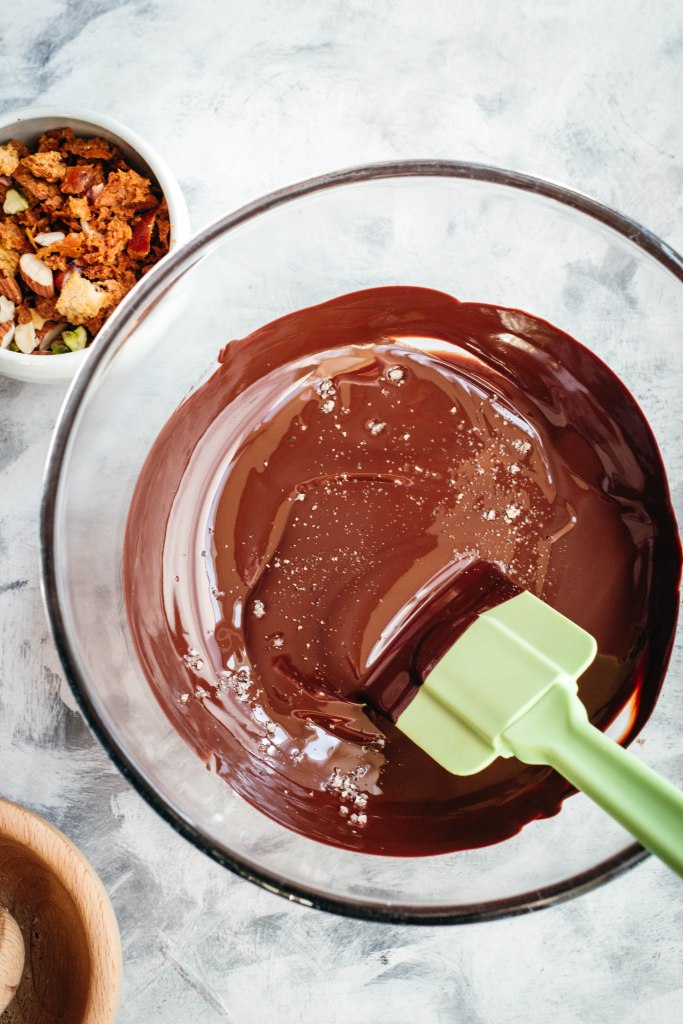
Gently melt your chocolate in a heatproof bowl placed over a saucepan with a bit of hot water in the bottom: follow the instructions of a classic simple bain marie that allows you to melt your chocolate slowly and without ruining its texture. When the chocolate will be completely melted, mix it well, then pour it in a baking tray lined with parchment paper: spread the chocolate with a spatula, making an even layer. You can decide how much thin you want the chocolate bark to be, based on the size of your baking sheet.

Add your toppings while the base is still soft and gently press down a little bit the bigger pieces with your hands if necessary. You can change the amount of toppings according to your preferences. Place the chocolate bark in the fridge for a couple of hours. Once it will be ready, break it into pieces.

If you liked this post, share it with your friends using the buttons below! Don’t forget to tag me @amatterofnourishment on Instagram if you try this recipe: I’d love to see your creations!

Come preparare i panini per burger soffici tipo pan brioche

(read in English)

Se ti piacciono i burger serviti in un panino bello morbido tipo pan brioche, con questa ricetta potrai imparare a fare questo pane in casa: avrai tutti i consigli del caso a tua disposizione per semplificare la preparazione e, allo stesso tempo, potrai anche scoprire qualche curiosità scientifica sul ruolo che rivestono i vari ingredienti!

Homemade soft brioche burger buns

Negli anni ho provato tantissime combinazioni per questo tipo di pane, sia fatte da zero, sia ispirate da altre ricette (alcune ottime!) e, ad un certo punto, ho trovato esattamente ciò che stavo cercando!

Ma non è soltanto una questione di gusto: la chiave per avere degli ottimi panini da burger è una perfetta combinazione tra consistenza, morbidezza, aroma, aspetto e gusto. Non bisogna sottovalutare l’importanza che può rivestire l’avere un buon pane in abbinamento al tuo burger: mi è capitato di avere varie esperienze culinarie deludenti in cui il burger in sè ed i vari condimenti erano ottimi, ma il pane era mediocre o proprio poco buono; mi spiace ma per me questi mix sono un no secco. Ci sono dei burger (sia a base di carne/pesce, che vegetale) e dei condimenti che si abbinano bene anche a tipologie di pane diverse da quello classico in stile brioche; non è infatti necessario che il panino sia per forza questo, ma se si vuole scegliere un’alternativa, penso sia necessario fare un po’ di ricerca in merito per trovare l’opzione migliore.

Ti sei mai chiesto perchè un uovo in più o qualche cucchiaio di olio d’oliva influiscono così tanto su un prodotto da forno? O perchè dovresti controllare il contenuto di proteine della farina? Tutta questione di chimica del cibo e ciò che avviene dietro le quinte!

UN PO’ DELLA CHIMICA DIETRO QUESTA RICETTA:

  • GRASSI: per questa ricetta ho utilizzato una combinazione di burro, olio d’oliva e yogurt intero. Avendo tutti caratteristiche diverse, ognuno di questi ingredienti gioca un ruolo specifico nel contribuire alla consistenza ed al sapore del risultato finale. Dato che essi influiscono sulla formazione del network proteico legato al glutine (ma non vi contribuiscono, eccezion fatta per quella piccola percentuale di acqua contenuta nel burro), è importante riuscire ad individuare il giusto rapporto tra grassi e farina.
  • BURRO E OLIO D’OLIVA: mentre l’olio d’oliva è composto principalmente da lipidi (triacilgliceroli, 99% circa), il burro è costituito principalmente da grassi derivati dal latte, ma ha anche una parte d’acqua ed una di proteine del latte (in Europa il contenuto di grassi è tra 80 e 90%, il massimo contenuto d’acqua è 16% e non c’è più del 2% di parte solida non grassa derivante dal latte). Le composizioni caratteristiche del burro e dell’olio d’oliva donano a questi due ingredienti diverse proprietà fisiche (pensa al burro a temperatura ambiente e confrontalo con l’olio) e questo influirà sul loro effetto sui prodotti da forno. Inoltre, è importante ricordare che le proteine contenuto nel burro contribuiscono nel conferire al pane quel gusto tipo frutta secca (grazie ad un processo che avviene durante la cottura) e che l’olio d’oliva dona al cibo un sapore davvero unico. Un buon equilibrio tra burro, olio d’oliva e yogurt (un’altra fonte di grassi e proteine) risulta in un pane con una combinazione ottimale tra morbidezza e densità.
  • UOVA: arricchiscono il pane con grassi, proteine ed acqua. Questi 3 componenti contribuiscono alla morbidezza, alla struttura ed alla formazione del glutine. Realizzando questa ricetta con 1 uovo soltanto, otterrai dei panini che sono meno densi e che tendono a sbriciolarsi più facilmente, ma variando questa quantità a 2, otterrai un pane più morbido e denso che mantiene molto bene la forma mentre mangi (questo risultato non è interamente legato all’uovo in più – in realtà è dovuto ad una combinazione di fattori, ma ho potuto notare una certa differenza anche solo dopo questa variazione).
  • ZUCCHERO: in questa ricetta c’è una quantità molto piccola di zucchero, ma anch’essa svolge la sua parte. Lo zucchero riveste diversi ruoli in questa preparazione: 1) è d’aiuto per la lievitazione e la fermentazione (lo zucchero è una fonte di cibo facilmente disponibile per il lievito); 2) contribuisce al colore, al sapore ed alla morbidezza del pane. Preferisco usare lo zucchero mascobado scuro, poichè ha una composizione diversa rispetto allo zucchero bianco ed è più aromatico (lo zucchero bianco è saccarosio cristallizzato – lo zucchero come il mascobado è composto principalmente da saccarosio cristallizzato, ma ha anche del glucosio, fruttosio e minerali in tracce).
  • GLUTINE: quando la farina viene mischiata con un liquido, le molecole di glutine (proteine) si attivano: questo vuol dire che tendono a legarsi l’un l’altra ed a creare una struttura dotata di elasticità in cui le bolle d’aria rimarranno intrappolate. Abbina quest’effetto con la lievitazione e gli altri ingredienti, ed otterrai dei panini super soffici. Il glutine sicuramente è d’aiuto, ma puoi preparare dei pancakes morbidi anche con farine senza glutine (occorre soltanto un po’ di impegno in più per trovare la ricetta giusta). Può essere utile tenere a mente che sia i grassi che le uova influiscono sulla formazione del network di proteine. Usando sia burro che olio, sono riuscita ad ottenere quell’effetto che ricorda un po’ le torte tipico del pan brioche senza cambiare le quantità di zucchero o burro: questo risultato è legato al modo in cui l’olio interagisce con la farina.
  • FARINA: non tutte le farine sono uguali; per preparare il pane, preferisco usare quella che viene chiamata “farina per pane”, che ha un contenuto leggermente più alto di proteine rispetto a quella bianca classica. La maggior parte del tempo cucino con farina integrale ed, ovviamente, è possibile usarla anche per preparare questi panini, ma le quantità che trovi qui sotto sono perfette per essere utilizzate con la farina da pane bianca (preferisci una non sbiancata) per ottenere questi panini da burger in stile brioche soffici ed elastici.
  • REAZIONE DI MAILLARD: le proteine delle uova e della farina, in presenza di calore, sottostanno ad un processo chimico chiamato reazione di Maillard, che ha come risultato la colorazione scura del cibo e la formazione di nuovi sapori (è la stessa reazione che avviene per esempio quando si cuoce la carne).

Vorresti vedere su questo blog una ricetta dei panini per burger senza glutine o vegana? Scrivimi usando il box dei commenti qui sotto e ci lavorerò molto volentieri!

Homemade soft brioche burger buns

PANINI PER BURGER SOFFICI TIPO BRIOCHE

INGREDIENTI (per 6 panini)

  • 300 g di farina bianca da pane*
  • 30 g di burro (sciolto)
  • 2 uova (circa 100 g)**
  • 70 g di yogurt bianco intero***
  • 3-4 cucchiai di olio extra vergine d’oliva
  • 50-65 ml di acqua
  • 5 g di zucchero mascobado scuro (puoi anche usarne 10-15 g se preferisci)
  • 4 g di lievito secco istantaneo
  • un pizzico di sale

*Per darti un’idea, se confronto una farina bianca normale ed una da pane della stessa marca, rispettivamente hanno 10 g e 12.6 g di proteine (anche la quantità di carboidrati è ovviamente diversa, risulta più bassa in quella da pane).

**Separo da questa quantità circa 2 cucchiaini di tuorlo e li conservo in frigorifero per spennellare i panini prima della cottura.

***Se hai solo dello yogurt senza grassi a disposizione, cambia la ricetta in questo modo: usa 100 g di yogurt, solo circa 15 ml di acqua ed 1 cucchiaio in più di olio d’oliva.

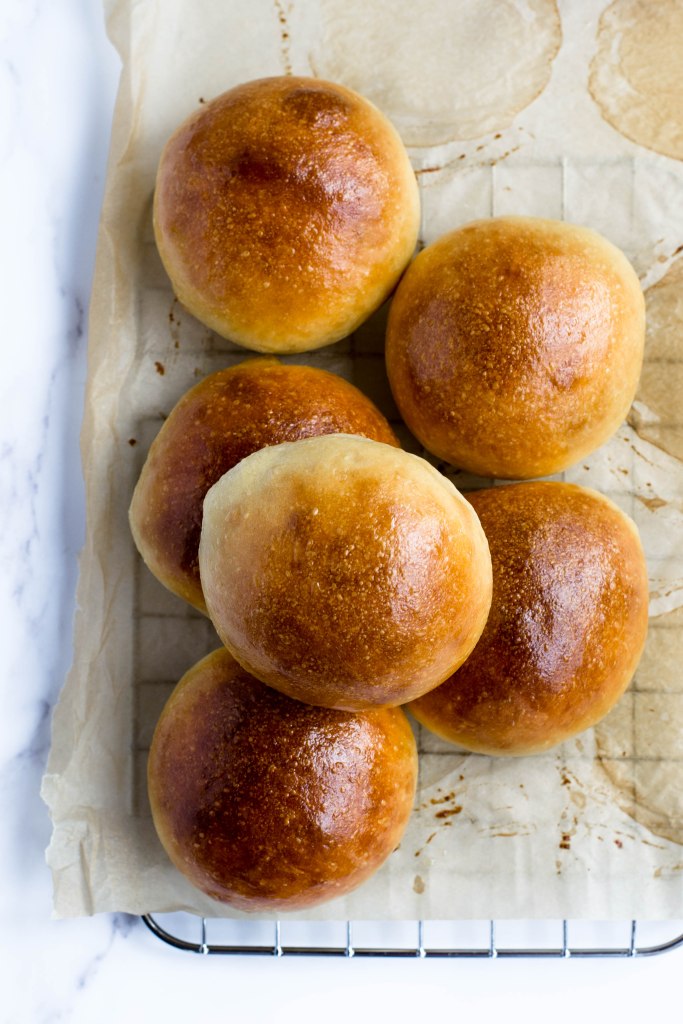
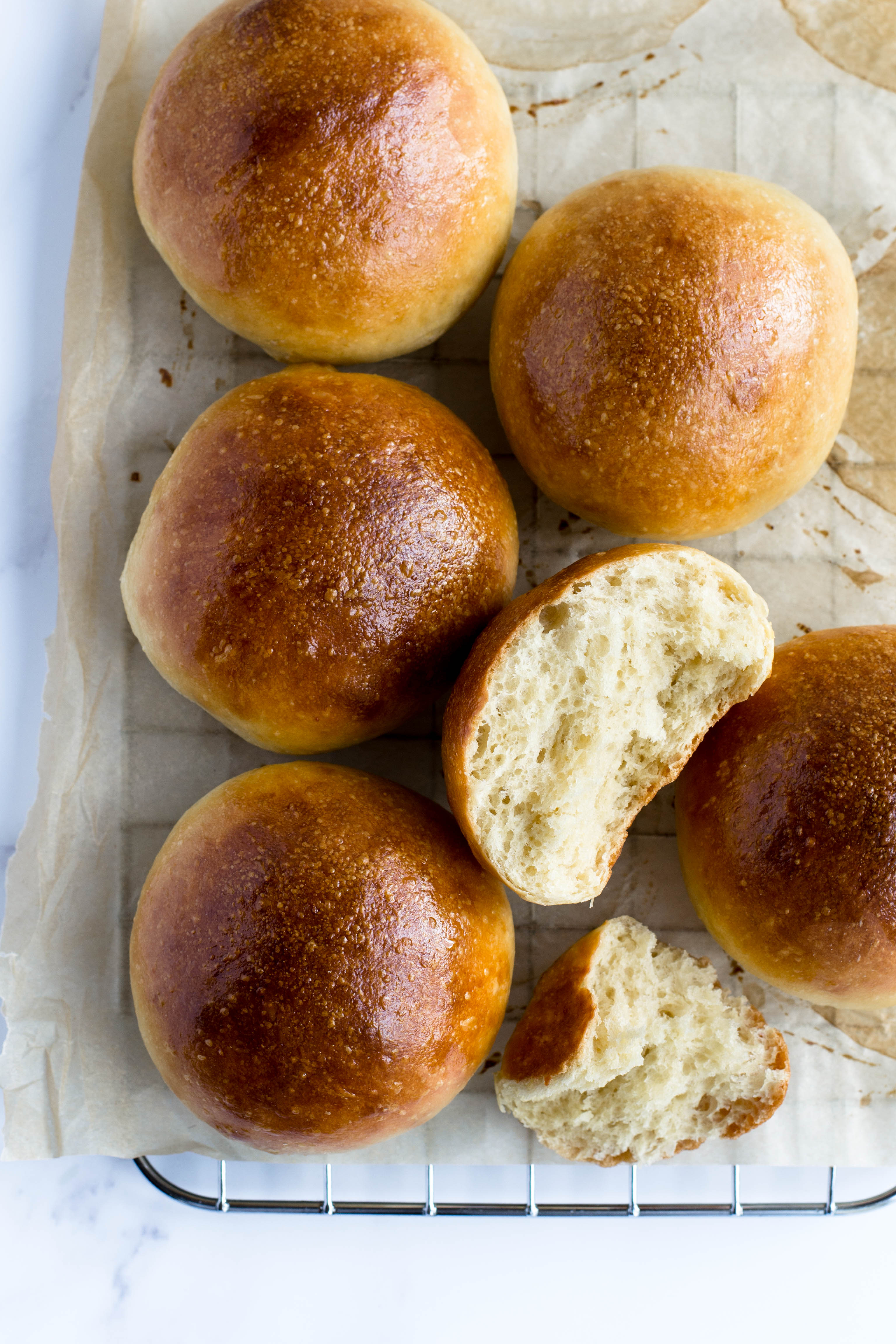
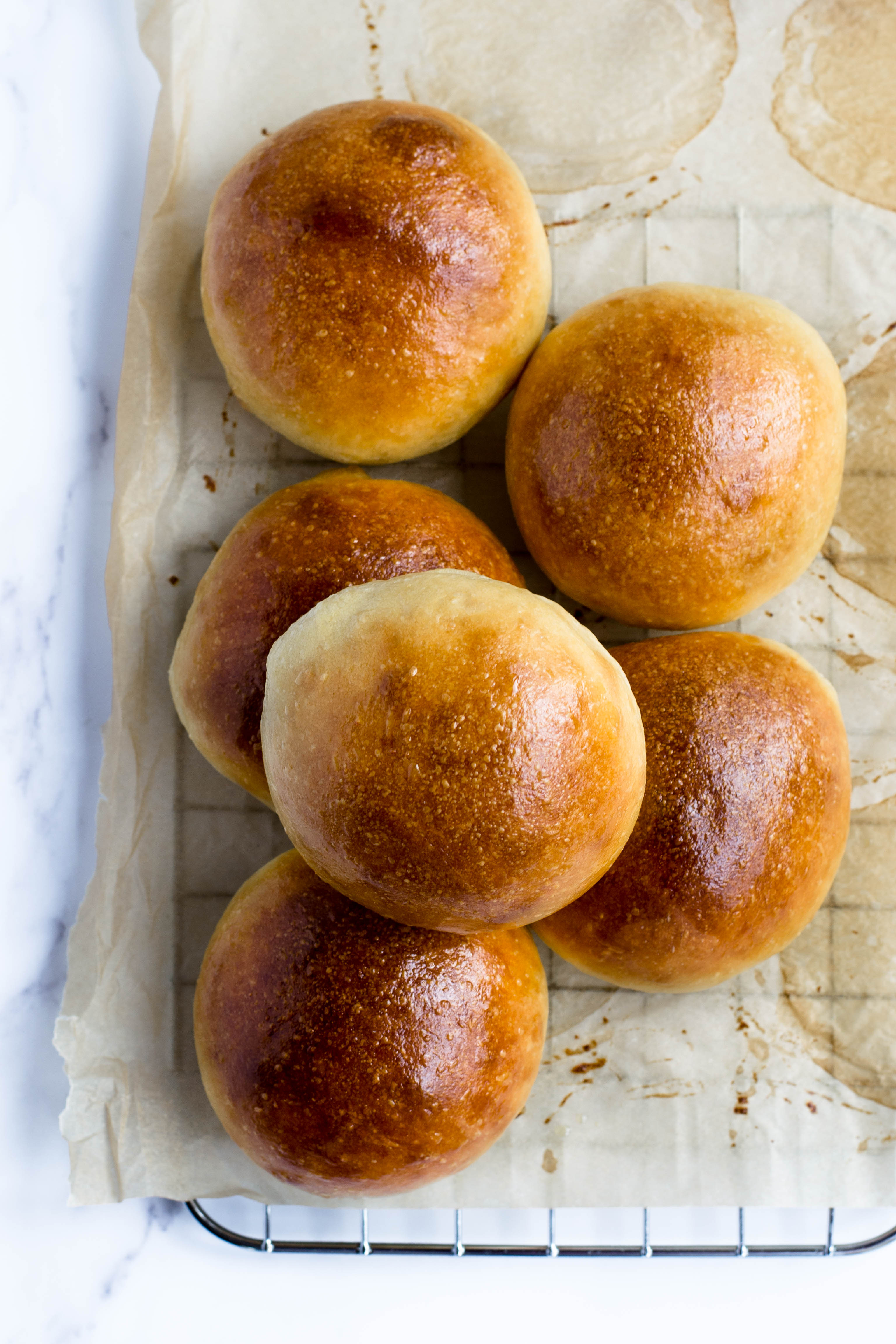
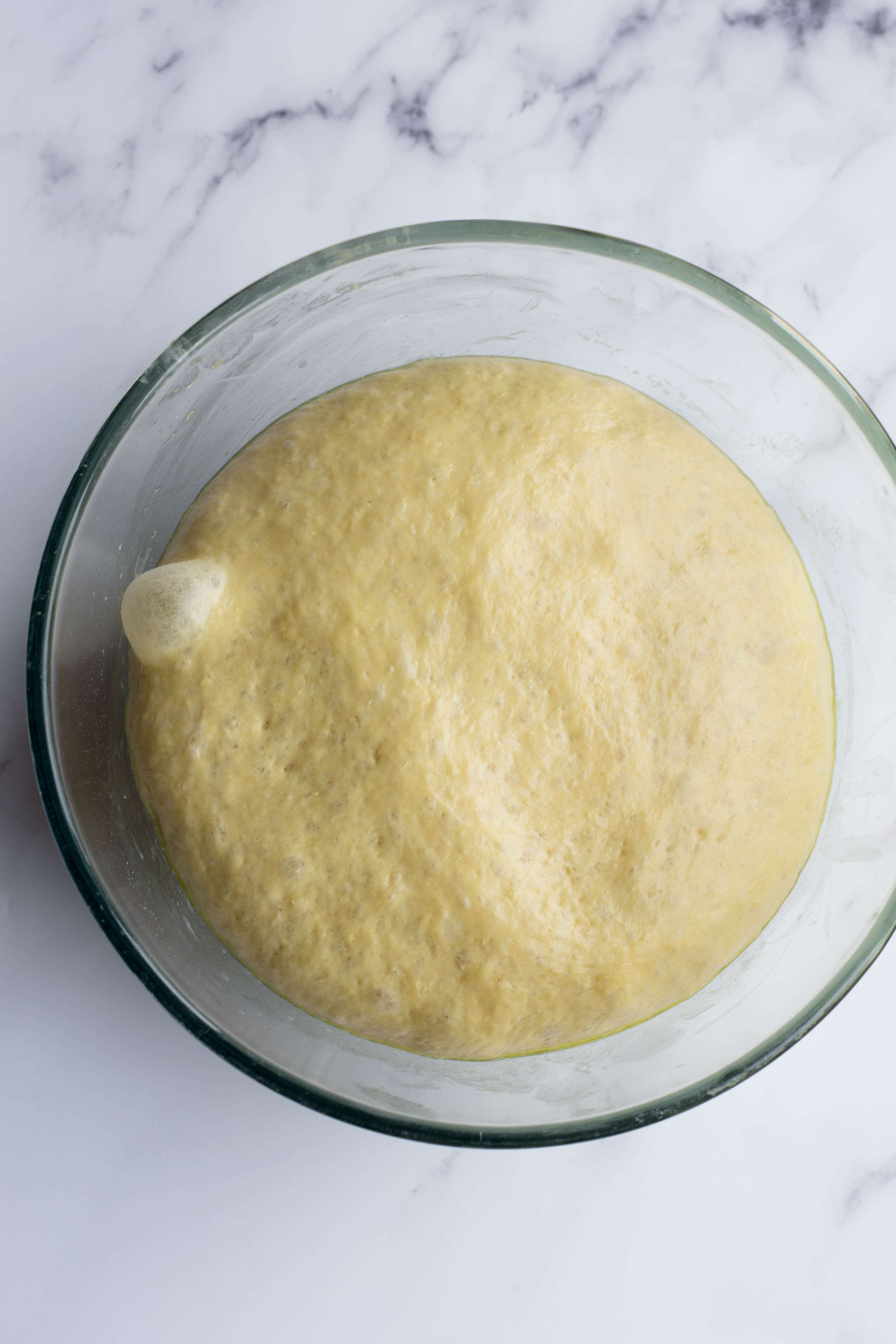
Soft brioche burger buns: the dough after rising
Soft brioche burger buns: the buns after rising and before the egg wash

PREPARAZIONE

  • Avrai bisogno di 2 ciotole: una per gli ingredienti liquidi ed una per quelli secchi. Mischia tutti gli ingredienti secchi in una ciotola piuttosto capiente. Apri le uova in una ciotola più piccola (questo è il momento giusto per mettere da parte quei cucchiaini di uova da usare successivamente – puoi anche saltare questo passaggio se preferisci, ma ricorda che per spennellare i panini ti servirà una piccola quantità di uova, quindi assicurati di evitare sprechi di cibo). Utilizzando una frusta mischia bene le uova con yogurt, 3/4 della quantità complessiva di acqua ed il burro sciolto (tiepido).
  • Aggiungi gli ingredienti liquidi nella ciotola contenente quelli secchi ed inizia ad impastare, inizialmente con un cucchiaio, poi con le mani: controlla l’impasto passo dopo passo ed inizia ad aggiungere lentamente i 3 cucchiai di olio d’oliva e la parte restante di acqua (potresti dover usare una quantità di acqua diversa, in base al tipo di farina che hai scelto e alla tua esperienza nell’impastare a mano).
  • Lavora l’impasto per circa 5 minuti finchè non ottieni un risultato morbido, liscio ed elastico: lascialo lievitare in una ciotola (cosparsa con un pochino d’olio d’oliva) e coperta con un canovaccio da cucina pulito o un involucro riutilizzabile (come quelli fatti con cera d’api). Questo passaggio richiederà circa 1-1.5 ore, in base alla temperatura della stanza.
  • Quando l’impasto sarà raddoppiato in volume, dividilo in 6 pezzi uguali (puoi fare 6 panini da 93 g ognuno – questi sono panini con un a misura classica, ma puoi anche farli di dimensioni differenti). Fai roteare tra le mani ogni pezzetto di impasto finchp non otterrai delle palline perfettamente tonde (assicurati che il fondo dei panini sia fatto bene, in questo modo l’aspetto dopo cottura sarà migliore). Mettili in una teglia da forno rivestita con carta forno o con un’alternativa riutilizzabile, assicurandoti che ci sia abbastanza spazio tra un panino e l’altro per permettergli di lievitare.
  • Copri i panini con un canovaccio da cucina pulito, poi lasciali lievitare per circa 45 minuti, finchè non saranno più o meno raddoppiati in volume. Spennella con delicatezza i panini con una miscela di tuorlo d’uova (vedi note precedenti) e 2 cucchiai di latte. Cuoci in forno preriscaldato a 180°C per circa 15-18 minuti.
  • Questi panini si conservano bene fino a 3 giorni, ma puoi anche congelarli.
  • Sei alla ricerca di qualche idea su come utilizzarli? Ne puoi trovare alcune sulla mia pagina Instagram oppure puoi provare i miei burger di tonno!
Easy tuna burgers with capers

Se questo post ti è piaciuto, condividilo con i tuoi amici usando i link qui sotto. Non dimenticare di taggarmi (@amatterofnourishment) su Instagram se provi questa ricetta: mi piacerebbe molto vedere le tue creazioni!

How to make soft brioche burger buns

(read in Italian)

If you love a burger wrapped in a soft, pillowy brioche-style bun, here you can finally learn how to make this kind of bread at home and, at the same time, you’ll get some proper insights on the reasons why each ingredient plays a key role in this simple recipe!

Homemade soft brioche burger buns

I’ve tried endless combinations for this kind of bread during the years both made from scratch and inspired by other recipes (some pretty tasty though!) and, eventually, I found exactly what I was looking for!

But it’s not just a matter of taste: having a great combination of consistency, fluffiness, flavour, look, and taste is actually the key to the best homemade burger bun. Don’t underestimate how powerful it can be having the right bread with your burger: I had several disappointing burger’s experiences in which the patty and the toppings were delicious but the bread was awful; I’m afraid but this for me is a no-no. There are patties (both veggie or not) and toppings that would pair well with different kinds of bread because you don’t necessarily have to choose a brioche-style bun but if you are going to pick that road, then you have to do a bit of research.

Have you ever wondered how exactly can one extra egg or a few tablespoons of olive oil affect quite a lot your baked goods? Or why you should check the protein content of the flour? It’s all a matter of food chemistry!

Some of the chemistry behind this recipe:

  • FATS: for this recipe, I have used a combination of butter, olive oil, and full-fat yogurt. Due to their inner different nature, they all play a specific role in contributing to the consistency and flavour of the final result. Since they affect the formation of the network of protein related to gluten (but they don’t contribute to it, apart from that small water content found in butter), identifying the right ratio between fats and flour is essential.
  • BUTTER AND OLIVE OIL: while olive oil is primarily made of lipids (triacylglycerols, approx. 99%), butter is mainly made of butterfat but it also has a percentage of water and a small part of milk protein (in the EU the fat content is between 80 and 90%, the maximum water content is 16% and there is no more than 2% of non-fat milk solids). The characteristic composition of butter and olive oil give them different physical properties (think about how butter looks like at room temperature and compare it with olive oil) and this will influence their effect on the baked goods. It’s also important to note that the protein in butter brown while the bread bakes, contributing to the final nutty flavour, and the olive oil gives a unique flavour to the final result. A good balance between butter, olive oil and yogurt (another source of fats and protein) gives you a bread with a great combination of softness and density.
  • EGGS: they enrich the bread with fats, protein, and water. These 3 components contribute to softness, structure, and gluten formation. Using just 1 egg in this recipe, you’ll get a bun that is less dense and more crumbly but, upgrading this amount to 2, you’ll get a softer and denser bread that holds perfectly its structure while you eat your burger (this result is not completely related to the extra egg, because it’s more due to a combination of factors but I could notice a difference just with this change).
  • SUGAR: there’s just a small amount of it in this recipe but it makes the difference. Sugar plays different roles in this preparation: 1) it helps with the process of rising and with the fermentation (sugar is a source of readily available food for the yeast); 2) it contributes to the colour, the flavour and the softness of bread. I prefer using dark muscovado sugar that has a different composition from white sugar and it’s more aromatic (white sugar is crystallised sucrose – brown sugar is mainly made of crystallised sucrose but it also has glucose, fructose and trace minerals).
  • GLUTEN: when the flour is mixed with a liquid, the gluten molecules (protein) become active: this means that they will tend to bond with each other and create a specific elastic structure made of protein in which the air bubbles will be trapped. Pair this effect with the leavening process and the other ingredients, and you’ll get the “fluffy factor” of your bread. Gluten obviously is helpful but you can make fluffy bread with gluten-free flours, too (it just takes a bit more of work to get the recipe right). It’s useful to keep in mind that both fats and eggs affect the formation of this network of protein. By using both butter and olive oil, I managed to get that cake-like effect typical of brioche bread without changing the initial amount of butter and sugar: this is related to how the oil interacts with the flour.
  • FLOUR: not all flours are created equally; for making bread, I prefer using what is called “bread flour” that has a slightly higher protein content compared to the classic all-purpose flour. I bake with whole grain flour most of the time and you could absolutely make brown burger buns but the quantities listed below work perfectly with white bread flour (go for an unbleached option) to get fluffy brioche-style buns.
  • MAILLARD REACTION: the protein from both eggs and flour, in the presence of heat, undergo a process called Maillard reaction that results in the browining of food and in the formation of new flavours (it’s the same reaction that takes place when, for example, you cook a piece of meat).

Would you like to see a recipe for gluten-free or vegan burger buns on this blog? Let me know in the comment below and I’ll be happy to work on it!

Homemade soft brioche burger buns

Homemade soft brioche burger buns

INGREDIENTS (makes 6 buns)

  • 300 g white bread flour*
  • 30 g butter (melted)
  • 2 eggs (approx. 100 g)**
  • 70 g plain full-fat yogurt***
  • 3-4 tbsp extra virgin olive oil
  • 50-65 ml water
  • 5 g dark muscovado sugar (you can increase this amount to 10-15 g if you prefer)
  • 4 g quick dry yeast (instant)
  • a pinch of salt

*To give you an idea, if I compare white all-purpose flour and bread flour from the same brand, they have 10 g and 12.6 g of protein respectively (they also have a different amount of carbohydrates, that’s higher for the all-purpose flour).

**I separate from this amount approx. 2 tsp of yolk and keep them in the fridge for the final egg wash.

***If you have just low-fat yogurt available, make these changes to the recipe: use 100 g of yogurt, only approx. 15 ml of water and 1 extra tbsp of olive oil.

Soft brioche burger buns: the dough after rising
Soft brioche burger buns: the buns after rising and before the egg wash

METHOD

  • You’ll need 2 separate bowls: one for the liquid ingredients and one for the dry ones. Place in a large bowl all the dry ingredients and mix well. In a smaller bowl, add the eggs (now it’s the right time to save those few teaspoons for later – you can skip this step if you prefer using another egg for the final egg wash but keep in mind that you’ll only need a small amount of it, so be sure those ingredients don’t end up being wasted), the yogurt, 3/4 of the total amount of water, and the melted butter (slightly warm): use a whisk to mix well all these ingredients together.
  • Add the liquids into the bowl with the dry ingredients and start mixing the dough with a spoon at the begin and with your hands later on: check the dough step by step and start adding 3 tablespoons of olive oil and the remaining amount of water in small portions (you may require a slightly different amount of water, depending on your flour and kneading experience).
  • Knead the mixture for approx. 5 minutes until you get a soft and smooth dough: allow it to rise in a bowl (with a bit of olive oil) covered with a clean kitchen towel or a reusable wrap. This step will take approx. 1-1.5 hours, depending on the temperature of the room.
  • Once the dough has doubled in size, divide it into 6 equal pieces. You can make 6 buns of 93 g each – these are standard-sized buns but you can decide to make them bigger or smaller, according to your preferences. Roll each piece of dough with your hands to get a perfectly round ball (ensuring the bottom of your buns is done properly will help you in getting better shaped buns). Place them on a baking sheet lined with a reusable mat or parchment paper and ensure there’s enough room between each bun.
  • Cover the buns with a clean kitchen towel, then let them rise for approx. 45 minutes, until doubled in size. Gently brush them with the egg wash (approx. 2 tsp egg yolk + 2 tsp of milk) and bake in a preheated oven at 180°C for approx. 15-18 minutes.
  • These burger buns will keep well for up to 3 days but you could also freeze them.

Looking for ideas for your burgers? Check the graphics below or try my recipe for some tasty tuna burgers!

Soft brioche burger buns: an example with a tuna burger
Homemade soft brioche burger buns: an example with a veggie burger

If you liked this post, share it with your friends using the buttons below! Don’t forget to tag me @amatterofnourishment on Instagram if you try this recipe: I’d love to see your creations!
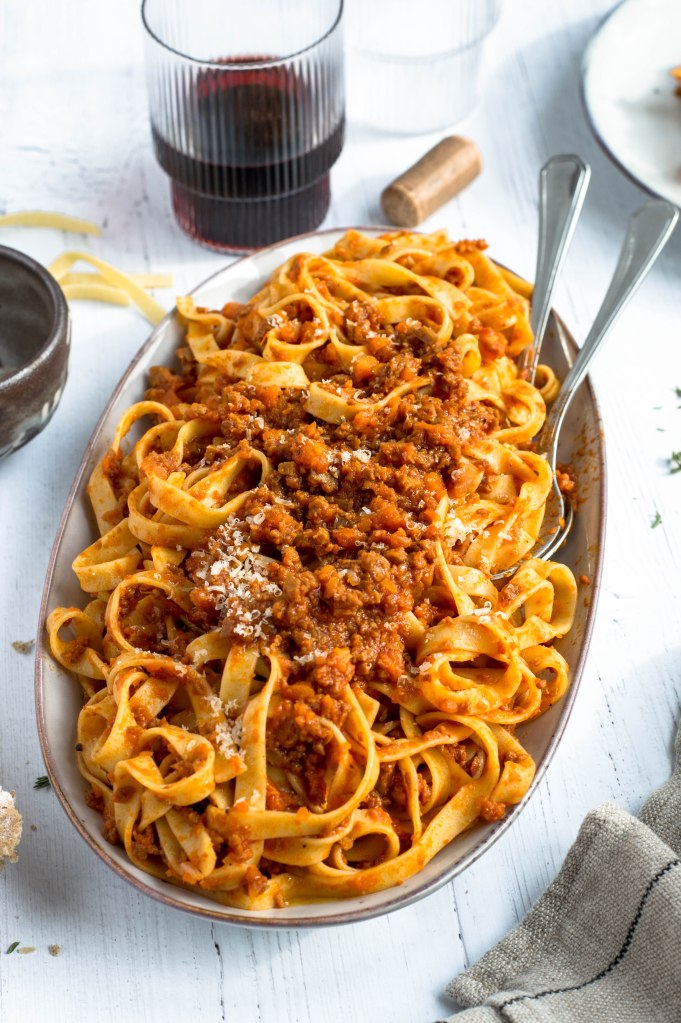
Il mio famoso ragù di seitan (vegano)

(read in English)

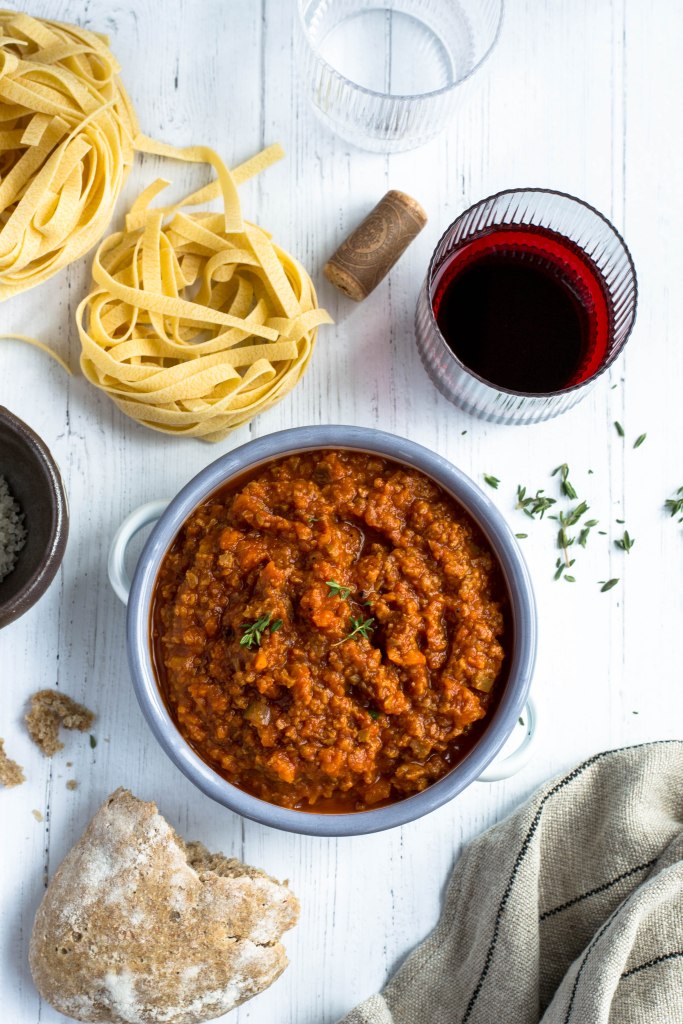
Un’ottima ricetta per un ragù vegano che si sposa benissimo con un bel piatto di pasta: per prepararlo avrai bisogno di pochi ingredienti essenziali oltre al seitan e potrai tranquillamente cucinarlo in anticipo visto che risulta anche più buono il giorno dopo (e non è solo un mio parere… è chimica!).

This vegan ragù is the ultimate comfort food and it will easily become one of your favourite plant-based pasta sauces: it only requires a few simple ingredients along with seitan and it's even better the day after! Recipe on amatterofnourishment.com

Il ragù (o ragù alla Bolognese) è un classico del panorama gastronomico dell’Emilia-Romagna (da dove provengo!). Spesso chiamato anche solo “sugo alla Bolognese”, è una preparazione a base di carne e ogni città (ed a volte anche ogni persona) ha le sue variazioni: è una zona in cui il cibo viene preso piuttosto sul serio e le persone finiscono spesso a dibattere su queste differenze, indipendentemente dal fatto che siano importanti o minime.

Questo ragù interamente veg a base seitan è stata una delle prime ricette che ho ricreato in versione vegana anni fa quando decisi di iniziare a cambiare la mia alimentazione e ridurre il consumo di carne (in seguito ho poi optato per un’alimentazione inizialmente vegetariana e, in seguito, vegana – ma questa è un’altra storia). La ragione dietro a tutto ciò non era la voglia di trasformare in qualcos’altro ogni ricetta classica che contenesse carne: siamo tutti un po’ abitudinari in fondo in fondo e, da dove provengo, nella maggior parte delle cucine si prepara una pentola di ragù tradizionale più o meno ogni settimana per poi abbinarlo a pasta, pane o anche riso, quindi credo di non essere l’unica persona che, dopo aver deciso di consumare meno carne, ha naturalmente creato una versione alternativa del ragù più che altro per abitudine.

Anche se la maggior parte dei piatti che cucino nella vita di tutti i giorni sono vegetariani, al momento non seguo nessuno tipo particolare di alimentazione, ma questo ragù vegano ha sempre un posto speciale nel mio cuore e sulla mia tavola. Spesso parlo di come il cibo sia molto più di un mucchietto di calorie o nutrienti e questa è una perfetta rappresentazione di ciò che intendo: questo ragù mi ricorda i primi tentativi attuati per cambiare la mia alimentazione, il piccolo appartamento di Bologna dove ho vissuto mentre frequentavo l’università, il mio ragazzo che chiede sempre il bis quando lo preparo… e tanto altro! Posso dire in tutta onestà che preferisco questa versione a quella tradizionale e probabilmente non è solo una questione di gusto.

ALTRI DETTAGLI SU QUESTA RICETTA

  • IL TEMPO DI COTTURA: questa versione vegana, come quella tradizionale, è piuttosto semplice da preparare, ma necessita di un po’ di pazienza per la cottura, che deve essere lenta e deve durare qualche ora se vuoi ottenere un risultato davvero saporito. Per trovare un giusto equilibrio tra realtà e gusto, il tempo di cottura potrà essere indicativamente tra le 1.5 e le 4 ore (alcune persone dedicano giornate intere alla preparazione tradizionale!). Ovviamente potresti anche cucinarlo in 20 minuti, ma il sapore non sarà lo stesso.
  • COME ABBINARE QUESTO SUGO: per un risultato ottimale usa delle tagliatelle o delle pappardelle. Anche qualcosa di diverso come rigatoni, penne, tortelli freschi o gnocchi di patate sono ottime opzioni, ma cerca di evitare gli spaghetti: c’è un grande dibattito su questa questione visto che un piatto chiamato “spaghetti alla Bolognese” è piuttosto famoso nel mondo, ma non lo troverai sicuramente a Bologna!
  • L’UTILIZZO DEL SEITAN: se provi a fare una veloce ricerca online, troverai tantissime idee per il ragù senza carne. Lenticchie, fagioli neri, funghi, soia disidratata, tofu: ho provato tutti questi ingredienti, ma nessuno di essi riesce ad essere davvero l’elemento chiave per un sugo per la pasta vegano buono come quando utilizzo il seitan (sfortunatamente, questa non è un’opzione per chi deve evitare il glutine o il grano – se vorresti vedere una versione senza glutine di questo sugo su questo blog, lascia un commento qui sotto e ci lavorerò sicuramente!).

COS’È IL SEITAN?

Il seitan (spesso chiamato anche “proteina di grano” o “muscolo di grano”) si prepara lavando via l’amido da un impasto fatto con farina di frumento; quindi, essenzialmente, è un cibo ricco di proteine e composto da glutine (può anche essere preparato in casa utilizzando delle miscele apposite (che semplificano un po’ le cose rispetto all’utilizzo della farina classica) o si può acquistare già pronto). Grazie alla sua consistenza, sapore ed contenuto proteico, il seitan può costituire un’alternativa per ideare un piatto senza carne diverso dal solito. Quest’alimento non può essere consumato da persone che non possono mangiare glutine o grano. Le opzioni disponibili in commercio alle volte sono ricche di sodio, quindi è bene prestare attenzione a questo particolare ed adattare i piatti in base alle proprie necessità.

This vegan ragù is the ultimate comfort food and it will easily become one of your favourite plant-based pasta sauces: it only requires a few simple ingredients along with seitan and it's even better the day after! Recipe on amatterofnourishment.com

IL MIO FAMOSO RAGÚ DI SEITAN (VEGANO)

Ingredienti

  • 200 g di seitan
  • 500 ml di passata di pomodoro
  • 130 g di carote (circa 2 carote di medie dimensioni)
  • 50 g di sedano (1-2 gambi di medie dimensioni)
  • 1 scalogno
  • 3-4 pomodori secchi (opzionale)
  • olio extra vergine d’oliva
  • 1/3 di cucchiaino di paprika
  • un pizzico di pepe nero
  • un pizzico di sale

Preparazione

  1. Organizza bene gli ingredienti prima di iniziare a cucinare: prepara lo scalogno tagliato finemente, frulla in piccoli pezzi le altre verdure e sminuzza il seitan usando un frullatore (vuoi ottenere un effetto “macinato”) – metti queste 3 preparazioni in ciotole separate.
  2. In una pentola, scalda 1 cucchiaio di olio extra vergine d’oliva, poi aggiungi lo scalogno, mescolando finchè non inizia a diventare dorato. Subito dopo aggiungi nella pentola le altre verdure e fai soffriggere il tutto per circa 1 minuto. Seguendo lo stesso metodo, aggiungi poi il seitan e mischialo bene con il resto degli ingredienti.
  3. Gli ultimi ingredienti da aggiungere sono la passata di pomodoro e le spezie. Solitamente all’inizio utilizzo un pizzico di sale, la paprika e 1/2 cucchiaino di pepe nero appena macinato, poi, quando il ragù è pronto, lo assaggio ed aggiusto le quantità di paprika e pepe nero in base alle mie preferenze.
  4. Aggiungi anche un po’ d’acqua (giusto la quantità necessaria per coprire tutti gli ingredienti), copri la pentola con un coperchio e riduci la fiamma.
  5. Cuoci il ragù mescolando occasionalmente per almeno 1 ora e mezzo. Come dicevo nelle note qui sopra, sarebbe meglio cuocerlo più a lungo, anche fino a 4 ore (ovviamente potrai dover aggiungere dell’acqua in fase di cottura, tenendo presente che il risultato finale dovrà essere cremoso, non liquido – termina la cottura senza coperchio per gli ultimi 15-20 minuti).
  6. Nella scelta della pentola per questa ricetta, ricorda che ti servirà qualcosa che sia abbastanza capiente in modo da poter ospitare tutti gli ingredienti, con il coperchio e con un fondo abbastanza spesso per consentirti di cuocere il ragù per alcune ore in tranquillità (con queste quantità potrai preparare il sugo per la pasta per 3-4 persone).

Se questo post ti è piaciuto, condividilo con i tuoi amici usando i link qui sotto. Non dimenticare di taggarmi @amatterofnourishment su Instagram se provi questa ricetta: mi piacerebbe molto vedere le tue creazioni!

My famous seitan ragù (vegan)

(read in Italian)

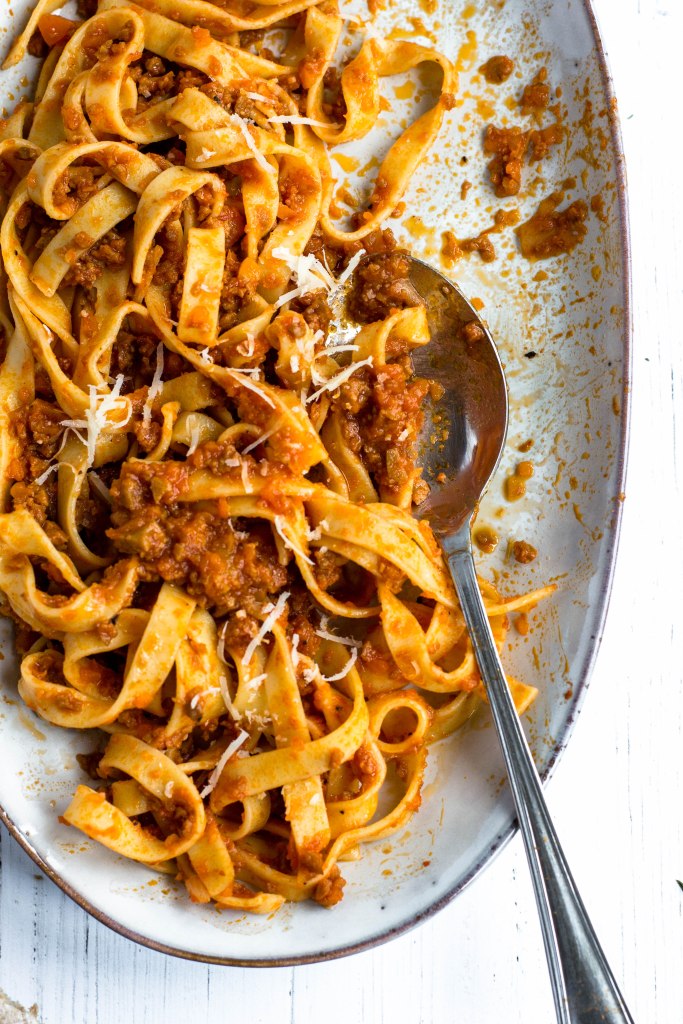
This vegan ragù is the ultimate comfort food and it will easily become one of your favourite plant-based pasta sauces: it only requires a few simple ingredients along with seitan and it’s even better the day after (not just in my opinion… that’s chemistry, folks!).

This vegan ragù is the ultimate comfort food and it will easily become one of your favourite plant-based pasta sauces: it only requires a few simple ingredients along with seitan and it's even better the day after! Recipe on amatterofnourishment.com

Ragù (or “ragù alla Bolognese”) is a traditional Italian sauce from the area called Emilia-Romagna (my homeland!). Widely known also as “Bolognese sauce”, it’s a meat-based preparation and each town (and sometimes even each person) has its own variations: in that area, we take food pretty seriously and people easily end up arguing about these differences regardless of them being major or minor changes.

This vegan ragù made with seitan has been the first recipe I recreated in a meatless version years ago when I decided to change my diet and reduce the consumption of meat (I then decided to follow a completely vegetarian diet first and vegan soon after but this is another story!). The reason behind this choice wasn’t the will to transform each meat-based recipe into something else: we are creatures of habit and where I come from, most families are used to make a big pot of traditional ragù each week and eat it with pasta, bread, and sometimes even a risotto, so I think I’m not the only one who, after choosing to eat less meat, naturally started to make a plant-based ragù just out of habit.

Currently, even if most of the meals I cook in the everyday life are vegetarian, I don’t follow a specific diet but this plant-based ragù has a special place in my heart and on my table. I often talk about food saying that is way more than just a bunch of calories or nutrients and this is a great representation of what I mean: this ragù reminds me of my first attempts to change my diet, the small apartment in Bologna I lived in while I was in college, my boyfriend who always asks for more every time I make it, and much more! I can honestly say I prefer this version to the traditional one and probably is not just for the taste.

MORE DETAILS ABOUT THIS RECIPE

  • COOKING TIME: this veggie version, like the traditional one, is pretty easy to make but needs to be cooked slowly over a few hours to get a truly flavourful result. To find a good balance between reality and taste, I would say you need a cooking time between 2 and 4 hours (some people cook the traditional one for an entire day or even more!). Sure, you could make it in 20 minutes but it won’t taste the same.
  • HOW TO PAIR THIS SAUCE: to get the most out of this ragù, use it with tagliatelle or pappardelle. Even something different like rigatoni, penne, freshly made tortelli or potato gnocchi would work well but, please, avoid using spaghetti: there’s a big debate on this point because a dish called “spaghetti alla Bolognese” is pretty famous worldwide but you won’t find it in Bologna!
  • WHY USING SEITAN? If you try to have a look online, you’ll find hundreds of ideas for a vegan Bolognese sauce: lentils, black beans, mushrooms, dry soy chunks, tofu… I tried all of them but nothing makes a good plant-based pasta sauce like seitan (unfortunately, this is not an option for someone who needs to avoid gluten or wheat – if you’d like me to share a gluten-free version of this sauce, let me know and I’ll work on it!).

WHAT IS SEITAN?

Seitan (sometimes called “wheat protein”) is made by rinsing away the starch from a dough made with wheat flour, so it’s essentially a high-protein food made of gluten (it can also be prepared at home using a special flour called vital wheat gluten or you can buy it in a ready to eat version). Seitan has a high protein content and it can be a good alternative for creating a meatless meal with a different twist. It must be avoided by people who can’t eat gluten or wheat. Commercially available options can be rich in sodium, so just pay attention to this point and build your meal accordingly to your needs.

This vegan ragù is the ultimate comfort food and it will easily become one of your favourite plant-based pasta sauces: it only requires a few simple ingredients along with seitan and it's even better the day after! Recipe on amatterofnourishment.com

MY FAMOUS SEITAN RAGU’ (VEGAN)

Ingredients

  • 200 g seitan
  • 500 ml tomato passata
  • 130 g carrots (approx. 2 medium-sized carrots)
  • 50 g celery (1-2 medium-sized stalks)
  • 1 shallot
  • 3-4 sun-dried tomatoes (optional)
  • extra virgin olive oil
  • 1/3 tsp paprika
  • a pinch of black pepper
  • a pinch of sea salt

Preparation

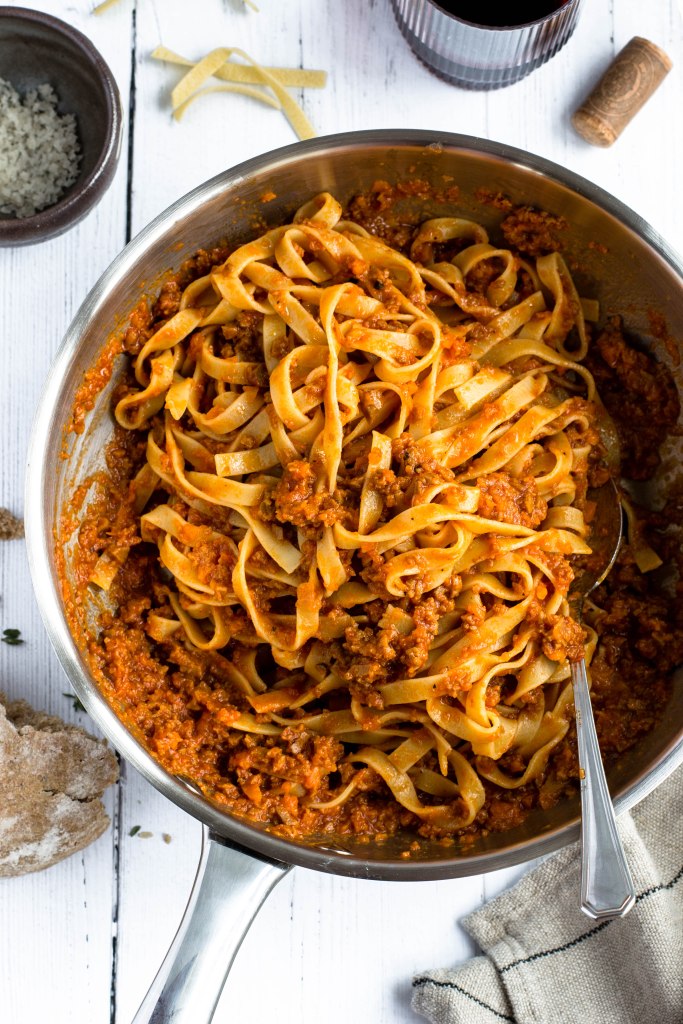
  1. Organise your ingredients before starting to cook: prepare the finely chopped shallot and, with a blender, reduce into small pieces both the other vegetables and the seitan (for this ingredient you want to get a kind of “minced” texture) – keep these 3 preparations into separate bowls.
  2. Heat 1 tbsp of olive oil in a pot and add the shallot, then stir until it starts to turn golden. Suddenly after, add the other vegetables in the same pot and stir well for approx. a minute. Following again the same procedure, add the seitan and mix well.
  3. The last few ingredients to add are the tomato passata and the spices. At the begin, I usually add just a pinch of salt, the paprika, and 1⁄2 tsp of freshly crushed black pepper but, when the ragù will be ready, I’ll taste it and adjust the spices according to my preferences.
  4. Add also a little bit of water (just the right amount to keep your ingredients slightly covered), put a lid on the pot, and reduce the heat.
  5. Cook your ragù stirring occasionally for at least 1 hour and a half, even better if you can cook it for 2-4 hours (you’ll obviously need to add more water while the ragù is cooking but keep in mind that the final result should be creamy, not watery – remove the lid for the last 15-20 minutes).
  6. For this preparation, a classic stockpot or casserole dish will work well, since you need something with enough space for all the ingredients, a lid to keep everything covered while cooking, and a good base to allow you to cook the ragù for a few hours (using these ingredients you’ll be able to make a pasta sauce for 3-4 people).

If you liked this post, share it with your friends using the buttons below! Don’t forget to tag me @amatterofnourishment on Instagram if you try this recipe: I’d love to see your creations!
Il panino perfetto per l’Estate

(read in English)

Questo panino vegetariano è caratterizzato da una buonissima combinazione di sapori e colori tipici dell’Estate, ma, se questo non dovesse essere abbastanza per conquistare il tuo palato, questa ricetta guadagna anche tanti punti extra essendo veramente semplice da preparare! In questo panino figurano ingredienti di stagione come peperoni, melanzane, pomodori e timo fresco, consentedogli di abbracciare perfettamente la mia filosofia “trarre il meglio da ogni stagione”.
This vegetarian sandwich has a lovely combination of most of the typical Summer flavours and it gets all the extra points for being super easy to make! Featuring seasonal ingredients such as tomatoes, red peppers, aubergines, and a good handful of fresh thyme, it perfectly embraces my philosophy of "get the most out of each season". You can also easily adapt this sandwich to your needs using, for example, some gluten-free bread or a dairy-free mozzarella. Recipe on amatterofnourishment.com

Pane ed olio d’oliva di buona qualità, uniti ad ingredienti di stagione, sono la chiave per preparare questa ricetta nel migliore dei modi: è un panino semplice che profuma d’Estate, con una ventata dei classici sapori Mediterranei e che, come i migliori panini che si rispettino, ha gocce di sugo che colano qua e là. Se ti è capitato di provare un piatto tipico della Catalogna chiamato Pan con tomate o Pa amb tomàquet (pane con pomodoro), noterai che esternamente questo panino ne ricorda la semplicità e la bontà (il Pan con tomate non viene preparato con pomodori a fette o tagliati finemente come nel caso della bruschetta o di un toast, ma ne utilizza bensì la polpa).

Nella mia mente l’Estate va di pari passo con i pomodori maturi e li metterei davvero in ogni piatto, partendo dalla pasta fino ad arrivare ad una colazione salata, ma qui ho deciso di utilizzare la passata (uno degli ingredienti chiave della mia dispensa). L’idea di aggiungere uno strato di passata di pomodoro sul pane (come si fa di solito con la maionese, l’hummus o qualsiasi altra salsa in un normale panino) può essere utilizzata tutto l’anno ed è un buon modo per abbinare un po’ d’Estate a delle verdure che sono tipiche di altre stagioni.

Scegli del pane di pasta madre o qualcosa di simile (anche meglio se integrale) che possa bilanciare il sapore della verdura con un gusto deciso. Potenzialmente potresti usare anche del pane al latte, una ciabatta o del pane in cassetta, ma il risultato non sarebbe lo stesso.

Quando metti il panino in forno per tostare il pane e sciogliere la mozzarella, adatta le tempistiche in base alle tue preferenze. Dopo aver provato questa ricetta alcune volte, posso dire che il momento migliore per togliere il panino dal forno è quando il pane ha acquisito un po’ di croccantezza ed il formaggio non è completamente sciolto. Puoi anche adattare facilmente la ricetta a degli specifici requisiti se necessario: ad esempio, puoi usare un pane senza glutine o scegliere un’alternativa vegana per la mozzarella.

This vegetarian sandwich has a lovely combination of most of the typical Summer flavours and it gets all the extra points for being super easy to make! Featuring seasonal ingredients such as tomatoes, red peppers, aubergines, and a good handful of fresh thyme, it perfectly embraces my philosophy of "get the most out of each season". You can also easily adapt this sandwich to your needs using, for example, some gluten-free bread or a dairy-free mozzarella. Recipe on amatterofnourishment.com

IL PANINO PERFETTO PER L’ESTATE

Ingredienti (per 2 panini)

  • 4 fette di pane (piuttosto spesse)
  • 2 melanzane di dimensioni medie
  • 1 peperone rosso di dimensioni medie
  • 6-8 cucchiai di passata di pomodoro
  • 1 manciata piccola di timo fresco
  • un pizzico di pepe nero
  • un pizzico di sale
  • olio extra vergine d’oliva

Prepara le fettine di melanzana e peperone: puoi arrostirle nel forno a 180°C per circa 15 minuti con un filo d’olio ed un pizzico di pepe e sale o grigliarle. Taglia a fette il pane e cospargi entrambi i lati interni con la passata di pomodoro (usa circa 2 cucchiai di passata su ogni lato – la quantità esatta dipende dalle dimensioni del pane). Poi aggiungi gli altri ingredienti: inizia con le fette di melanzana, seguite da peperone, mozzarella, timo, pepe ed olio d’oliva – finisci il panino con altre fette di melanzana.

Aggiungi un filo d’olio d’oliva sui lati esterni del panino. Ora puoi tostarlo in una padella antiaderente preriscaldata o passarlo in forno preriscaldato a 190°C. Cuocilo per circa 5 minuti o finchè l’esterno non sarà dorato e croccante. Non lasciare che la mozzarella si sciolga del tutto, altrimenti il panino diventerà troppo molle.

Se questo post ti è piaciuto, condividilo con i tuoi amici usando i link qui sotto. Non dimenticare di taggarmi @amatterofnourishment su Instagram se provi questa ricetta: mi piacerebbe molto vedere le tue creazioni!