Beetroot hummus

(read in Italian)

Once you learn how to make the best homemade hummus, you’ll start cooking it so often that the next step obviously has to be getting more creative in the kitchen and start exploring new flavors and ingredients. A creamy beetroot hummus is a great way to get started: pair it with bread, focaccia or crackers and some cucumber for the most simple appetizer or snack and use this tasty dip to easily increase the nutritional content (and the deliciousness) of your meal.

Smooth beetroot hummus recipe
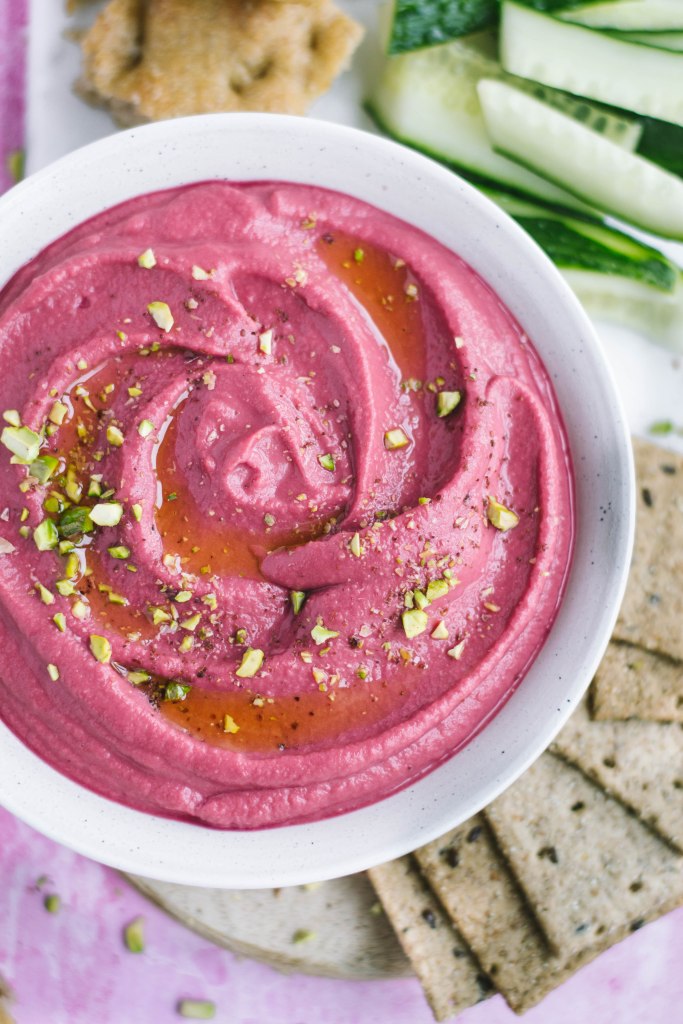
Smooth beetroot hummus with pistachios

There are so many variations of hummus you can create quite easily using seasonal products and your favorite vegetables, spices, nuts, and seeds. Two of the most creative recipes I’ve seen around recently are this tandoori hummus and this one with miso. If you require a FODMAP friendly alternative, I recommend you to check out this recipe with courgettes.

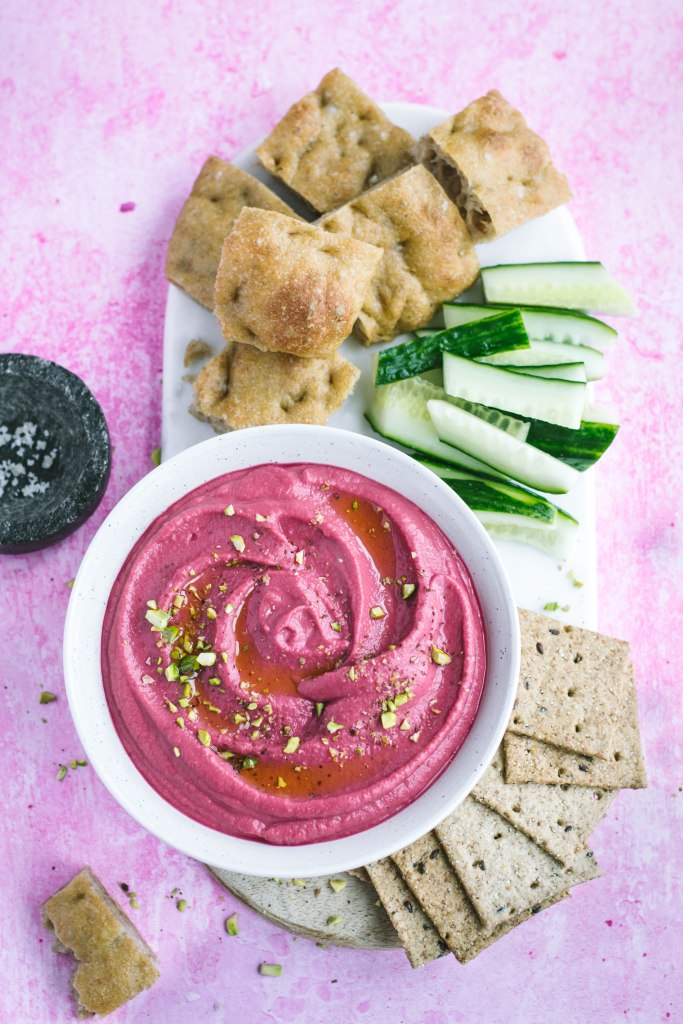
This pink hummus is one of the variations I make more often, with both raw, roasted, or steamed beetroots: the texture of the final result is different based on this factor; it will turn out creamier with roasted or steamed beetroots but, if you love this vegetable, your hummus will be delicious anyway. This creamy beetroot dip makes a lovely pair with simple toppings like, for example, a pinch of sumac, a drizzle of extra virgin olive oil, and a few chopped pistachios.

Snack platter with beetroot hummus
Smooth beetroot hummus recipe
Snack board with beetroot hummus

BEETROOT HUMMUS

Ingredients:

  • 300 g cooked chickpeas (you can decide to use the chickpeas rinsed and drained or you can opt for not rising them and also keep 3-4 tbsp of cooking water to get a creamier hummus, you can find my recipe for a basic hummus HERE)
  • 2 medium-sized beetroots
  • 2 tbsp tahini (sesame seed paste)
  • juice of 1 lemon
  • 1 tsp fennel seeds
  • 1/2 tsp ground cumin
  • a pinch of salt (optional)
  • a few tbsp of cold water (or you can use the cold cooking water from chickpeas)

Prepare the beetroots in advance if you want to cook them. Peel the beets before roasting (chopped – cook in a preheated oven at 180°C for approx. 20 minutes) or steaming them (cook until tender). Use a blender or a food processor to make your hummus – add the water in small portions step by step based on how your hummus looks like. Add the tahini as the last ingredient when you already have your creamy mixture. Add the cold and chopped beetroots into the blender with the other ingredients. Adjust the spices and lemon juice to your preferences and do the same for the toppings (feel free to add garlic to this basic recipe if you want).

If you liked this post, share it with your friends using the buttons below. Don’t forget to tag me @amatterofnourishment on Instagram if you try this recipe: I’d love to see your creations!

Pancakes alla ricotta

(read in English)

Se vuoi preparare dei pancakes super soffici in pochi minuti, l’ingrediente segreto da tenere a portata di mano è la ricotta! Aggiungendo poi anche un pochino di scorza di limone nell’impasto, otterrai un risultato dal sapore ricco, fresco e che ricorda un po’ una torta tipo quelle morbide agli agrumi.

Adoro quando i pancakes sono soffici ed hanno dei punti all’interno che ricordano un po’ la crema pasticcera. Per questo motivo, spesso aggiungo nell’impasto delle banane (frullandole con la parte liquida prevista dalla ricetta, per ottenere un risultato ancora più cremoso), dello yogurt, o del kefir. Un’altra idea per preparare, ad esempio, dei pancakes che sembrano una morbida torta al cioccolato, include l’utilizzo dell’avocado (ho condiviso la mia ricetta per i pancakes al cioccolato ed avocado qui). Per migliorare la consistenza dei tuoi pancakes, puoi anche aggiungere all’interno della zucca cotta (puoi usare la mia ricetta ricca di spezie e con farina integrale).

Ci sono tante ricette che, per aumentare la morbidezza dei pancakes, abbinano la ricotta con il latticello: qui io ho deciso di semplificare le cose ed utilizzare un ingrediente extra che ho sempre a disposizione in casa (lo yogurt al naturale).

COS’E’ ESATTAMENTE CHE RENDE QUESTI PANCAKES COSI’ SOFFICI?

Dipende da una combinazione di fattori. Possiamo trovare la risposta a questa domanda dando un’occhiata dal punto di vista chimico e nutrizionale agli ingredienti chiave di questa ricetta.

  • L’agente lievitante usato in questi pancakes è il bicarbonato di sodio. Come probabilmente saprai già, il bicarbonato è una base con un pH pari a 9 e quando viene aggiunto in una miscela, è in grado di aumentarne il pH (per un piccolo promemoria sul pH: 7 = neutro, valori più elevati = basico, valori inferiori = acido). Ho già menzionato l’uso del bicarbonato in cucina all’interno dei miei consigli su come preparare un ottimo hummus fatto in casa. Questa base reagirà con ogni acido presente nell’impasto, secondo una semplicissima reazione acido-base che genera gas (anidride carbonica – ecco perchè potrai notare delle bolle ed una leggera effervescenza nella miscela). Considera che lo yogurt ha un pH pari a circa 4-4.6, mentre la ricotta ha un pH intorno a 5.8-6 (e, come riferimento, il pH del latte è pari circa a 6.7). Quando scaldi la miscela, la reazione acido-base viene accelerata.
  • Gli ingredienti chiave di questa ricetta sono la ricotta e lo yogurt: essendo entrambi non in una versione a basso contenuto di grassi, semplicemente aumenteranno la cremosità dei pancakes grazie alla loro parte grassa (se vuoi fare un confronto, pensa a come diventa soffice il pane quando viene aggiunto latte o yogurt nell’impasto; si ottiene un effetto simile anche preparando un pane con il latte di cocco).
  • Ultimo, ma non per importanza: l’effetto del glutine. Quando la farina viene mischiata con un liquido, le molecole di glutine (proteine) si attivano: questo vuol dire che tendono a legarsi l’un l’altra ed a creare una struttura dotata di elasticità in cui le bolle d’aria rimarranno intrappolate. Abbina quest’effetto con un agente lievitante come il già citato bicarbonato, ed otterrai dei pancakes super soffici. Il glutine sicuramente è d’aiuto, ma puoi preparare dei pancakes morbidi anche con farine senza glutine!

PANCAKES ALLA RICOTTA

Ingredienti:

  • 250 g ricotta
  • 50 g yogurt al naturale non zuccherato
  • 120 g farina integrale (puoi anche decidere di usare un mix 60:40 di farina integrale e farina bianca – opta per la farina di riso integrale per un’alternativa senza glutine)
  • 2 uova
  • 1 cucchiaino di bicarbonato di sodio
  • 1/2 cucchiaino di scorza di limone grattugiata (usa limoni biologici e non trattati)
  • 1/2 cucchiaino di zenzero fresco grattugiato
  • un pizzico di sale
  • circa 100-120 ml di acqua (adatta la quantità in base alla ricotta ed allo yogurt che utilizzi)
  • da aggiungere sopra: io ho scelto dello yogurt (con un pochino di cacao in polvere), dei mirtilli e del miele

In una ciotola, mischia le uova, la ricotta, lo yogurt, lo zenzero, la scorza di limone e circa 50 ml di acqua. Mischia bene questi ingredienti, poi inizia ad aggiungere la farina (aggiungi anche altro liquido, se necessario, in piccole quantità). Mischia bene con una frusta finchè non otterrai un impasto omogeneo e senza grumi, ma non lavorarlo troppo. Avendo l’avocado nell’impasto, è importante controllare la consistenza passo dopo passo. Scalda una padella, meglio se antiaderente, su fuoco medio con 1 cucchiaino di olio extra vergine d’oliva (ma se hai una buona padella antiaderente a disposizione, puoi anche cuocerli senza olio). Usa 2-3 cucchiai di impasto per ogni pancake e cuocili da entrambi i lati finchè non si riescono a girare bene con una spatola. Mischia l’impasto prima di cuocere ogni pancake (con queste quantità dovresti riuscire a prepararne circa 8-9).

Se questo post ti è piaciuto, condividilo con i tuoi amici usando i links qui sotto!

Ricotta pancakes

(read in Italian)

Fluffy ricotta pancakes

If you want to make a stack of fluffy and soft pancakes in a matter of minutes, ricotta is the secret ingredient you should be looking for! By adding in the batter a bit of lemon zest, you’ll get the freshest and delicious combination that will help you to start the day with a smile.

I love pancakes with a “fluffy factor” on point and a soft custardy inside. That’s why I often add bananas (for the best creamy result, I blend them with the liquid of choice, based on which recipe I’m using), yogurt, or kefir to the batter. Another idea for getting soft pancakes that taste like a delicious decadent chocolate cake involves avocado (I’ve shared the recipe for my chocolate avocado pancakes here). To improve the texture of your pancakes, you can also add some cooked pumpkin into the batter and prepare a tasty Autumn-themed breakfast (you can use my recipe with plenty of spices and whole grain flour).

There are several recipes in which ricotta is paired with buttermilk, to increase the softness of the pancakes: here I’ve decided to keep the things simple and use an extra ingredient that’s always available in my house (plain yogurt).

WHAT IS EXACTLY THAT MAKES THESE PANCAKES EXTRA FLUFFY?

It’s a combination of factors. We can find the answer to this question thinking about chemistry and considering the composition of the key ingredients of the recipe.

  • The raising agent used in these pancakes is baking soda (bicarbonate of soda, sodium bicarbonate). As you probably know, sodium bicarbonate is a base with a pH of 9 and it raises the pH of a mixture when added into it (for an overview of pH values: 7 = neutral, higher values = basic, lower values = acidic). I’ve already mentioned bicarbonate within my tips on how to make the best homemade hummus. The bicarbonate will react with any acid in the batter, following a simple acid-base reaction that generates a gas (carbon dioxide – that’s why some bubbles and a light fizzing will occur in the mixture). Consider that yogurt has a pH of approx. 4-4.6, while ricotta’s pH value is around 5.8-6 (and, as a reference, milk’s pH is around 6.7). When you heat the mixture, the acid-base reaction is accelerated.
  • The key ingredients of this recipe are ricotta and yogurt: being both full-fat, they simply increase the creaminess of pancakes with their fats content (for a comparison, think about how fluffy the bread turns when there’s yogurt or milk mixed in the dough; you’ll get a similar effect with a dairy-free enriched bread made with coconut milk).
  • Last, but not for importance: the effect of gluten. When the flour is mixed with a liquid, the gluten molecules (protein) become active: this means that they will tend to bond with each other and create a specific elastic structure made of protein in which the air bubbles will be trapped. Pair this effect with a leaving agent like the baking soda mentioned above, and you’ll get the “fluffy factor” of your pancakes. Gluten obviously is an extra help but you can make fluffy pancakes with gluten-free flours, too!
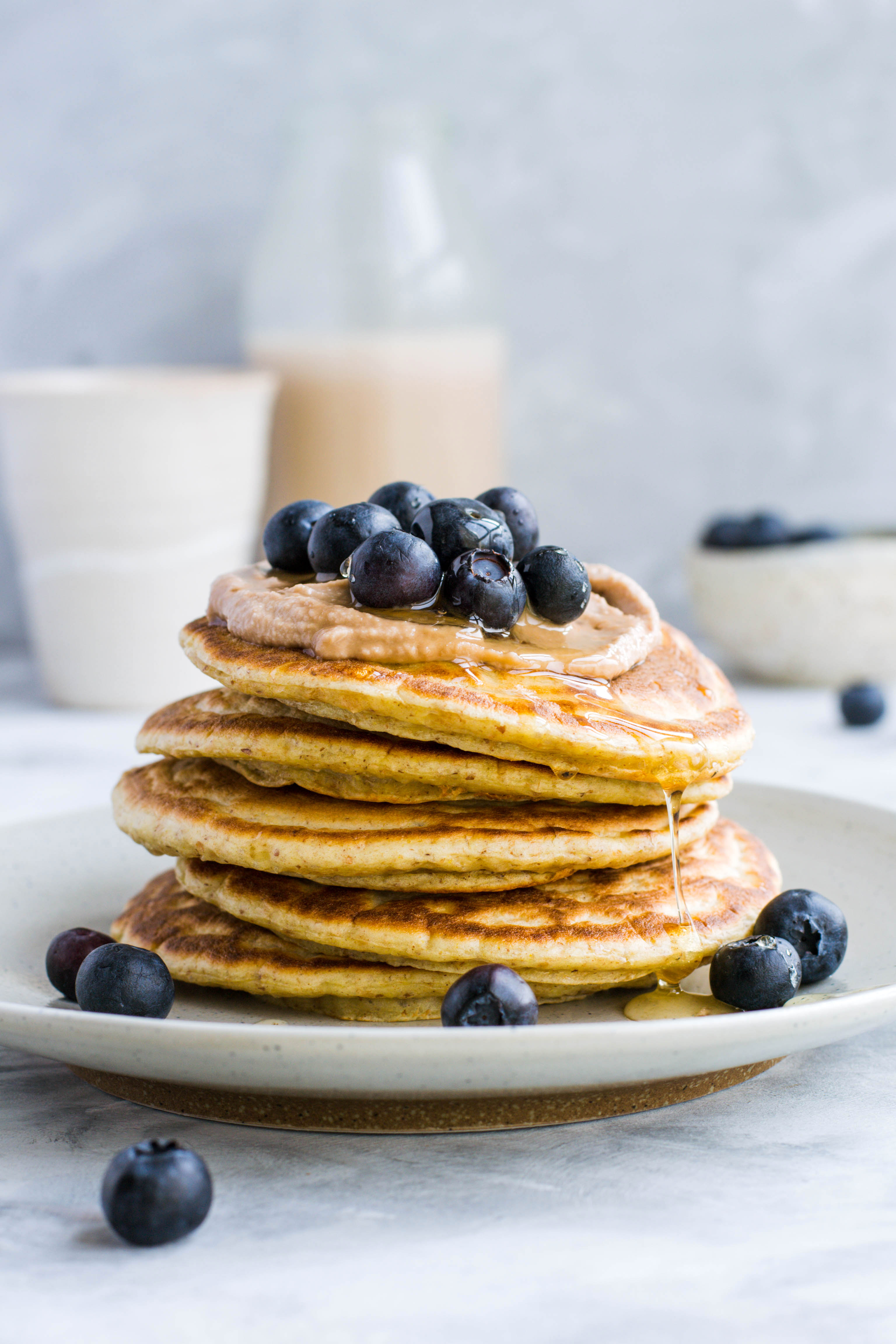
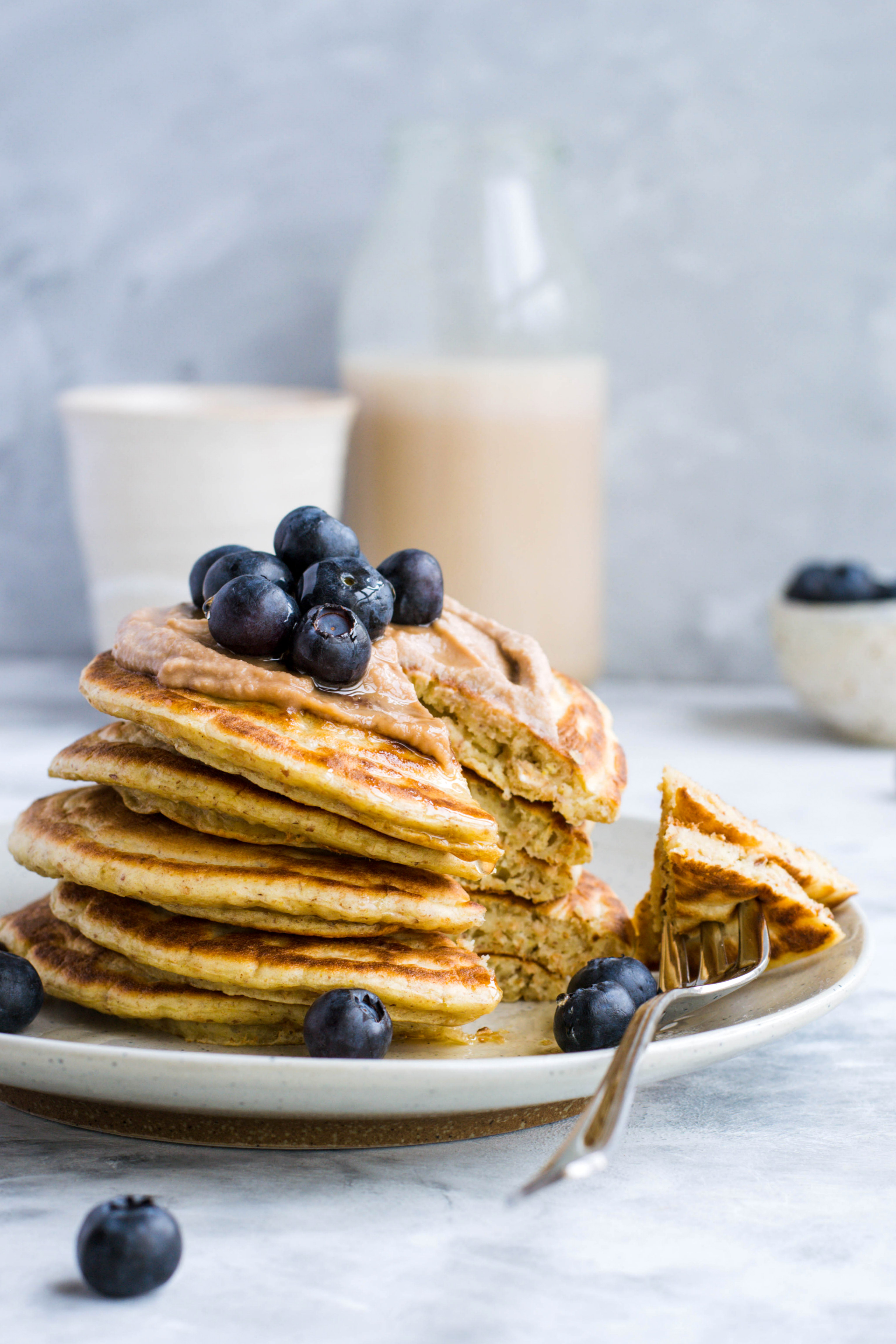
Fluffy ricotta pancakes with blueberries and honey
Fluffy ricotta pancakes

RICOTTA PANCAKES

Ingredients:

  • 250 g ricotta
  • 50 g plain unsweetened yogurt
  • 120 g whole grain flour (you can also decide to use a 60:40 mix of whole grain flour and plain white unbleached – opt for brown rice flour for a gluten-free option)
  • 2 eggs
  • 1 tsp baking soda
  • 1/2 tsp of grated lemon (use organic unwaxed lemons)
  • 1/2 tsp of grated fresh ginger
  • a pinch of salt
  • approx. 100-120 ml water (adjust the amount based on the kind of ricotta and yogurt available)
  • toppings: here I’ve used some yogurt (mixed with cacao powder), blueberries, and honey

In a medium-sized bowl, combine eggs, ricotta, yogurt, ginger, lemon zest, and approx. 50 ml of water. Mix well these ingredients and start adding the flour (add also more liquid in small portions, if necessary). Stir until there are no lumps but don’t overmix the batter. Heat a frying pan, preferably a non-stick one, on medium heat with approx. 1 tsp of extra virgin olive oil (but if you have a good non-stick pan, you can even cook them without it). Use 2-3 tbsp for each pancake, moving the pan until the batter is evenly distributed. Cook each pancake until it can be easily flipped with a spatula. Gently mix the batter before cooking each pancake. Using these quantities, you will be able to make approx. 8-9 pancakes.

If you liked this post, share it with your friends using the buttons below!

Granola al banana bread

(read in English)

Follow my blog with Bloglovin
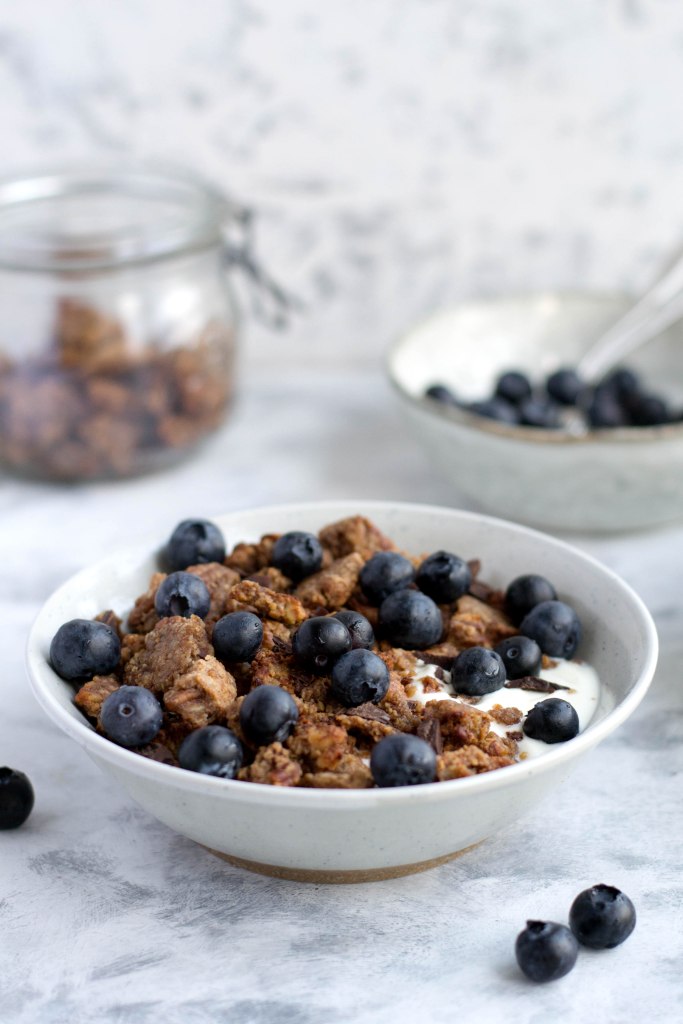
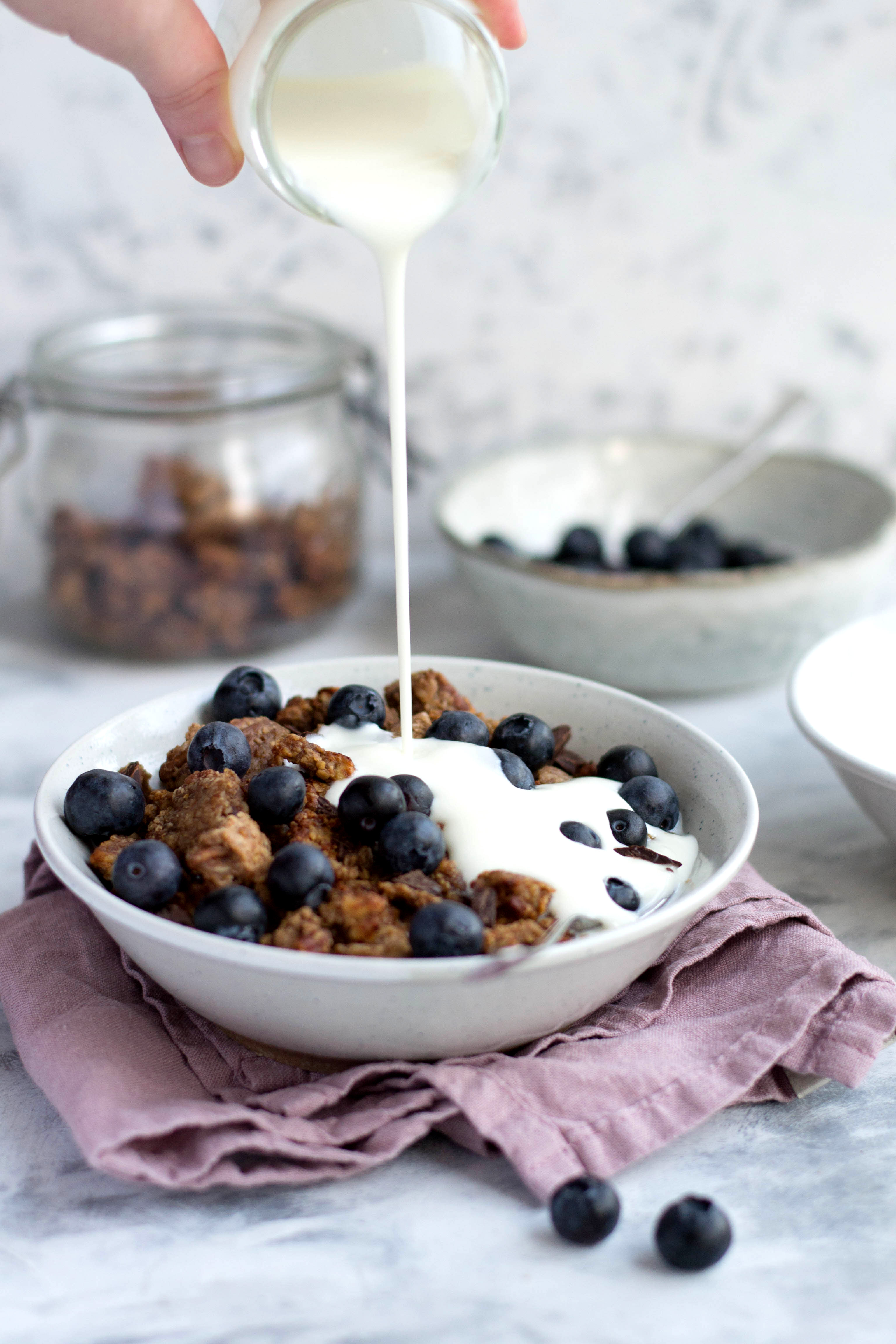
Banana bread granola with kefir and blueberries
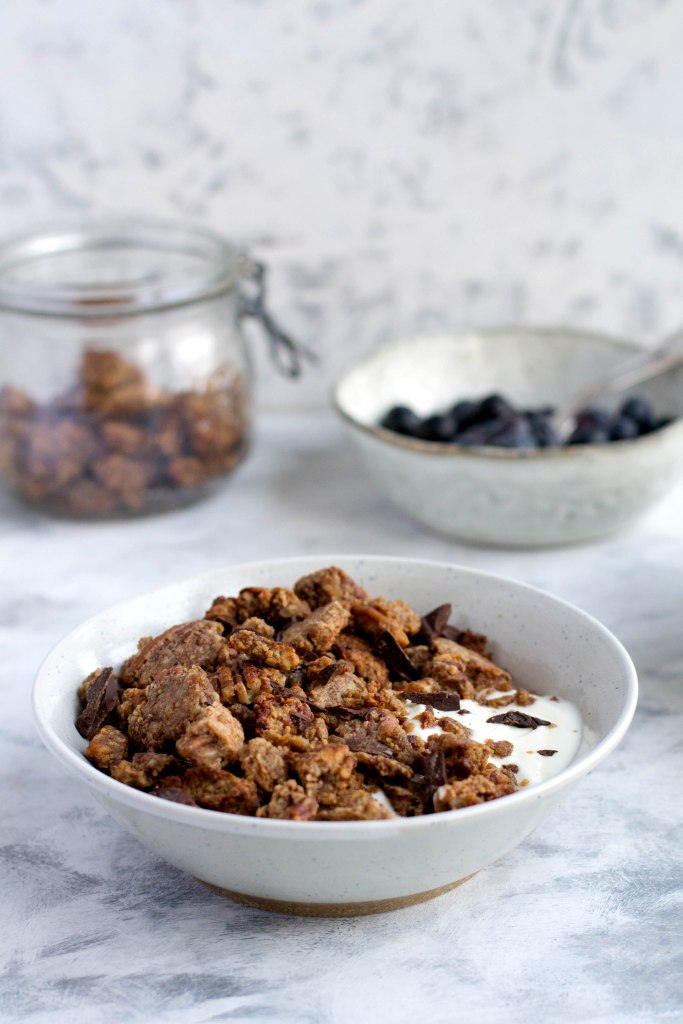
Banana bread granola

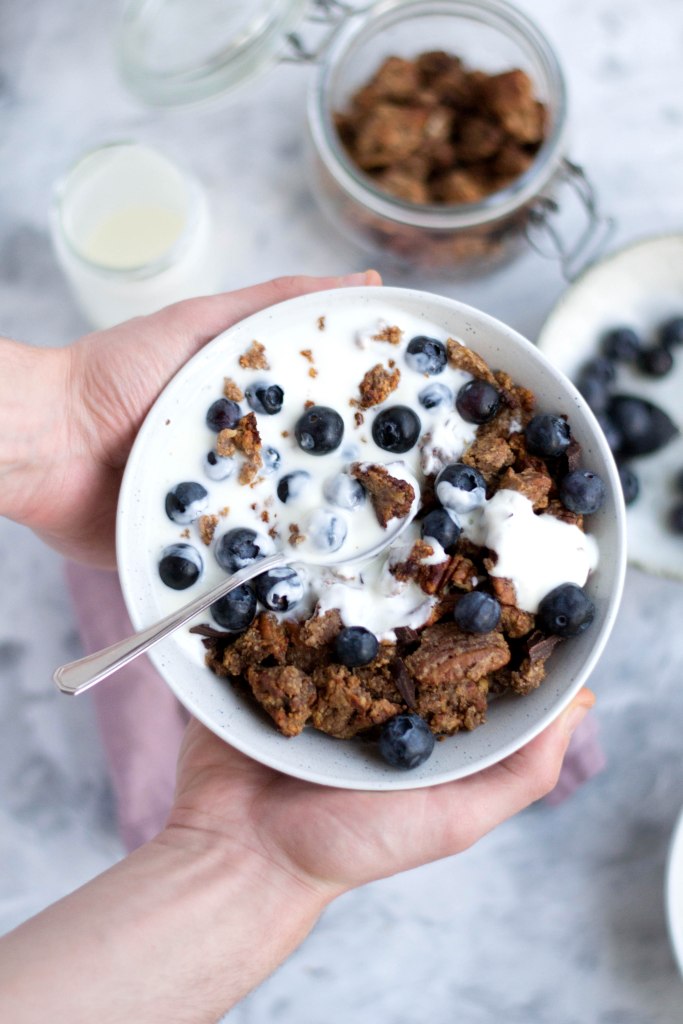
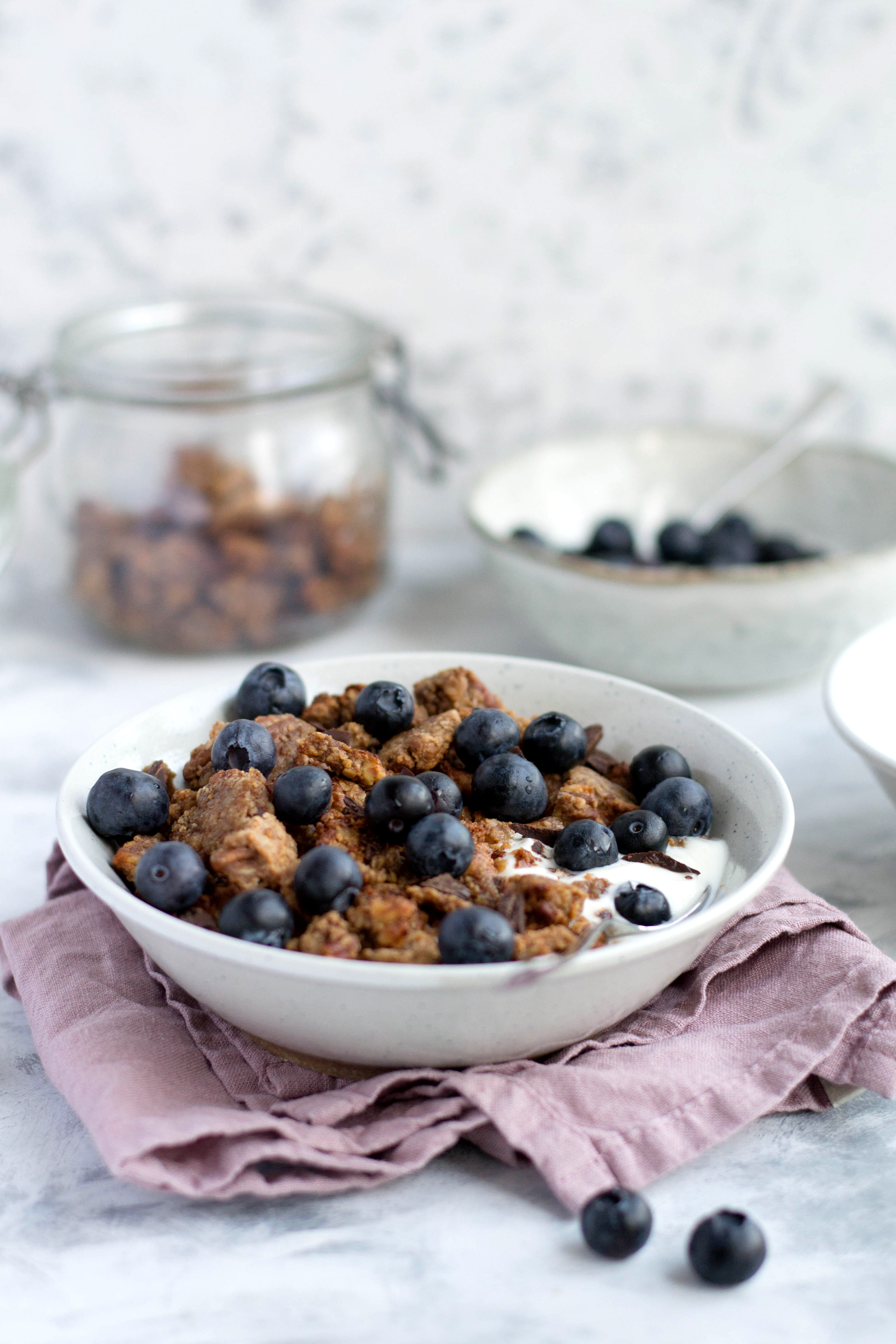
Le cose che preferisco di questa granola al banana bread non sono solo relative al fatto che sia facilissima da fare e che necessiti di pochi ingredienti che ho quasi sempre a disposizione in cucina… la parte migliore sono proprio quei bei pezzi grandi e croccanti. E anche per questo motivo che tende a finire sempre rapidamente ogni volta che la preparo! Con il suo mix di nutrienti ed i pezzi di dimensioni adattabili ad ogni necessità, questa granola è un’ottima scelta sia per colazione, che per uno snack da mettere in borsa, magari conservato in un bel sacchetto riutilizzabile.

Questa granola ha alcune peculiarità che ti faranno voler inziare a prepararla il prima possibile:

  • FACILE DA ADATTARE: puoi modificare molto facilmente le quantità dei vari ingredienti (ad esempio, a me piace usare della frutta secca extra in questa ricetta), puoi sostituire le noci pecan con altro o mischiare 2 tipi diversi di frutta secca, o puoi variare le dimensioni dei pezzi in base alle tue preferenze (io di solito scelgo di preparare dei pezzi più grandi se voglio usarla come snack e pezzetti più piccoli se la utilizzerò a colazione)
  • SEMPLICITA’: per prepararla hai bisogno di soltanto 5 ingredienti piuttosto comuni in ogni cucina (avena, banane, noci pecan, cioccolato fondente, olio extra vergine d’oliva) e di un paio di spezie
  • MINIMA PREPARAZIONE: non potrebbe essere più semplice di così! Ti occorrono solo alcuni minuti per frullare e mischiare gli ingredienti. Se la mia granola all’arancia ti sembrava già abbastanza semplice, sappi che questa è molto più facile!

Una nota meno positiva riguarda la cottura (richiede un pochino d’attenzione in più rispetto a ricette simili) e la conservazione (anche per questo, consiglio di preparare questa granola in piccole quantità – la conserverei per massimo 2 giorni nella dispensa e fino a 4 se conservata in frigorifero).

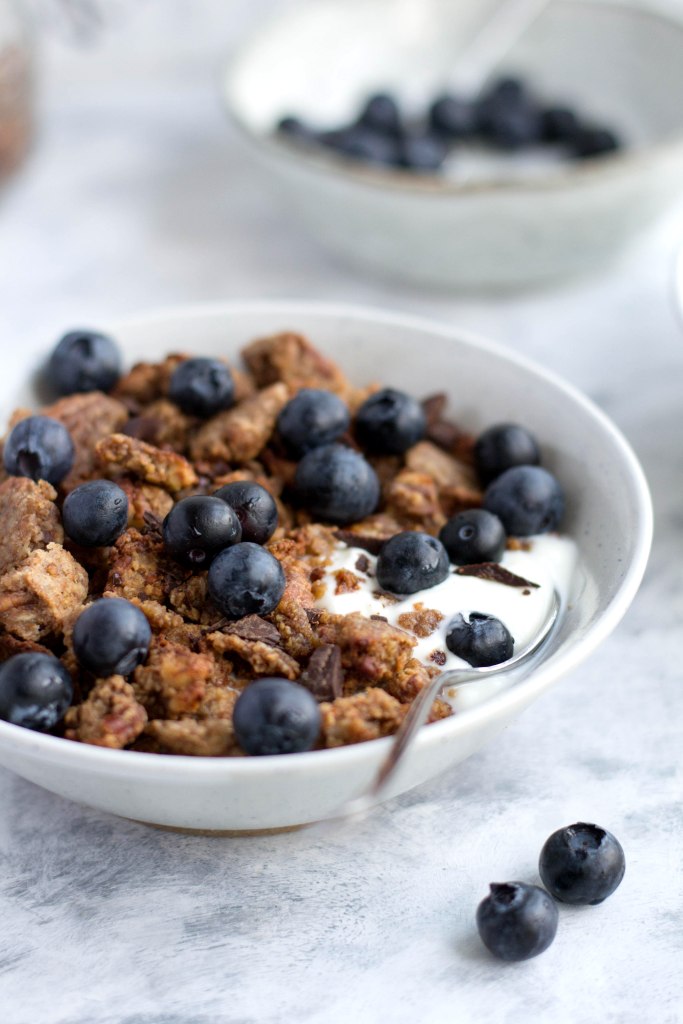
Banana bread granola clusters
Banana bread granola
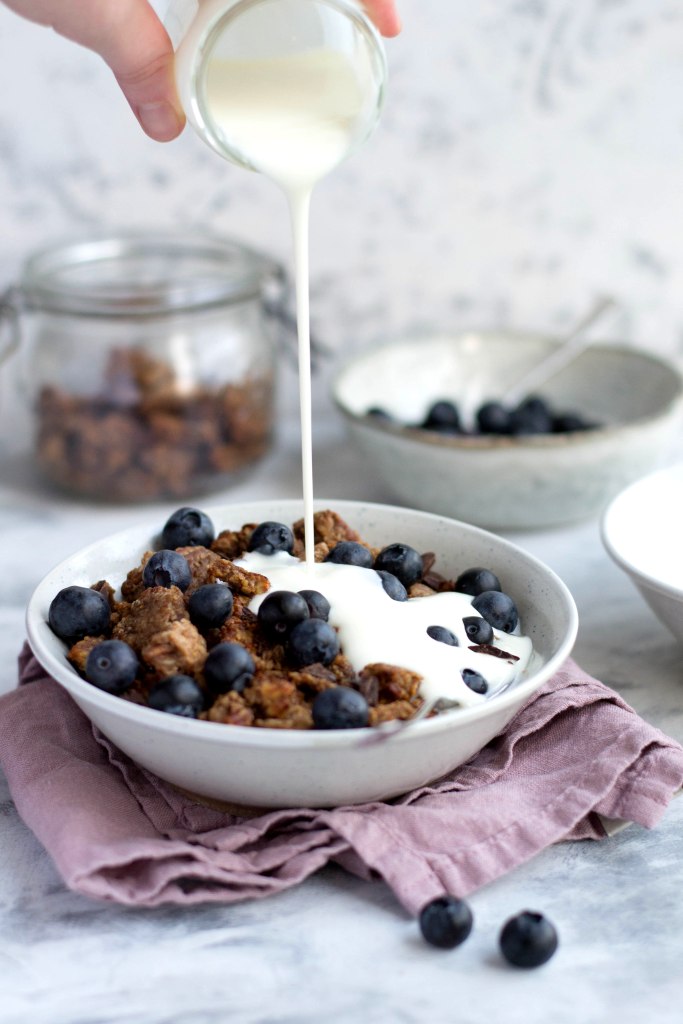
Banana bread granola with kefir and blueberries

GRANOLA AL BANANA BREAD

Ingredienti:

  • 180 g di fiocchi d’avena (scegli quella certificata senza glutine se necessario)
  • 2 banane di dimensioni medie
  • 100-120 g di noci pecan
  • 40 g di cioccolato fondente (70% o più)
  • 2 cucchiai di olio extra vergine d’oliva
  • 1 cucchiaino di cannella in polvere
  • 1 cucchiaino di zenzero in polvere
  • un pizzico di sale

Metti le banane nel frullatore e trasformale in una crema, poi aggiungi l’avena ed 1/3 delle noci pecan: frulla questi ingredienti seguendo le tue preferenze (puoi fare un mix cremoso o uno con dei pezzetti all’interno). Metti il mix ottenuto col frullatore in una ciotola ed aggiungi il resto delle noci pecan (spezzettate con le mani), le spezie e l’olio: mischia bene. Cuoci la granola in forno pre-riscaldato a 180°C per circa 20-25 minuti: per iniziare, disponi la granola sulla teglia (utilizza della carta forno o un tappetino apposito riutilizzabile) formando uno strato più o meno uniforme. Dopo qualche minuto, rimuovi la teglia dal forno ed inizia a spezzettare la granola con un cucchiaio: ripeti questo passaggio varie volte mentre la cuoci; questo procedimento ti aiuterà a cuocere al meglio tutti gli ingredienti ed a ottenere dei bei pezzi di granola dorati e croccanti (e puoi anche adattare le loro dimensioni). Può essere utile cuocere per alcuni minuti la granola con il forno leggermente aperto (molti forni consentono di lasciare lo sportello un pochino aperto).

Quando la granola si sarà raffreddata, aggiungi i pezzetti di cioccolato, mischia il tutto, e conservala in un contenitore a chiusura ermetica.

Se provi questa ricetta, non dimenticarti di fotografarla e taggarmi su Instagram. E se questo post è stato utile, condividilo usando i link qui sotto

Banana bread granola

(read in Italian)

Banana bread granola with kefir and blueberries
Banana bread granola

What I really love about this banana bread granola is not just that’s easy to make and it requires ingredients that are available in my pantry most of the time… the best part of it are the giant clusters. And this is also the main reason why it disappears so quickly every time I make it! With a good balance of nutrients and its big clusters, this granola is a great choice for breakfast or as a snack on the go to pack into reusable containers.

Overall, these are the main key points that will make you want to prepare this granola straight away:

  • ADAPTABILITY: you can easily change the ratio between the ingredients (for example, I love using extra nuts in this recipe), swap pecans for something else or mix 2 different kinds of nuts, and adapt the size of the clusters to your preferences (I usually go for bigger pieces if I plan to use it as a snack and for the smaller ones if I want to use it for breakfast)
  • SIMPLICITY: you only need 5 pretty basic ingredients to make it (oats, bananas, pecans, dark chocolate, extra virgin olive oil) and a couple of spices
  • QUICK TO MAKE: it really doesn’t get easier than this! It will only take you a couple of minutes to blend and mix the ingredients. If my orange flavored granola sounded already pretty much straightforward to you, get ready to be impressed by this one!

On the other hand, the baking step for this granola requires a bit more attention compared to similar recipes and its shelf life is not too long (that’s why I recommend you to make this granola in small batch – I would keep it only for a couple of days in the pantry and for up to 4 if stored in the fridge).

Banana bread granola clusters
Banana bread granola with kefir and blueberries

BANANA BREAD GRANOLA

Ingredients:

  • 180 g rolled oats (choose the gluten-free option if needed)
  • 2 medium-sized bananas
  • 100-120 g pecans
  • 40 g dark chocolate (70% or higher)
  • 2 tbsp extra virgin olive oil
  • 1 tsp ground cinnamon
  • 1 tsp ground ginger
  • a pinch of salt

Place the bananas in the blender and get a smooth paste, then add the oats, and 1/3 of the pecans: blend everything together according to your preferences (you can either make a creamy mix or one with the things more roughly chopped). Place the mix in a bowl and add the remaining pecans (broken into smaller pieces with your hands), the spices, and the oil: combine well all the ingredients. Bake in a preheated oven at 180°C for approx. 20-25 minutes: to start, spread the granola on a baking tray (use some parchment paper or a reusable non-stick baking mat) and make an even layer. After a few minutes, remove the tray from the oven and start breaking the granola into pieces using a spoon: repeat this step a few times while you bake it, this allows you to properly cook all the ingredients and to get those golden crunchy clusters (and you can adjust their size). It can be useful to cook the granola for a few minutes with the door of the oven slightly open (most of the ovens allow you to do so).

Wait until the granola is cold, then mix it with the finely chopped dark chocolate. Store in an air-tight container.

If you try this recipe don’t forget to take a photo and tag me on Instagram: I’d love to see your creations! And if this post was useful, share it with your friends using the buttons below

5 semplici modi per avere una cucina in stile “zero waste”

(read in English)

Ci sono tanti modi per ridurre gli sprechi, il consumo di plastica e di oggetti monouso in una casa: la cucina può essere un ottimo punto di partenza per iniziare ad apportare qualche cambiamento. Dal mio punto di vista, uno stile di vita che sia un vero e proprio supporto per il mio benessere è uno che prende in considerazione, insieme a tanti altri fattori, anche cose come:

  • essere più creativi in cucina sia per ridurre gli sprechi che per tenere sempre attiva una certa curiosità verso il cibo (qui trovi 5 idee per cucinare con il cibo avanzato)
  • riconnettersi con la natura
  • avere una certa attenzione verso l’ambiente ed a ciò che si può fare ogni giorno per avere uno stile di vita più consapevole

Di tanto in tanto, è sempre una buona idea farsi domande come “il mio stile di vita è come vorrei che fosse?”, “cosa posso cambiare o migliorare?”, “se ora facessi un passo indietro ed osservassi le mie abitudini dall’esterno, cosa potrei notare?”, etc.

Food market in Dublin
Reusable cups
Reusable jars
5 semplici modi per avere una cucina in stile "zero waste"

Vediamo 5 semplici modi per avere uno stile di vita più green

1) CREATIVITA’, RISPARMIO E MENO SPRECHI

Puoi mettere in pratica quest’idea in vari modi. Ad esempio:

  • gli avanzi possono essere un’opportunità per avere del cibo già pronto per il giorno seguente o possono anche essere un buon punto di partenza per utilizzare un po’ più di creatività in cucina
  • visto che certi cibi hanno dei tempi di cottura o preparazione piuttosto lunghi, puoi decidere di cucinare cereali o legumi in abbondanza (sconditi) e conservarli nel frigo per qualche giorno: in questo modo, saranno già pronti quando vorrai preparare un piatto veloce
  • cucina più spesso partendo dagli ingredienti di base. Ovviamente, non c’è nessun bisogno di passare dal cucinare solo un semplice toast al preparare in casa pane, yogurt, passata e pasta fresca per tutta la famiglia ogni giorno! Inizia a farlo passo dopo passo, adattando il tutto ai tuoi impegni, alle tue abilità in cucina ed alle tue necessità: c’è sempre tempo per migliorare!
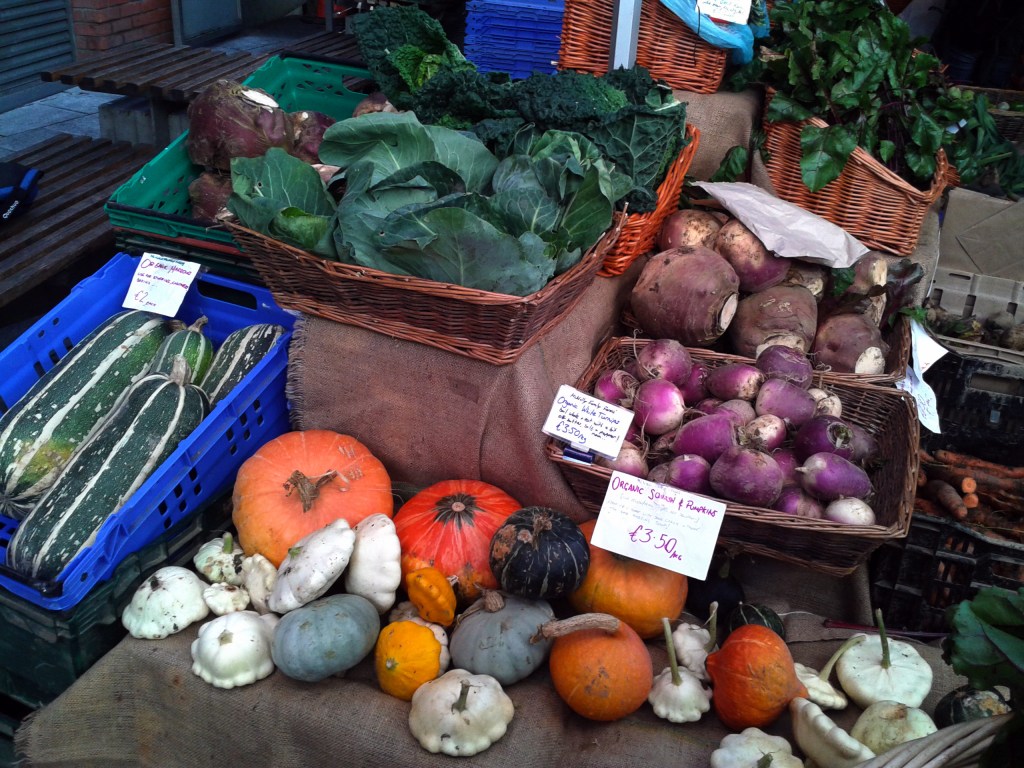
  • inizia a scoprire mercati contadini, produttori locali, prodotti biologici e frutta/verdura di stagione. E’ un buon modo per ridurre gli sprechi (spesso nei mercati contadini si trovano prodotti con meno imballaggi), consumare più prodotti seguendo la stagionalità del luogo in cui si vive e farsi coinvolgere da tutto la parte di socialità che ruota attorno ai mercati
  • hai dei vasi di vetro vuoti? Riciclali secondo le linee guida della tua città o conservali per dargli una nuova vita!
  • quando è possibile, cerca di comprare più prodotti senza imballaggio o senza plastica. Pensa anche a che prodotto stai comprando e che tipo di confezione scegli (ad esempio: “per 2 persone,compro lo yogurt da 500g in una confezione sola o 6 yogurt piccoli?“)

2) SCEGLI BORSE RIUTILIZZABILI PER LA SPESA

Ogni volta che ti prepari per uscire per fare la spesa, ricordati di portare con te le borse riutilizzabili (tipo queste). Può essere molto pratico anche decidere di averne sempre una con sè: tienila in macchina, nella borsetta, o in una tasca del cappotto (alcune delle borse pieghevoli diventano veramente piccolissime!).

3) RICICLA

Organizzati con i vari bidoni: assicurati che tutti in casa sappiano come utilizzarli. Informati riguardo le linee guida per la tua città/zona e chiedi conferma in caso di dubbio alla stazione ecologica più vicina

4) RIDUCI GLI OGGETTI MONOUSO

Parlo di carta assorbente per la cucina, carta d’alluminio, carta forno, pellicola per gli alimenti, sacchetti di plastica, etc. Prima di tutto, fai un passo indietro e guarda le tue abitudini dall’esterno: pensa a quante di queste cose utilizzi ed inizia a sostituirle con alternative riutilizzabili sempre più spesso. Qui ci sono alcuni esempi:

  • procurati alcuni fogli di stoffa cerata (solitamente sono fatti con cera d’api, ma ci sono anche alternative che utilizzano la cera di soia) per coprire le ciotole, i piatti, o per conservare anche un limone o un melone aperto (dai un’occhiata a Bee’s Wrap o altre marche simili)
  • acquista un tappetino per il forno riutilizzabile (qui trovi alcuni esempi)
  • assicurati di avere sempre canovacci da cucina e spugne a portata di mano: sarà più facile optare per queste soluzioni al posto della carta assorbente
  • opta per dei sacchetti per la cucina in cotone (tipo questi) e contenitori riutilizzabili per conservare sia gli ingredienti che i piatti già cucinati. Alcuni esempi: i vari contenitori per il pranzo di Black+Blum, sacchetti per i panini preparati con i fogli di stoffa cerata citati in precedenza e le bustine in silicone come quelle di Stasher
  • cosa utilizzi per portarti il pranzo al lavoro? Cosa puoi migliorare? Un paio di esempi: se usi posate monouso, puoi già fare un semplice cambiamento scegliendo quelle riutilizzabili (come quelle in bambù); un ottimo investimento per te e per il pianeta può anche essere una tazza da viaggio riutilizzabile (tipo quelle KeepCup).

5) COMPRA ANCHE FRUTTA E VERDURA IMPERFETTA

E’ piuttosto comune scegliere la mela che sembra perfetta e non quella che ha qualche imperfezione – l’abbiamo fatto tutti! Però, scegliendo ogni volta soltanto i prodotti perfetti, continui a mandare un messaggio al negozio a proposito delle preferenze del consumatore, ed è questo che poi farà adattare l’offerta di conseguenza. Il risultato? Più spreco! La prossima volta, prova a dare una possibilità anche a quei prodotti che non sono del tutto perfetti… scoprirai che sono ottimi e nutrienti esattamente come ti aspetti che siano!
Ora è il tuo turno: pensa alle tue abitudini in cucina ed a cosa potresti iniziare a migliorare da subito! E se questo post è stato utile, condividilo usando i link qui sotto

Questo post contiene dei link di affiliazione. Questo vuole dire che guadagnerò una piccola commissione su ogni acquisto effettuato usando uno di questi link, senza alcun costo aggiuntivo per te. Tutte le opinioni che condivido sono mie; raccomando solo prodotti che ritengo validi ed utili.

5 idee per cucinare con il cibo avanzato

(read in English)

Quando penso a delle strategie per ridurre lo spreco di cibo, le prime cose che mi vengono in mente sono tutte riguardanti piccole azioni quotidiane che, quando vengono sommate tra loro, possono fare davvero la differenza. Un processo fatto di semplici cambiamenti, magari anche imperfetti, ma attuati il più spesso possibile, è anche il modo migliore per creare delle vere e proprie abitudini, fare scelte più consapevoli, ed abbracciare una vita più zero waste senza pressioni: tutti possiamo fare ciò che si adatta al meglio alle nostre possibilità (stile di vita, budget, orari, etc).

In un blog post precedente, ho condiviso 5 semplici modi per avere una cucina in stile zero waste ed avere un approccio più green per quanto riguarda spesa e gestione delle cose relative al cibo. Qui invece approfondiremo il discorso sullo spreco di cibo, che è un problema decisamente da non sottovalutare.

Uno dei modi più semplici per iniziare a ridurre lo spreco di cibo tra le mura di casa, consiste nell’essere più creativi con gli avanzi e scoprire nuovi sapori e combinazioni. Questo è un cambiamento piuttosto semplice da mettere in pratica e non richiede tanta pianificazione.

Infatti, possiamo paralre di 3 punti cardine su cui focalizzarsi:

  • cerca di capire bene in casa tua quanto cibo viene buttato
  • identifica le ragioni dietro a questo spreco di cibo
  • fai diventare l’utilizzo degli avanzi un’abitudine e non solo una cosa da fare ogni tanto

Cucinare delle porzioni troppo abbondanti, non conservare gli avanzi adeguatamente e non voler riproporre lo stesso piatto per più di un pasto sono alcune delle ragioni principali dietro allo spreco di cibo in una casa. Parlando per esperienza personale, capisco benissimo chi non esulta all’idea di mangiare le stesse cose per 3 volte di fila: quando frequentavo l’università dovevo gestire spesa/cucina soltanto per una persona; so quando è facile cucinare troppo per sbaglio e poi avere avanzi per giorni. Ma, invece di buttare via gli avanzi, ho imparato ad usarli come punto di partenza per creare dei piatti ricchi di gusto, variando i sapori e le consistenze. Ma c’è di più: ho anche capito come far diventare quello che era inizialmente un errore, una vera e propria parte della mia organizzazione settimanale (e quando passi tutte le tue giornate tra lezioni e laboratori, hai davvero bisogno di un po’ di idee per velocizzare le cose in cucina!).

Qui voglio parlarvi di 5 semplicissimi modi per utilizzare gli avanzi. Le ricette non sono esatte in termini di quantità, perchè ognuno di noi partirà da una quantità di avanzi diversa. Ma ci sono 3 insegnamenti importanti che vorrei trasmettere con questo post:

  • l’intuizione dovrebbe avere un ruolo di rilievo nel tuo rapporto col cibo; ogni piccola occasione che hai per scegliere in maniera più intuitiva un ingrediente, un sapore, una ricetta… è anche un’ottima possibilità per stabilire una connessione più solida con le tue scelte in fatto di cibo!
  • essere creativi in cucina è un buon modo per riflettere più spesso su domande come “mi piace DAVVERO questo?” o “perchè dò per scontato di NON poter mischiare questi ingredienti?” o “mi sento a mio AGIO anche se non posso contare esattamente le calorie di questo piatto?”, etc…
  • ridurre gli sprechi di cibo e, da un punto di vista più generale, fare scelte più consapevoli non è vuole dire dover fare tutto PERFETTAMENTE di punto in bianco. Fare del tuo meglio, anche se in maniera imperfetta ma continuativa, è ciò che può davvero fare la differenza

5 IDEE PER CUCINARE CON IL CIBO AVANZATO

1) PANE PREPARATO CON AVANZI DI PORRIDGE

Bread made with leftover porridge

Il punto di partenza per la preparazione di questo pane è del porridge avanzato (avena, bevanda alla mandorla, acqua). Di seguito ho indicato le proporzioni tra i vari ingredienti (pensata in termini di cucchiai). Ho bilanciato il gusto dolce dell’avena con una miscela di farina integrale di grano/segale ed il pepe nero.

  • porridge avanzato
  • farina integrale (1:3 porridge/farina)
  • yogurt bianco non zuccherato (1:1 porridge/yogurt)
  • lievito secco (1 tsp per 5-6 tbsp di porridge)
  • miele (1 tsp per 5-6 tbsp di porridge)
  • olio extra vergine d’oliva (3 tbsp per 5-6 tbsp di porridge)
  • acqua (in base alla necessità)
  • pepe nero (1 tsp per 5-6 tbsp di porridge)

Mischia il lievito con il miele e 2 cucchiai di acqua tiepida in una ciotolina: lascialo riposare per 5 minuti prima di utilizzarlo. In una ciotola capiente, metti insieme il porridge, la farina, lo yogurt ed il pepe. Aggiungi il lievito agli altri ingredienti, mischia bene il tutto e aggiungi un po’ d’acqua in piccole quantità (vuoi ottenere un impasto finale che si lavora con facilità e non si attacca alle mani). Quando l’impasto è quasi pronto, aggiungi l’olio e continua a lavorarlo per alcuni minuti con un cucchiaio o con le mani. Copri la ciotola e lascia riposare il pane finchè non sarà raddoppiato. Quando sarà pronto per il prossimo passaggio, lavora l’impasto per circa 30 secondi usando un pochino d’olio sulle mani se necessario, dai la forma ai panini e mettili su una teglia da forno (preparata con dell’olio sul fondo o con della carta forno o un’alternativa riutilizzabile): copri il pane con un canovaccio da cucina pulito e lascialo riposare per 20-30 minuti. Cuoci in forno preriscaldato a 180°C per circa 20-25 minuti o finchè non inizia ad avere una crosticina dorata e croccante all’esterno.

2) PASTA AL FORNO PREPARATA CON GLI AVANZI DEL PRANZO

How to use leftover pasta
Baked pasta made with leftovers from lunch

Il punto di partenza per questa pasta al forno sono stati degli avanzi di un pranzo piuttosto rapido (pasta condita con passata, carote, scalogno, paprika affumicata, pepe, e sale). E’ un modo molto semplice per riproporre degli avanzi di pasta, cambiandone il sapore, creando un sugo ricco e cremoso e sfruttando tutta la bontà data dal breve passaggio nel forno.

  • avanzi di pasta con il suo sugo
  • carote (2 carote di dimensioni medie per 2 persone)
  • pomodori secchi (4-5 pezzi per 2 persone)
  • formaggio stagionato (una manciata di formaggio grattugiato da mettere sopra la pasta)
  • pepe, cumino, semi di mostarda nera (a piacere)
  • olio extra vergine d’oliva

Separa come possibile la pasta dalle carote a pezzi e metti quest’ultime nel frullatore con le carote crude ed i pomodori secchi (entrambi tagliati a pezzetti). Usa un pochino d’acqua per frullare il tutto al meglio, ma soltanto la minima quantità necessaria. Mischi il sugo, la pasta e le spezie in una ciotola. Prepara un teglia con un pochino d’olio sul fondo, poi aggiungi la pasta ed il formaggio. Cuoci in forno per circa 15 minuti a 180°C o finchè non inizia a formarsi una crosticina dorata e croccante.

3) POLPETTE VEGETARIANE PREPARATE CON PATATE BOLLITE AVANZATE

Vegetarian meatballs made with leftover boiled potatoes
  • patate bollite avanzate (schiacciate con una forchetta)
  • curcuma, garam masala, cumino e sale (a piacere)
  • olio extra vergine d’oliva (2 tbsp per circa 6-7 tbsp di patate)
  • uova (2 per circa 6-7 tbsp di patate)
  • pangrattato (4-5 tbsp per circa 6-7 tbsp di patate)

Mischia le patate con le spezie, 1 uovo e l’olio. Forma le polpette e passale prima nel secondo uovo (sbattuto), poi nel pangrattato. Cuocile in forno preriscaldato a 180°C per circa 15 minuti o finchè non inizieranno a diventare dorate e croccanti all’esterno.

4) BURGER DI RISO PREPARATI CON RISOTTO AVANZATO

How to use leftover risotto
Rice patties made with leftover risotto

Per preparare questi burger ho utilizzato del risotto avanzato condito con una salsa di cavolfiore (il colore giallo è dato da curcuma e zafferano). Mischia il risotto con delle uova (2 uova per circa 6-7 cucchiai di risotto) e, se necessario, delle spezie. Se il risotto è un pochino liquido, aggiungi al resto degli ingredienti anche un paio di cucchiai di pangrattato. Forma i burger con le mani e mettili su una teglia da forno preparato con un pochino d’olio o della carta forno o un’alternativa riutilizzabile. Aggiungi un filo d’olio sopra i burger prima di cuocerli in forno preriscaldato a 180°C per 20-25 minuti o finchè non saranno dorati e ben cotti esternamente.

5) ZUPPA PREPARATA CON GLI AVANZI DI 2 CENE ED UN PRANZO

Soup made with leftovers

Il punto di partenza per questo piatto è un po’ diverso da quanto visto in precedenza: qui ho utilizzato gli avanzi dei 2 giorni precedenti (riso scondito, verdure cotte al forno, zuppa di lenticchie) per creare una semplicissima zuppa. Metti tutti gli ingredienti nel frullatore, poi scaldali in una padella per alcuni minuti. Prima di servire assaggi la zuppa per capire se è necessario aggiungere altre spezie (sulla base di quelle che contenevano i tuoi avanzi). In questo caso ho servito la zuppa (speziata con curcuma, paprika affumicata, coriandolo, cumino e pepe) ravvivandola un po’ con degli ingredienti aggiunti direttamente sul piatto finale: avocado, yogurt bianco, limone, prezzemolo e olio d’oliva.

5 idee per cucinare con il cibo avanzato

Ora è il tuo turno: pensa alle tue abitudini in cucina ed a cosa potresti iniziare a migliorare da subito! E se questo post è stato utile, condividilo usando i link qui sotto

5 easy and delicious recipes made with leftovers

(read in Italian)

When I think about reducing food waste, what comes to my mind are mainly small choices you can take on a daily basis, because when you sum them up, they actually make the difference and this step by step process helps you to consciously create a series of habits. A “zero waste” life is a long journey made of small consistent actions: we can all do what suits best our lifestyle, daily schedule, budget, etc.

In a previous blog post, I’ve shared 5 simple ways to start having a “zero waste” kitchen: general strategies, creative hacks, and the importance of paying attention to your shopping list are some of the topics you’ll find over there. While here we will really dive into the topic of reducing food waste as it’s quite a big issue nowadays.

To reduce food waste in your home, one of the easiest ways to get started is getting creative with leftovers and discover new flavors and food combinations. It’s a pretty straight-forward step to take and it doesn’t require much planning or organisation.

Indeed, we can talk about 3 main points to focus on:

  • understand better how much food gets thrown away in your home
  • find out the main reasons behind food waste in your household
  • make the use of leftovers a habit and not just a random practice

A large part of the food that gets wasted in a home comes from cooking too much and not storing those leftovers properly or not willing to eat again the same meal several times. From my personal experience, I can totally understand someone who doesn’t get excited by thinking about eating the same food for 3 meals in a row: when I was a college student, I had to organise my grocery shopping and cooking just for myself and I know how easy it is to cook more than 1 portion or have leftovers for days. But, instead of throwing away the leftovers, I’ve learned how to create new delicious meals using them, change up the flavors and textures, and actually turn what at the begin started as a mistake into a part of my weekly meal prep (when you spend your entire day between classes and laboratories, your meal prep skills definitely need to be on point!).

Here I’m sharing with you 5 simple and tasty ways to use leftovers. The recipes are not totally accurate in terms of measurements because we will all start with a different amount of leftovers. BUT there are 3 main lessons you can take from this post:

  • your intuition should play a major role in your relationship with food, and any little chance you have to be more intuitive in choosing an ingredient, a flavor, a recipe, or a food combination… it’s also a wonderful chance to feel more connected with your food choices!
  • getting creative in the kitchen is a great way to ask yourself a bit more often questions like “do I REALLY like this?” or “why do I assume I CAN’T mix these ingredients?” or “do I feel OK in eating this even if I can’t count the exact amount of calories?”, etc…
  • reducing food waste and, from a general point of view, taking more conscious choices is not about doing everything PERFECT. Instead, it’s about doing your best in an imperfect but consistent way

5 EASY AND DELICIOUS WAYS TO USE LEFTOVERS

1) BREAD MADE WITH LEFTOVER PORRIDGE

Bread made with leftover porridge

To make this bread, I’ve used some leftover porridge (oats, almond drink, water) as a starting point. Below you’ll find the ratios between the ingredients (it’s all about a comparison between tablespoons). A mix of wholegrain wheat and rye flour helped me to balance the taste of oats, along with the black pepper.

  • leftover porridge
  • wholegrain flour (1:3 porridge/flour)
  • plain unsweetened yogurt (1:1 porridge/yogurt)
  • dry yeast (1 tsp for 5-6 tbsp of porridge)
  • honey (1 tsp for 5-6 tbsp of porridge)
  • extra virgin olive oil (3 tbsp for 5-6 tbsp of porridge)
  • water (as needed)
  • black pepper (1 tsp for 5-6 tbsp of porridge)

In a small cup, mix well the dry yeast with the honey and 2 tbsp of warm water: leave it to rest for 5 minutes before using it. In a large bowl, combine porridge, flour, yogurt, and pepper. Add the yeast to the other ingredients, mix well and add the water in small portions (you want to get a dough that doesn’t stick to your hands). When your dough is almost ready, add the olive oil and keep kneading it in the bowl with a spoon or your hands for a few minutes. Cover the bowl and wait until the dough doubled in size. Then knead the down for approx. 30 seconds using a bit of oil on your hands if needed, shape the bread and place it on a baking tray (with some oil or parchment paper or a reusable non-stick baking mat): cover the bread with a clean kitchen towel and leave it to rest for 20-30 minutes. Cook in a preheated oven at 180°C for approx. 20-25 minutes or until it’s golden brown and quite firm on the outside.

2) BAKED PASTA MADE WITH LEFTOVERS FROM LUNCH

How to use leftover pasta
Baked pasta made with leftovers from lunch

To make this baked pasta, I’ve used some pasta left from lunch (pasta, tomato sauce, carrots, shallots, smoked paprika, black pepper, salt) and turned what was a quick and simple sauce into a delicious creamy alternative.

  • leftover pasta and sauce
  • carrots (2 medium-sized carrots for 2 people)
  • sun-dried tomatoes (4-5 tomatoes for 2 people)
  • aged cheese (a handful of shaved cheese to add on top)
  • black pepper, cumin, black mustard seeds (to taste)
  • extra virgin olive oil

Do your best to separate the pasta from the chopped carrots and add the latter in the blender with the fresh carrots and sun-dried tomatoes (both finely chopped). Use a small amount of water if needed to blend everything well. In a bowl, mix the sauce, the pasta, and the spices. Prepare a baking tray with a drizzle of olive oil in the bottom, then spread the pasta to form an even layer, and top it with cheese. Bake for approx. 15 minutes at 180°C or until it starts to get crispy and golden.

3) CROQUETTES MADE WITH LEFTOVER BOILED POTATOES

Vegetarian meatballs made with leftover boiled potatoes
  • leftover boiled potatoes (mashed with a fork)
  • turmeric, garam masala, cumin, salt (to taste)
  • extra virgin olive oil (2 tbsp for approx. 6-7 tbsp of potatoes)
  • eggs (2 for approx. 6-7 tbsp of potatoes)
  • breadcrumbs (4-5 tbsp for approx. 6-7 tbsp of potatoes)

Mix the potatoes with the spices, 1 egg, and the olive oil. Shape the croquettes and roll them in the second egg (beaten) and then in the breadcrumbs. Bake in a preheated oven at 180°C for approx. 15 minutes or until they will start to turn golden and crispy on the outside.

4) RICE PATTIES MADE WITH LEFTOVER RISOTTO

How to use leftover risotto
Rice patties made with leftover risotto

To make these patties, I’ve used some leftover risotto tossed with a creamy cauliflower sauce (the yellow comes from turmeric and saffron). Mix the risotto with eggs (2 eggs for approx. 6-7 tbsp of risotto) and extra spices if necessary. If your risotto is a bit watery you will need to add a couple of tablespoons of breadcrumbs to the mix. Shape the patties with your hands and place them on a baking tray prepared with some oil or parchment paper or a reusable non-stick baking mat. Add a small drizzle of olive oil on top of your patties and baked them in a preheated oven at 180°C for 20-25 minutes or until they turn golden and firm on the outside.

5) SOUP MADE WITH LEFTOVERS FROM 2 DINNERS AND A LUNCH

Soup made with leftovers

To make this soup, all started with a bunch of leftovers from the previous days (plain rice, roasted veggies, lentil soup). Blend all the leftovers together and warm them up for a few minutes in a pan. Just before serving, taste the soup and add some extra spices if necessary (based on the flavors of your leftovers). Here I’ve served my soup (spiced with turmeric, smoked paprika, cumin, coriander, and black pepper) with avocado, plain yogurt, lemon, parsley, and olive oil.

5 easy and delicious recipes made with leftovers

Now it’s your turn: have a look at your cooking habits and check what you can start improving right now! You can also check out my product recommendations for a “zero waste” kitchen HERE

This post contains affiliate links. This means that I’ll receive a small commission at no extra cost to you if you use one of the links provided. All opinions are my own; I only recommend your products I value and find helpful.

L’arte del French Toast: ricetta e consigli

(read in English)

How to master the art of French toast: recipe and tips

Mi piace quando riesco a condividere una colazione lenta e curata con il mio ragazzo; il French toast è una di quelle preparazioni che piace ad entrambi e che ogni volta è sempre un’ottima scelta. Se sei sempre alla ricerca di nuovi sapori da portare in tavola o se vuoi imparare a destreggiarti con abilità nell’arte del French toast, continua a leggere perchè qui troverai ciò che ho imparato nel corso degli anni, i miei consigli e la ricetta per preparare un’ottima colazione in pochi minuti.

Alla fine del post troverai la mia ricetta per i French toast: ci sono tante varianti di questa preparazione, in alcune vengono aggiunti ingredienti come burro, panna, zucchero, o farina nella miscela in cui si inzuppa il pane. Io cerco di semplificare le cose il più possibile, sperimento un po’ con le spezie ed uso sempre pane di ottima qualità.

Iniziamo con qualche consiglio: ho deciso di passare in rassegna le questioni tecniche più comuni riguardanti questa ricetta. Se hai altre domande, puoi contattarmi sulla mia pagina Instagram.

French toast with strawberries and honey

1. QUALE PANE UTILIZZARE?

Il pane raffermo è sicuramente una scelta migliore rispetto a quello fresco ma, specialmente se decidi di usare challah o pan brioche, puoi decidere di usarne anche uno sfornato da poco. Utilizzare pane preparato con farina integrale aumenterà il contenuto di nutrienti della colazione (specialmente in termini di fibre) ed il risultato finale avrò un sapore caratteristico che ricorda un po’ la frutta secca. Puoi regolare gli altri ingredienti necessari per il French toast sulla base del tipo di pane che hai a disposizione (cerca di essere CONSAPEVOLE del suo sapore e della sua consistenza – IMPARA A CONOSCERE DAVVERO I TUOI INGREDIENTI). Le mie opzioni preferite sono:

  • pane di pasta madre (ma non mi piace molto utilzzare il pane di segale per il French toast)
  • pane di Altamura e pane Toscano
  • pan brioche*
  • croissants raffermi
  • challah*

*ovviamente pan brioche, croissants, o challah possono essere a base di lievito madre (anche meglio!)

2. PERCHE’ IL MIO FRENCH TOAST RISULTA TROPPO MOLLE?

Il punto cruciale è trovare il giusto equilibrio quando si inzuppa il pane nel mix liquido, in modo da ottenere un French toast che sia soffice all’interno e leggermente croccante all’esterno:

  • se opti per inzuppare velocemente il pane nel liquido senza pressarlo con delicatezza, il classico gusto del French toast sarà semplicemente una copertura esterna per una fetta di pane caldo. Inoltre, trovo che il sapore delle uova sia più marcato quando fai quest’errore
  • se inzuppi il pane troppo a lungo, probabilmente finirai per ottenere un risultato troppo molle

3. POSSO FARE UN FRENCH TOAST SENZA UOVA O SENZA LATTE?

Certo. Puoi sostituire il latte con la tua bevanda vegetale preferita (quelle fatte con mandorle, anacardi, o nocciole sono molto adatte allo scopo). Io preferisco utilizzare una bevanda fatta in casa in modo da poter regolare la concentrazione: la preparo più densa rispetto al solito se voglio preparare i French toast, così il risultato finale sarà più saporito.

4. DEVO USARE SOLO I TUORLI?

Tecnicamente, la scelta è tua. Io utilizzo le uova intere sia perchè è più pratico, sia perchè questa opzione mi permette di mangiare l’uovo nella sua interezza con tutti i suoi nutrienti. Cerca di sbattere le uova accuratamente, così eviterai di avere dei pezzi di albume a caso sul French toast.

5. PERCHE’ IL MIO FRENCH TOAST BRUCIA FACILMENTE? PERCHE’ SI ATTACCA ALLA PADELLA?

Ci potrebbe volere un po’ di pratica, ma riuscirai a fare un ottimo French toast! Scalda la padella prima di iniziare a cuocere il pane (come faresti per i pancakes), usa un pochino di ghee o olio d’oliva giusto per assicurarti che non si attacchi nulla, e scegli padelle antiaderenti di ottima qualità. Cucina il French toast a fuoco medio per ottenere un risultato leggermente croccante all’esterno e soffice all’interno.

6. COSA DOVREI FARE CON IL MIX DI UOVA AVANZATO?

Utilizzalo per preparare una piccola omelette oppure usalo per fare l’impanatura di qualche polpetta di carne o vegetariana (ovviamente seguito da un bel po’ di pangrattato). Usa un po’ di creatività e cerca sempre di fare del tuo meglio per ridurre gli sprechi!

French toast with strawberries and honey

LA RICETTA PER UN FRENCH TOAST FACILE E VELOCE

Ingredienti (per 2 persone)

  • 4-5 fette del pane che preferisci (non troppo sottili altrimenti tendono a rompersi e/o bruciare facilmente)
  • 1-2 uova intere
  • circa 150 ml di latte
  • 1-2 cucchiaini di ghee, sciolto (misurato solido)
  • 1/2 cucchiaino di cannella in polvere
  • un pizzico di pepe di Giamaica
  • un pizzico di sale

Prepara gli ingredienti per il mix liquido: mescolali bene tutti insieme in una ciotola (scegli la misura della ciotola in base al pane, altrimenti dovrai poi utilizzare un secondo contenitore per inzuppare le fette nel liquido). Preriscalda la padella e, quando sarà quasi pronta, inizia ad inzuppare il pane. Cuoci i French toast per 2-3 minuti su ogni lato, girandoli una volta. Servili caldi ed accompagnali con gli ingredienti che preferisci (qui io ho utilizzato fragole, fave di cacao spezzettate e miele).


Vorresti iniziare ad avere più consapevolezza nella vita di tutti i giorni e mettere in pratica quell’idea di slow living a cui hai sempre aspirato? Clicca sul bottone qui sotto per scoprire come inziare utilizzando un corso semplice, pratico ed efficace

LEGGI I DETTAGLI

How to master the art of French Toast: recipe and tips

(read in Italian)

How to master the art of French toast: recipes and tips

I love when I can manage to share a slow breakfast with my better half and a warm French toast is one of those preparations that we both like and never disappoints. If you are always on the hunt for some new flavors to bring on your table or if you want to master the art of French toast, keep reading ’cause here you’ll find some of the best tips I’ve learned during the years and my recipe to help you make a delicious breakfast in a matter of minutes.

Below you’ll find my favorite recipe for French toast: there are many variations of this preparation, some add butter, cream, sugar, or flour into the batter. I try to keep the things as much simple as possible, playing with spices and choosing good quality bread.

Let’s start with some tips: I’ve decided to cover the most common cooking issues related to this recipe. If you have other questions about it, feel free to get in touch on my Instagram page and I’ll be happy to help you.

How to master the art of French toast: recipes and tips
French toast with strawberries and honey
How to master the art of French toast: recipes and tips

1. WHICH BREAD SHOULD I CHOOSE?

Stale bread works definitely better than the fresh one but, especially if you are using challah or brioche bread, you can decide to go for it even if it has been baked recently. Using bread made with wholegrain flour will increase the nutritional content of your breakfast (especially in terms of fibre) and the final result has a more distinctive nutty flavor. You can adapt the other ingredients necessary to make your French toast based on the kind of bread available (be AWARE of its taste, consistency, and flavor – KNOW YOUR INGREDIENTS). My favorite options are:

  • sourdough bread (but I’m not a huge fan of rye sourdough bread for French toast)
  • brioche bread*
  • stale croissants
  • challah*

*obviously your brioche bread, croissants, or challah can be made with a sourdough starter (even better!)

2. WHY MY FRENCH TOAST TURNS OUT SOGGY?

You want to find a good balance when you soak the bread into your liquid mix in order to get that unique soft center:

  • if you just opt for a quick dip without pressing the bread into the liquid, the classic flavor of French toast will simply be the cover for a regular slice of warm bread. I also find the flavor of eggs to be way too strong if you do this mistake
  • if you soak the bread in the liquid for too long, you may end up with a soggy result

3. CAN I MAKE A DAIRY OR EGG-FREE FRENCH TOAST?

Absolutely. You can swap the milk with your favorite plant-based drink (those made with almonds, cashews, or hazelnuts work really well). I prefer using a homemade nut drink more concentrated than usual, to get a more flavorful result.

4. SHOULD I USE ONLY YOLKS?

Technically, this choice is up to you. I use whole eggs because it’s way more practical and to me, it makes sense eating the entire eggs with all its nutrients, instead of separating whites and yolks. Be sure to beat the eggs really well, to avoid finding random big pieces of whites on your French toast.

5. WHY MY FRENCH TOAST BURNS EASILY? WHY MY TOAST STICKS TO THE PAN?

It may take a bit of practice, but you’ll get there! Preheat your pan (exactly how you would do for pancakes), use a bit of ghee or olive oil just to ensure your toast won’t stick to the pan and opt for a good quality non-stick pan. Cook your French toast on medium heat to get a crispy outside and a soft inside.

6. WHAT SHOULD I DO IF I HAVE SOME LEFTOVER EGG MIX?

Use it to make a small omelette, or roll some meatballs or veggie meatballs in it (followed by a generous amount of bread crumbs). Get creative and always do your best to reduce food waste!

French toast with strawberries and honey
How to master the art of French toast: recipes and tips

EASY FRENCH TOAST RECIPE

Ingredients (serves 2)

  • 4-5 slices of your bread of choice (not too thin otherwise they will tend to break and/or burn easily)
  • 1-2 whole eggs
  • approx. 150 ml of milk
  • 1-2 tsp of ghee, melted (measured solid)
  • 1/2 tsp ground cinnamon
  • a pinch of all spice
  • a pinch of salt

Prepare the ingredients for your liquid mix: whisk them all together in a bowl (choose the size of the bowl based on the bread, otherwise you’ll have to find a second bowl/plate to dip the slices into the liquid). Preheat your pan and, when it will be almost ready, start soaking the bread into your liquid mix. Cook the French toast for 2-3 minutes on each side, flipping each slice once. Serve it warm along with your favorite toppings (here I have used strawberries, cacao nibs, and honey).


Would you like to bring more awareness into your days and let intuition play a real role in your life? Click on the button below to learn how to do it using a simple, effective, and enjoyable 7-step course

LEARN MORE